Flower profile
Big sagebrush
Artemisia tridentata
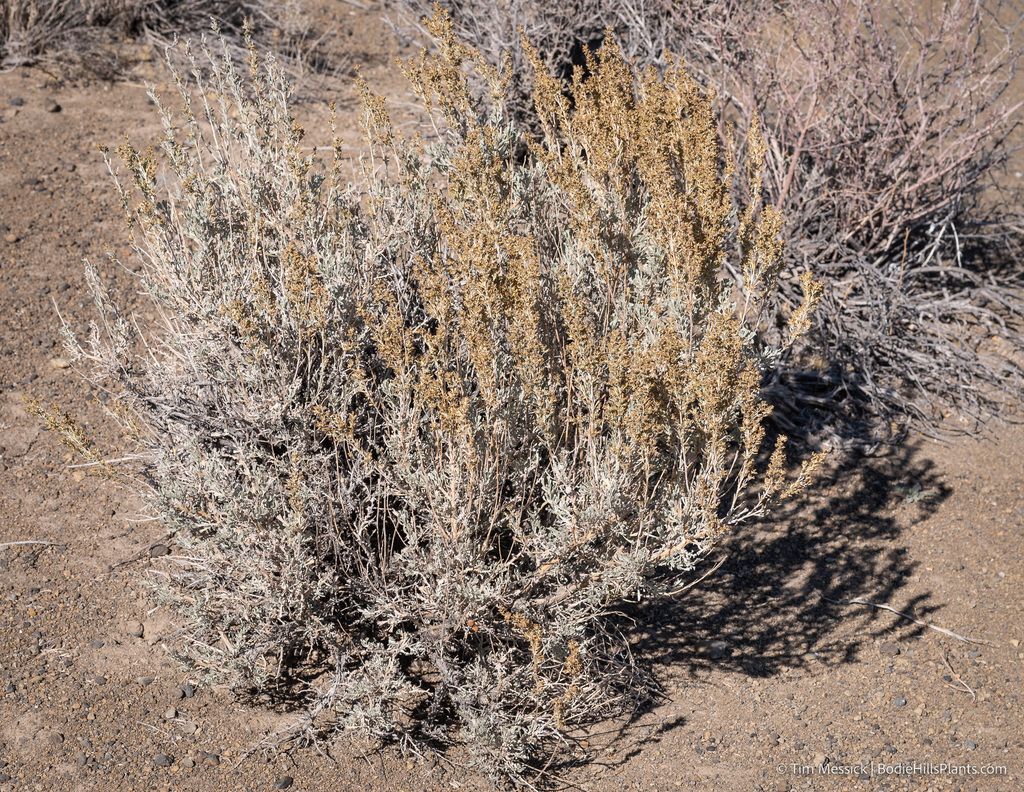
Big sagebrush (Artemisia tridentata) is a shrub or small tree in the Asteraceae family, native in the lower 48 states, blooming mostly September–November across the U.S.
Big sagebrush is a flowering plant that USDA PLANTS lists as native in the lower 48 states.
*iNaturalist research-grade observations, as of October 17, 2026.
On our lists for: Nevada
Quick look
Artemisia tridentata, commonly called big sagebrush, Great Basin sagebrush or simply sagebrush, is an aromatic shrub from the family Asteraceae.
- It belongs to the Asteraceae family. iNaturalist
- USDA PLANTS describes it as a shrub / a tree with a perennial life cycle. USDA PLANTS
- USDA PLANTS lists it as native in the lower 48 states and records it in 15 states. USDA PLANTS
- NatureServe lists it as native to Nevada. NatureServe
- USDA PLANTS lists its flower color as yellow. USDA PLANTS
- USDA PLANTS gives its bloom period as mid summer. USDA PLANTS
- USDA PLANTS lists a mature height of about 4 ft. USDA PLANTS
- iNaturalist has 1,217 research-grade sightings of it in Nevada, ranking #22 among the 132 flowers on our Nevada list. iNaturalist
When does it bloom?
There are only a handful of Nevada flowering records, so this chart uses records from across the U.S.
Conservation status
- Federal (U.S. ESA)
- Not listed No U.S. Endangered Species Act listing in the USFWS ECOS database. USFWS ECOS
- NatureServe global
- G5 Secure worldwide. NatureServe
- Nevada
- Not listed Not on Nevada fully protected plants, critically endangered (NAC 527.010). NatureServe: SNR, not yet ranked in Nevada. NAC 527.010
- Rare elsewhere
- No other U.S. state ranks it S1, S2, SH or SX.
Checked October 17, 2026. Rankings and lists can change, so follow the links for the latest.
Can you eat it?
None of the sources we checked (NC State Extension (no page for this plant), USDA PLANTS) say whether it's edible or poisonous for people.
It isn't on the ASPCA plant list. For context only: ASPCA lists a related species, Artemisia dracunculus (“Tarragon”), as toxic to dogs and cats. That doesn't tell us about this species, so keep pets away to be safe. ASPCA
🌿 Never eat a wild plant unless you're certain of its ID; this isn't medical advice. Worried about a person? Call Poison Control at 1-800-222-1222. Worried about a pet? Call your vet.
Where does it grow?
USDA PLANTS records big sagebrush in 15 states.
recorded by USDA PLANTS on our state lists not recorded
See the full list of states
Arizona, California, Colorado, Idaho, Massachusetts, Montana, Nebraska, Nevada, New Mexico, North Dakota, Oregon, South Dakota, Utah, Washington, Wyoming.
Nevada counties with USDA records: Carson City, Churchill, Clark, Douglas, Elko, Esmeralda, Eureka, Humboldt, Lander, Lincoln, Lyon, Mineral, Nye, Pershing, Storey, Washoe, White Pine.
Growing conditions
USDA PLANTS gives Big sagebrush a high shade tolerance, high drought tolerance and medium moisture use. It is rated for soil pH 6.0 to 8.2 and winter lows down to -43 °F.
- Shade tolerance
- High
- Drought tolerance
- High
- Moisture use
- Medium
- Soil textures it is adapted to
- medium
- Soil pH range
- 6.0 to 8.2
- Minimum temperature tolerated
- -43 °F
- Frost-free days needed (minimum)
- 90
- Annual precipitation range
- 6 to 16 inches
- Minimum root depth
- 20 inches
- Salinity tolerance
- Medium
- Fertility requirement
- Low
- Growth rate
- Slow
- Lifespan
- Long
- Active growth period
- Spring and Summer
- Fruit or seed
- Brown · Summer to Fall
- Can be propagated by
- bare root, container, seed
- Commercial availability
- Routinely Available
From the USDA PLANTS characteristics data for ARTR2. USDA ratings are general guidance for the species, not a guarantee for your garden.
Names, range and relatives
Native status by region (USDA PLANTS): Canada: Native; Lower 48 states: Native.
County records: USDA PLANTS lists it in 266 counties across 15 states; the most are in Montana (38), Idaho (34), California (31).
More from the Asteraceae family (212 on Bloomipedia; most observed first): Common yarrow, Goldenrods, White snakeroot, Sunflowers, Chicory, Black-eyed Susan, Bull thistle, Common dandelion.
More Nevada flowers
Sources
- USDA, NRCS. PLANTS Database, profile ARTR2.
- iNaturalist, Artemisia tridentata: taxonomy, research-grade observation counts and “Flowering” annotations, retrieved October 17, 2026.
- Wikipedia, Artemisia tridentata (lead quoted under CC BY-SA 4.0).
- Nev. Rev. Stat. § 235.050: Nevada state flower.
- Nevada: Nevada fully protected plants, critically endangered (NAC 527.010).
- Nevada: Nevada noxious weeds (NAC 555.010).
- USFWS, ECOS species database (ESA listing check), October 17, 2026.
- NatureServe Explorer, Artemisia tridentata (global and state ranks).
- Edibility and toxicity: ASPCA.
- Photo: Tim Messick via iNaturalist · CC BY 4.0 · resized.