Flower profile
Corkystem passionvine
Passiflora pallida
Also called corkystem passionflower
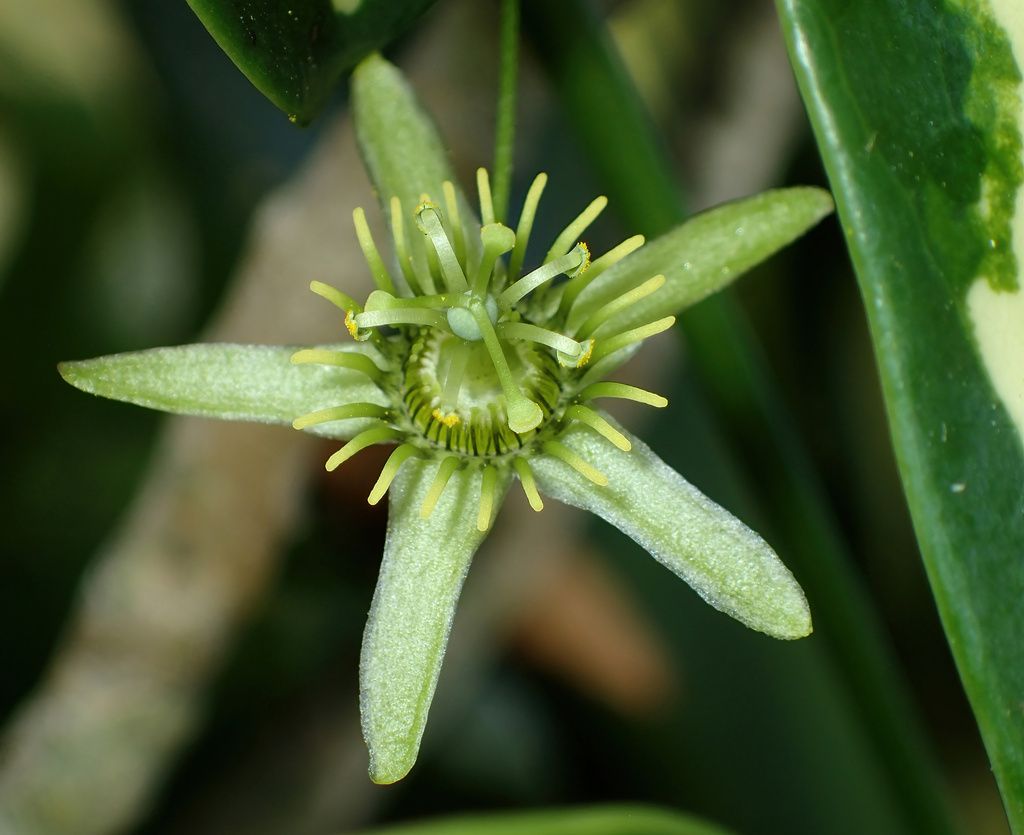
Corkystem passionvine is a wildflower in the Passifloraceae family.12 USDA PLANTS lists it as native in the lower 48 states.2 It is often found in subtropical to tropical woodlands, shrublands, pine forests, scrub and disturbed areas, in rocky, loamy to sandy, often calcareous, soil.3 Across the U.S., flowering sightings are most often in January–December.1
Identification
Corkystem passionvine is described as herbaceous, vine, with perennial.2
The Lady Bird Johnson Wildflower Center describes plants stems up to about 10 feet long.3
The Lady Bird Johnson Wildflower Center lists bloom colors as white, yellow, green and purple.3
When it blooms
In Florida, most flowering sightings come in January–December.1
The Lady Bird Johnson Wildflower Center lists January–December3. iNaturalist flowering sightings across the U.S. are most often in January–December1.
Where it grows
USDA PLANTS records it in 2 states.2 It is listed as native in the lower 48 states.2 Habitat notes from the same record include subtropical to tropical woodlands, shrublands, pine forests, scrub and disturbed areas, in rocky, loamy to sandy, often calcareous, soil.3
Related plants
Sources and review date
Facts on this page are drawn from the sources below. Numbers in the text point here. Sources used for this page were retrieved between October 17, 2026 and November 16, 2026.
- iNaturalist (taxonomy, research-grade observation counts and “Flowering” annotations, retrieved October 17, 2026).
- USDA, NRCS. PLANTS Database (profile PAPA22).
- Lady Bird Johnson Wildflower Center, Native Plant Information Network (record PAPA22, retrieved November 16, 2026).
- Photo: James Rogers via iNaturalist · CC BY 4.0 · resized.