Flower profile
Cushion buckwheat
Eriogonum ovalifolium
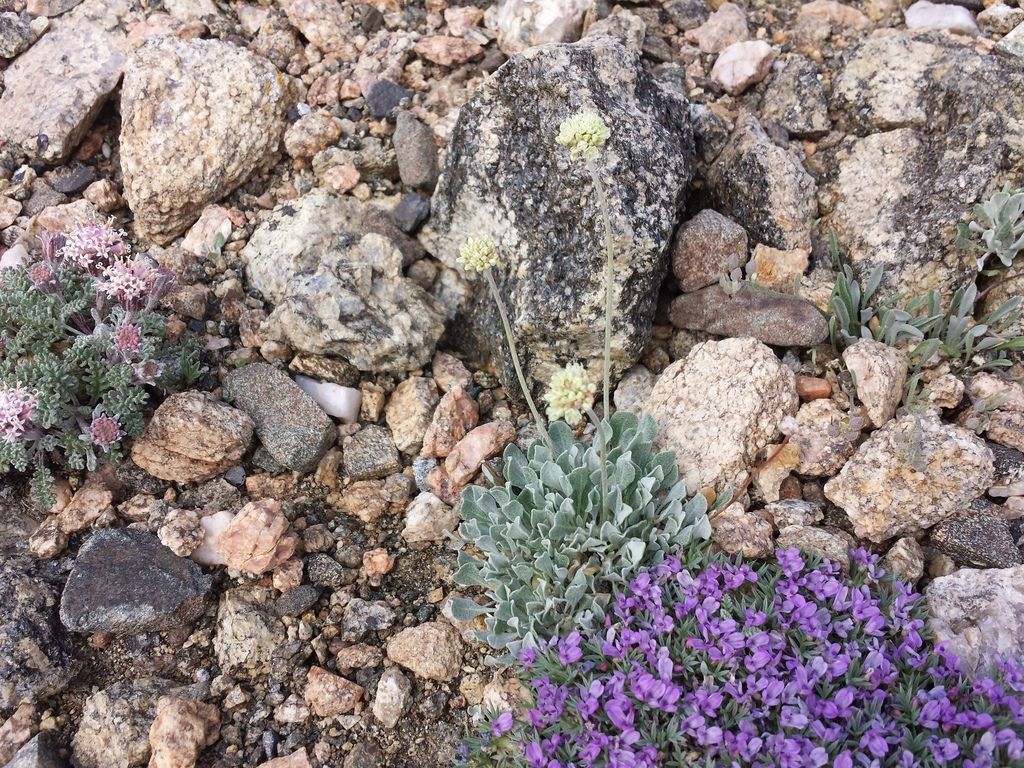
Cushion buckwheat is a herbaceous wildflower, sometimes shrubby in the Polygonaceae family.12 USDA PLANTS lists it as native in the lower 48 states.2 It is often found in in open areas from sagebrush plains to open coniferous woodlands, alpine ridges, and rocky mountain slopes.3 Across the U.S., flowering sightings are most often in May–August.1
Identification
Cushion buckwheat is described as herbaceous, subshrub, with perennial.2
The Lady Bird Johnson Wildflower Center describes plants up to about 1 foot tall.3
The Lady Bird Johnson Wildflower Center lists bloom colors as white, red, yellow and purple.3
When it blooms
The Lady Bird Johnson Wildflower Center lists May–August3. iNaturalist flowering sightings across the U.S. are most often in May–August1.
*iNaturalist research-grade observations, as of October 17, 2026.1
Where it grows
USDA PLANTS records it in 11 states.2 It is listed as native in the lower 48 states.2 The Lady Bird Johnson Wildflower Center describes the native range as “British Columbia south to northern California and east to Rocky Mountains from New Mexico to Alberta.”3 Habitat notes from the same record include in open areas from sagebrush plains to open coniferous woodlands, alpine ridges, and rocky mountain slopes.3
See the full state list
Conservation
Please leave it where it grows. Please don't pick or dig this flower: Eriogonum ovalifolium var. williamsiae is on Nevada's rare plant list (fully protected).5
It appears on official rare plant lists in Nevada (fully protected).4
Related plants
Sources and review date
Facts on this page are drawn from the sources below. Numbers in the text point here. Sources used for this page were retrieved between October 17, 2026 and November 16, 2026.
- iNaturalist (taxonomy, research-grade observation counts and “Flowering” annotations, retrieved October 17, 2026).
- USDA, NRCS. PLANTS Database (profile EROV).
- Lady Bird Johnson Wildflower Center, Native Plant Information Network (record EROV, retrieved November 16, 2026).
- Nevada fully protected plants, critically endangered (NAC 527.010).
- NAC 527.010.
- Photo: John Brew via iNaturalist · CC BY 4.0 · resized.