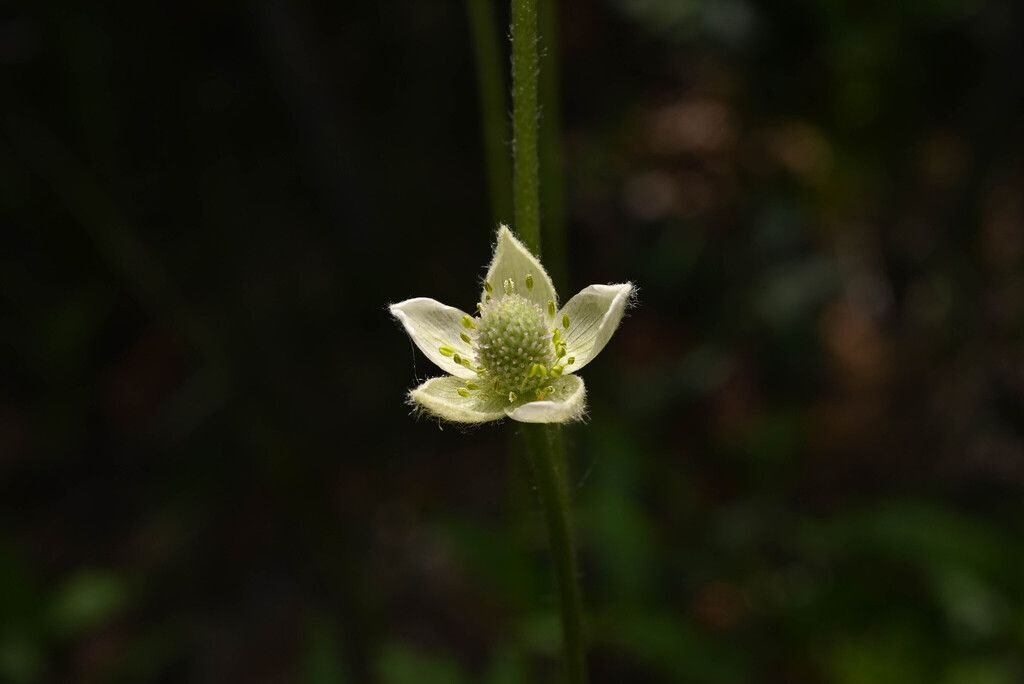
Flower profile
Cylindrical thimbleweed
Anemone cylindrica
Cylindrical thimbleweed (Anemone cylindrica) is a flowering plant in the Ranunculaceae family, native in the lower 48 states, blooming mostly June–July across the U.S.
Cylindrical thimbleweed is a wildflower that USDA PLANTS lists as native in the lower 48 states.
*iNaturalist research-grade observations, as of October 17, 2026.
On our lists for: North Dakota
Quick look
Anemone cylindrica, also known as thimbleweed, is an upright growing, clump forming herbaceous species of flowering plant in the buttercup family Ranunculaceae. Plants grow 30–100 centimetres (12–39 in) tall, flowering early summer but often found flowering until late summer, the flowers are greenish-white. It is primarily self-pollinated.
- It belongs to the Ranunculaceae family. iNaturalist
- USDA PLANTS describes it as an herb (forb) with a perennial life cycle. USDA PLANTS
- USDA PLANTS lists it as native in the lower 48 states and records it in 27 states. USDA PLANTS
- NatureServe lists it as native to North Dakota. NatureServe
- iNaturalist has 70 research-grade sightings of it in North Dakota, ranking #93 among the 116 flowers on our North Dakota list. iNaturalist
When does it bloom?
There are only a handful of North Dakota flowering records, so this chart uses records from across the U.S.
Conservation status
- Federal (U.S. ESA)
- Not listed No U.S. Endangered Species Act listing in the USFWS ECOS database. USFWS ECOS
- NatureServe global
- G5 Secure worldwide. NatureServe
- North Dakota
- No list North Dakota has no state law listing endangered or threatened plants, so we show NatureServe's North Dakota ranks instead. NatureServe: SNR, not yet ranked in North Dakota.
- Rare elsewhere
- Other states where NatureServe ranks it rare or missing: ID (S1), MO (S2), NH (SH), NJ (S1), PA (S1), RI (S1), VT (S1), WY (S2). (S1 critically imperiled, S2 imperiled, SH possibly extirpated, SX presumed extirpated.)
Checked October 17, 2026. Rankings and lists can change, so follow the links for the latest.
Can you eat it?
None of the sources we checked (NC State Extension (no page for this plant), USDA PLANTS) say whether it's edible or poisonous for people.
It isn't on the ASPCA plant list.
🌿 Never eat a wild plant unless you're certain of its ID; this isn't medical advice. Worried about a person? Call Poison Control at 1-800-222-1222. Worried about a pet? Call your vet.
Where does it grow?
USDA PLANTS records cylindrical thimbleweed in 27 states.
recorded by USDA PLANTS on our state lists not recorded
See the full list of states
Arizona, Colorado, Connecticut, Idaho, Illinois, Indiana, Iowa, Kansas, Maine, Massachusetts, Michigan, Minnesota, Missouri, Montana, Nebraska, New Hampshire, New Jersey, New Mexico, New York, North Dakota, Ohio, Pennsylvania, Rhode Island, South Dakota, Vermont, Wisconsin, Wyoming.
North Dakota counties with USDA records: Barnes, Benson, Billings, Bottineau, Burke, Burleigh, Cass, Dickey, Divide, Dunn, Eddy, Emmons, Golden Valley, Grand Forks, Grant, Griggs, Kidder, LaMoure, Logan, McIntosh, McKenzie, McLean, Mercer, Morton, Mountrail, Nelson, Oliver, Pembina, Pierce, Ransom, Renville, Richland, Sargent, Sheridan, Sioux, Slope, Stark, Stutsman, Ward, Wells, Williams.
Names, range and relatives
Native status by region (USDA PLANTS): Canada: Native; Lower 48 states: Native.
County records: USDA PLANTS lists it in 475 counties across 25 states; the most are in Minnesota (71), Michigan (54), Wisconsin (50).
Other Anemone on Bloomipedia (2): Tenpetal anemone, Tuber anemone.
More from the Ranunculaceae family (48 on Bloomipedia; most observed first): Lesser celandine, Rue anemone, Red columbine, Wood anemone, Western columbine, Marsh marigold, White baneberry, Round-lobed hepatica.
More North Dakota flowers
Sources
- USDA, NRCS. PLANTS Database, profile ANCY.
- iNaturalist, Anemone cylindrica: taxonomy, research-grade observation counts and “Flowering” annotations, retrieved October 17, 2026.
- Wikipedia, Anemone cylindrica (lead quoted under CC BY-SA 4.0).
- North Dakota: North Dakota state noxious weeds (N.D. Admin. Code 7-06-01-02), as listed by the ND Department of Agriculture.
- USFWS, ECOS species database (ESA listing check), October 17, 2026.
- NatureServe Explorer, Anemone cylindrica (global and state ranks).
- Edibility and toxicity: no source found (marked "not well documented").
- Photo: Anders Hastings via iNaturalist · CC BY 4.0 · resized.