Flower profile
Drummond's rain lily
Zephyranthes drummondii
Also called prairie lily
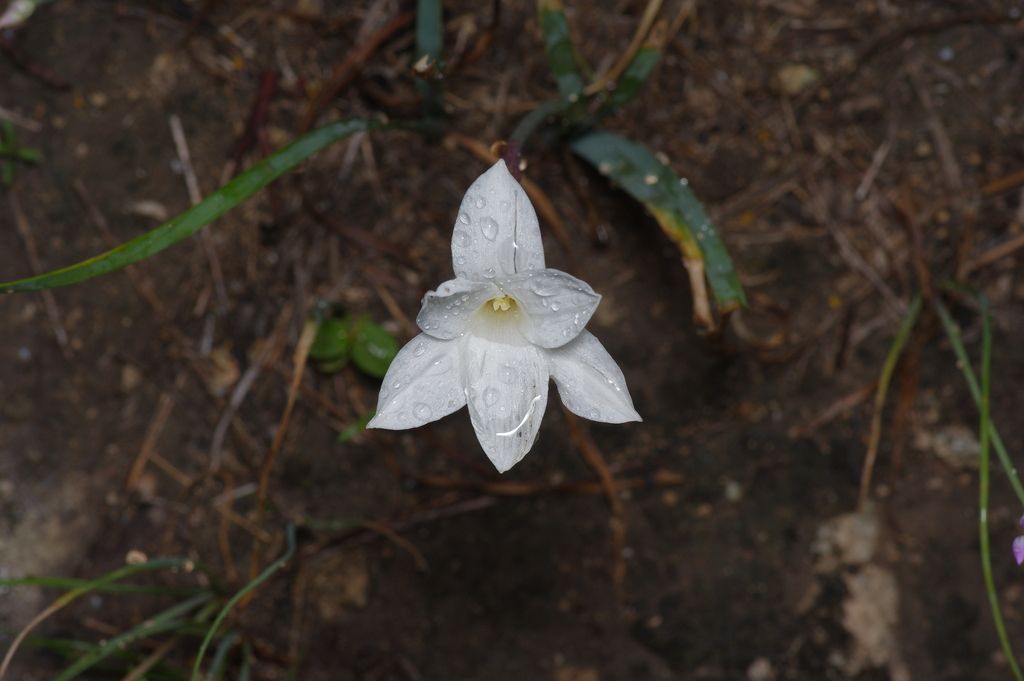
Identification
Drummond's rain lily is described as herbaceous, with perennial.2
When it blooms
In Texas, most flowering sightings come in March–May.1
iNaturalist flowering sightings across the U.S. are most often in March–May1.
Where it grows
USDA PLANTS records it in 3 states.2 It is listed as native in the lower 48 states.2
Conservation
Please leave it where it grows. Please don't pick or dig this flower: NatureServe ranks it S3 in Texas.4
NatureServe ranks it S3 in Texas.3
Edibility and toxicity
For pets: ASPCA's entry “Prairie Lily” (Zephyranthes drummondii) lists it as non-toxic to dogs and cats. Eating lots of any plant can still upset a pet's stomach5.
Never eat a wild plant unless you are certain of its identity; this is not medical advice. For a person, call Poison Control at 1-800-222-1222. For a pet, call your vet.
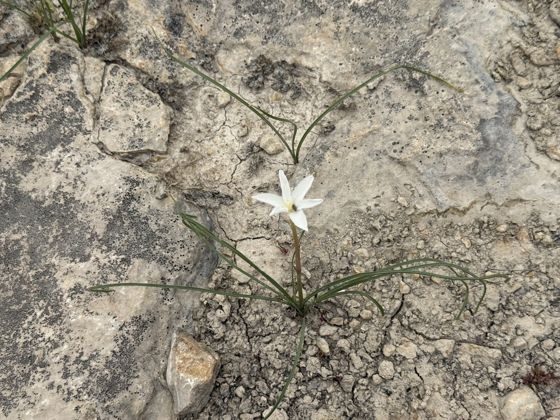
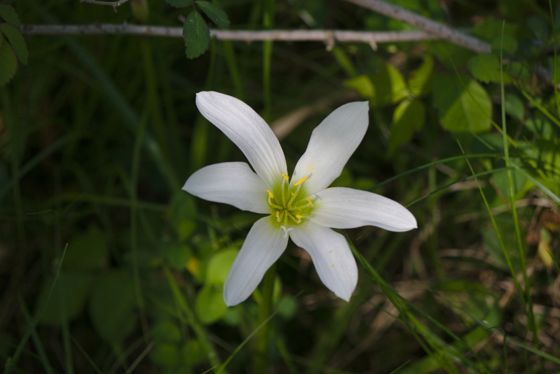
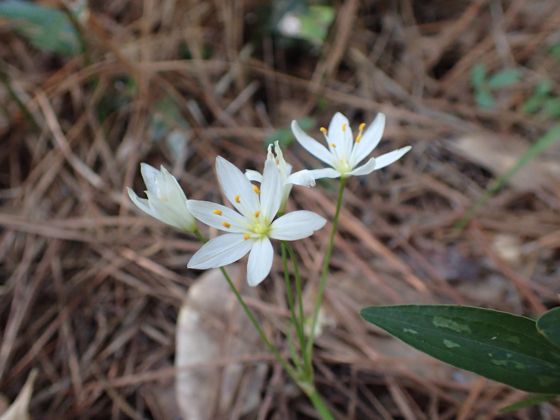
Related plants
Sources and review date
Facts on this page are drawn from the sources below. Numbers in the text point here. Sources used for this page were retrieved as of October 17, 2026.
- iNaturalist (taxonomy, research-grade observation counts and “Flowering” annotations, retrieved October 17, 2026).
- USDA, NRCS. PLANTS Database (profile COPE).
- NatureServe Explorer (global and state ranks for Zephyranthes drummondii).
- NatureServe.
- ASPCA.
- Photo: Michelle W. (鍾偉瑋) via iNaturalist · CC BY 4.0 · resized.