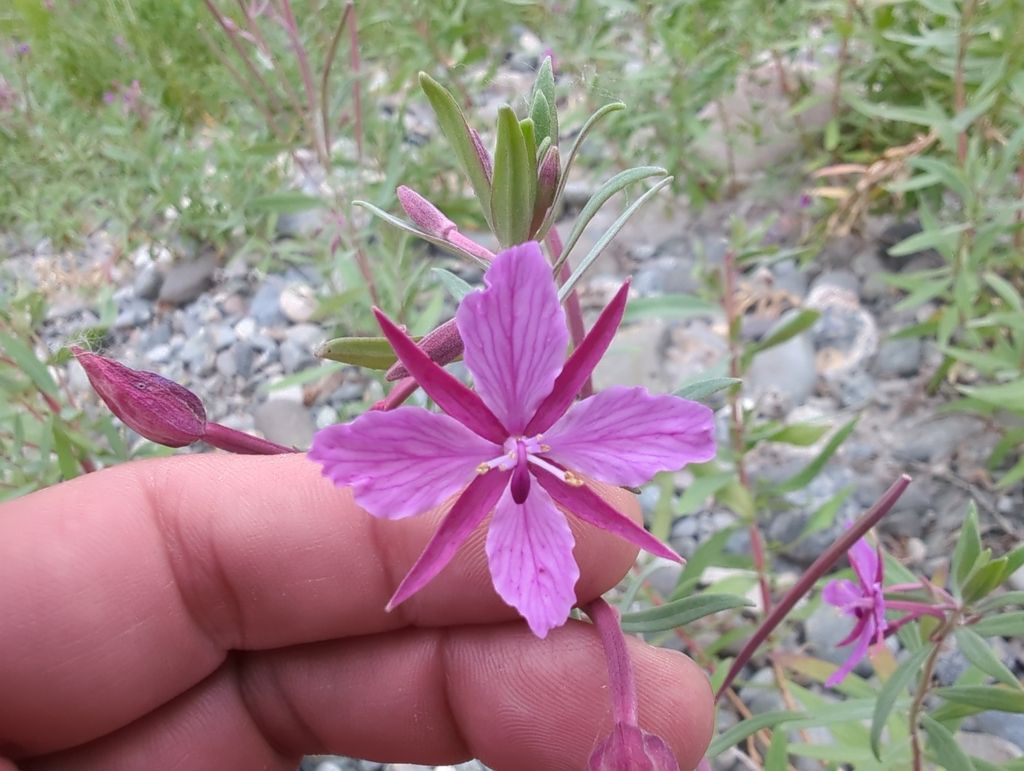
Flower profile
Dwarf fireweed
Chamaenerion latifolium
Dwarf fireweed (Chamaenerion latifolium) is a low shrub in the Onagraceae family, native in the lower 48 states, blooming mostly June–August across the U.S.
Dwarf fireweed is a wildflower that USDA PLANTS lists as native in the lower 48 states. In Alaska it's most often seen in bloom in June–August.
*iNaturalist research-grade observations, as of October 17, 2026.
On our lists for: Alaska
Quick look
Chamaenerion latifolium is a species of flowering plant in the evening primrose family known by the English common names dwarf fireweed and river beauty willowherb. It has a circumboreal distribution, appearing throughout the northern regions of the Northern Hemisphere, including alpine, sub-Arctic, and Arctic areas such as snowmelt-flooded gravel bars and talus, in a wide range of elevations.
- It belongs to the Onagraceae family. iNaturalist
- USDA PLANTS describes it as an herb (forb) / a subshrub with a perennial life cycle. USDA PLANTS
- USDA PLANTS lists it as native in the lower 48 states and records it in 11 states. USDA PLANTS
- NatureServe lists it as native to Alaska. NatureServe
- In Alaska, most iNaturalist sightings of it in flower come in June–August. iNaturalist
- iNaturalist has 3,266 research-grade sightings of it in Alaska, ranking #4 among the 121 flowers on our Alaska list. iNaturalist
When does it bloom?
In Alaska, most flowering sightings come in June–August.
Conservation status
- Federal (U.S. ESA)
- Not listed No U.S. Endangered Species Act listing in the USFWS ECOS database. USFWS ECOS
- NatureServe global
- G5 Secure worldwide. NatureServe
- Alaska
- No list Alaska has no state law listing endangered or threatened plants, so we show NatureServe's Alaska ranks instead. NatureServe: SNR, not yet ranked in Alaska.
- Rare elsewhere
- Other states where NatureServe ranks it rare or missing: NV (S2), UT (S1). (S1 critically imperiled, S2 imperiled, SH possibly extirpated, SX presumed extirpated.)
Checked October 17, 2026. Rankings and lists can change, so follow the links for the latest.
Can you eat it?
None of the sources we checked (NC State Extension (no page for this plant), USDA PLANTS) say whether it's edible or poisonous for people.
It isn't on the ASPCA plant list.
🌿 Never eat a wild plant unless you're certain of its ID; this isn't medical advice. Worried about a person? Call Poison Control at 1-800-222-1222. Worried about a pet? Call your vet.
Where does it grow?
USDA PLANTS records dwarf fireweed in 11 states.
recorded by USDA PLANTS on our state lists not recorded
See the full list of states
Alaska, California, Colorado, Idaho, Montana, Nevada, Oregon, South Dakota, Utah, Washington, Wyoming.
Alaska counties with USDA records: Aleutians East, Aleutians West, Anchorage, Bethel, Chugach, Copper River, Denali, Dillingham, Fairbanks North Star, Haines, Juneau, Kenai Peninsula, Ketchikan Gateway, Kodiak Island, Lake and Peninsula, Matanuska-Susitna, Nome, North Slope, Northwest Arctic, Sitka, Southeast Fairbanks, Yakutat, Yukon-Koyukuk.
Names, range and relatives
Native status by region (USDA PLANTS): Alaska: Native; Canada: Native; Greenland: Native; Lower 48 states: Native.
Other scientific names (synonyms in USDA PLANTS): Chamerion subdentatum, Epilobium latifolium.
County records: USDA PLANTS lists it in 65 counties across 9 states; the most are in Alaska (23), Colorado (14), Washington (10).
Other Chamaenerion on Bloomipedia (1): Fireweed.
More from the Onagraceae family (19 on Bloomipedia; most observed first): Pinkladies, California fuchsia, Common evening-primrose, Broadleaf enchanter's nightshade, Elegant clarkia, Cutleaf evening primrose, Sun cup, Fragrant evening primrose.
More Alaska flowers
Sources
- USDA, NRCS. PLANTS Database, profile CHLA13.
- iNaturalist, Chamaenerion latifolium: taxonomy, research-grade observation counts and “Flowering” annotations, retrieved October 17, 2026.
- Wikipedia, Chamaenerion latifolium (lead quoted under CC BY-SA 4.0).
- Alaska: Alaska prohibited and restricted noxious weeds (11 AAC 34.020).
- USFWS, ECOS species database (ESA listing check), October 17, 2026.
- NatureServe Explorer, Chamaenerion latifolium (global and state ranks).
- Edibility and toxicity: no source found (marked "not well documented").
- Photo: Matt Muir via iNaturalist · CC BY 4.0 · resized.