Flower profile
Graham's nipple cactus
Cochemiea grahamii
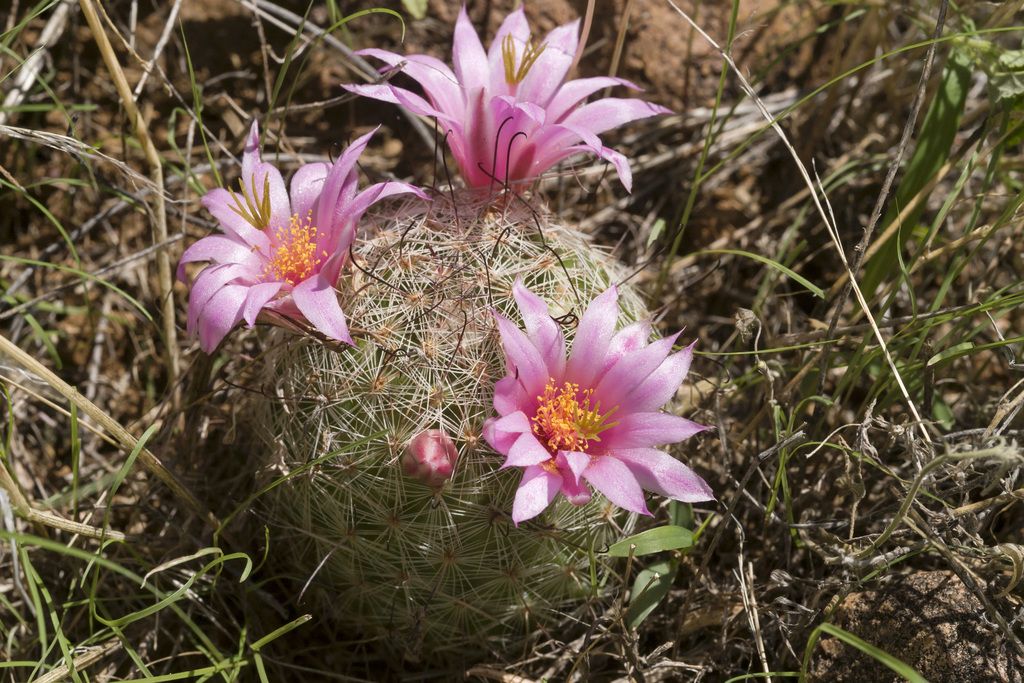
Graham's nipple cactus is a flowering plant. It's on our flower lists for 2 states, and across the U.S. it's most often seen in bloom in March–September.
*iNaturalist research-grade observations, as of October 17, 2026.
On our lists for: Arizona, New Mexico
Quick look
Cochemiea grahamii is a species of cactus also known by the names Arizona fishhook cactus and Graham's nipple cactus.
- It belongs to the Cactaceae family. iNaturalist
- In Arizona, most iNaturalist sightings of it in flower come in March–August. iNaturalist
- iNaturalist has 11,054 research-grade sightings of it in Arizona, ranking #6 among the 109 flowers on our Arizona list. iNaturalist
- iNaturalist has 786 research-grade sightings of it in New Mexico, ranking #73 among the 109 flowers on our New Mexico list. iNaturalist
Graham's nipple cactus gift ideas
Handmade graham's nipple cactus gifts from independent makers.
🌱 Sample spot. Handmade gift picks from independent shops will appear here once our shop partnership is approved. These cards are placeholders, not real products.
-
Placeholder
Graham's nipple cactus art print
-
Placeholder
Graham's nipple cactus greeting card
-
Placeholder
Graham's nipple cactus mug
-
Placeholder
Graham's nipple cactus earrings
-
Placeholder
Graham's nipple cactus embroidery pattern
-
Placeholder
Graham's nipple cactus sticker
When does it bloom?
Bloom time in each of our 2 states
| State | Type | Peak bloom | Sightings* |
|---|---|---|---|
| Arizona | – | March–August | 11,054 |
| New Mexico | – | few records | 786 |
Conservation status
- Federal (U.S. ESA)
- Not listed No U.S. Endangered Species Act listing in the USFWS ECOS database. USFWS ECOS
- NatureServe
- Unknown We couldn't find this name in NatureServe Explorer. NatureServe
- Arizona
- Not listed Not on Arizona Native Plant Law protected plants (Ariz. Admin. Code R3-3 Art. 11, App. A, eff. Feb. 2, 2025). AAC R3-3 App. A
- New Mexico
- Not listed Not on New Mexico state endangered plant species (19.21.2.9 NMAC). 19.21.2.9 NMAC
Checked October 17, 2026. Rankings and lists can change, so follow the links for the latest.
Can you eat it?
None of the sources we checked (NC State Extension (no page for this plant)) say whether it's edible or poisonous for people.
It isn't on the ASPCA plant list.
🌿 Never eat a wild plant unless you're certain of its ID; this isn't medical advice. Worried about a person? Call Poison Control at 1-800-222-1222. Worried about a pet? Call your vet.
Where does it grow?
USDA PLANTS has no state-by-state distribution for this name, so we can't map it yet.
More Arizona flowers
Sources
- USDA PLANTS: no profile matched this name.
- iNaturalist, Cochemiea grahamii: taxonomy, research-grade observation counts and “Flowering” annotations, retrieved October 17, 2026.
- Wikipedia, Cochemiea grahamii (lead quoted under CC BY-SA 4.0).
- Arizona: Arizona Native Plant Law protected plants (Ariz. Admin. Code R3-3 Art. 11, App. A, eff. Feb. 2, 2025).
- Arizona: Arizona prohibited noxious weeds (Ariz. Admin. Code R3-4-245).
- New Mexico: New Mexico state endangered plant species (19.21.2.9 NMAC).
- New Mexico: New Mexico Noxious Weed List (NM Department of Agriculture, updated June 2020).
- USFWS, ECOS species database (ESA listing check), October 17, 2026.
- Edibility and toxicity: no source found (marked "not well documented").
- Photo: Cecelia Alexander via iNaturalist · CC0 · resized.