Flower profile
Lindheimer's senna
Senna lindheimeriana
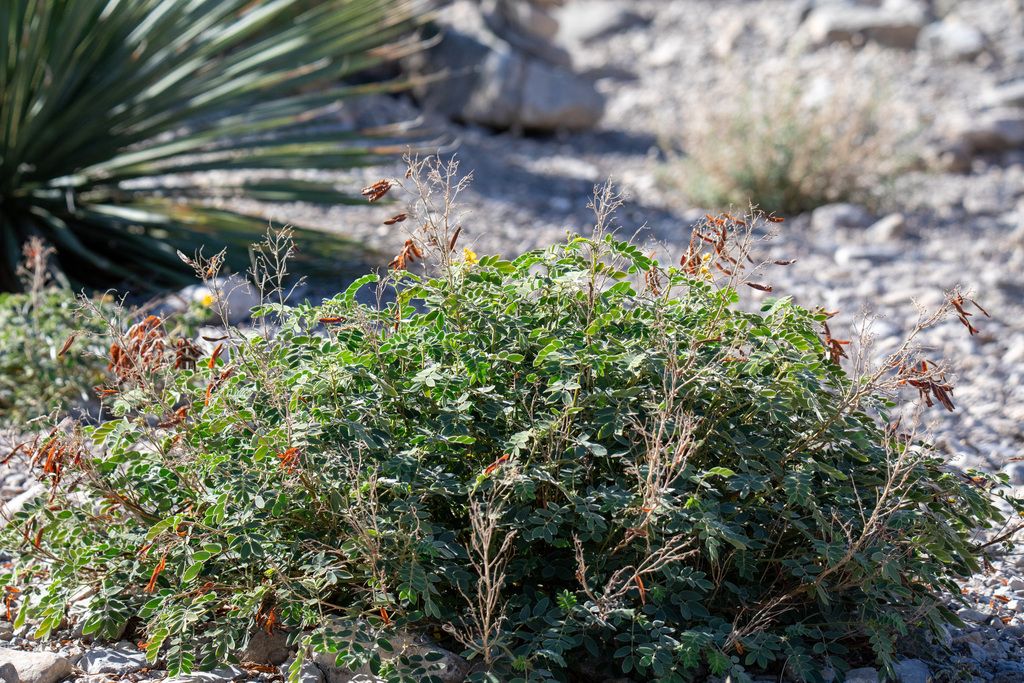
Lindheimer's senna (Senna lindheimeriana) is a low shrub in the Fabaceae family, native in the lower 48 states, blooming mostly September–November across the U.S.
Lindheimer's senna is a wildflower that USDA PLANTS lists as native in the lower 48 states. In Texas it's most often seen in bloom in September–November.
*iNaturalist research-grade observations, as of October 17, 2026.
On our lists for: Texas
Quick look
Senna lindheimeriana, the velvet leaf senna, is a species of flowering plant in the family Fabaceae. It is native to the US states of Arizona, New Mexico, and Texas, and to eastern Mexico. A perennial typically 1.5 m (5 ft) tall, it is hardy to USDA zone 8a, and is recommended for xeriscaping and for feeding birds, butterflies and bumblebees.
- It belongs to the Fabaceae family. iNaturalist
- USDA PLANTS describes it as an herb (forb) / a subshrub with a perennial life cycle. USDA PLANTS
- USDA PLANTS lists it as native in the lower 48 states and records it in 3 states. USDA PLANTS
- NatureServe lists it as native to Texas. NatureServe
- In Texas, most iNaturalist sightings of it in flower come in September–November. iNaturalist
- iNaturalist has 8,258 research-grade sightings of it in Texas, ranking #72 among the 169 flowers on our Texas list. iNaturalist
When does it bloom?
In Texas, most flowering sightings come in September–November.
Conservation status
- Federal (U.S. ESA)
- Not listed No U.S. Endangered Species Act listing in the USFWS ECOS database. USFWS ECOS
- NatureServe global
- G4 Apparently secure worldwide. NatureServe
- Texas
- Not listed Not on Texas endangered and threatened plants (31 Tex. Admin. Code § 69.8), as listed by Texas Parks and Wildlife. NatureServe: SNR, not yet ranked in Texas. 31 TAC 69.8
- Rare elsewhere
- No other U.S. state ranks it S1, S2, SH or SX.
Checked October 17, 2026. Rankings and lists can change, so follow the links for the latest.
Can you eat it?
None of the sources we checked (NC State Extension (no page for this plant), USDA PLANTS) say whether it's edible or poisonous for people.
It isn't on the ASPCA plant list.
🌿 Never eat a wild plant unless you're certain of its ID; this isn't medical advice. Worried about a person? Call Poison Control at 1-800-222-1222. Worried about a pet? Call your vet.
Where does it grow?
USDA PLANTS records lindheimer's senna in 3 states.
recorded by USDA PLANTS on our state lists not recorded
See the full list of states
Arizona, New Mexico, Texas.
Texas counties with USDA records: Bandera, Bexar, Brewster, Burnet, Cameron, Comal, Culberson, Dimmit, El Paso, Gillespie, Hays, Hudspeth, Jeff Davis, Kinney, Llano, Mason, Presidio, Real, Terrell, Travis, Uvalde, Val Verde.
Names, range and relatives
Other scientific names (synonyms in USDA PLANTS): Cassia lindheimeriana.
County records: USDA PLANTS lists it in 31 counties across 3 states; the most are in Texas (22), New Mexico (8), Arizona (1).
Other Senna on Bloomipedia (3): Two-leaved senna, Coues' senna, American sicklepod.
More from the Fabaceae family (114 on Bloomipedia; most observed first): Lupines, White clover, Red clover, Eastern redbud, Purple crownvetch, Bird's-foot trefoil, Partridge pea, White sweetclover.
More Texas flowers
Sources
- USDA, NRCS. PLANTS Database, profile SELI4.
- iNaturalist, Senna lindheimeriana: taxonomy, research-grade observation counts and “Flowering” annotations, retrieved October 17, 2026.
- Wikipedia, Senna lindheimeriana (lead quoted under CC BY-SA 4.0).
- Texas: Texas endangered and threatened plants (31 Tex. Admin. Code § 69.8), as listed by Texas Parks and Wildlife.
- Texas: Texas noxious and invasive plant list (4 Tex. Admin. Code § 19.300(a)).
- USFWS, ECOS species database (ESA listing check), October 17, 2026.
- NatureServe Explorer, Senna lindheimeriana (global and state ranks).
- Edibility and toxicity: no source found (marked "not well documented").
- Photo: Kevin Floyd via iNaturalist · CC BY 4.0 · resized.