Flower profile
Linearleaf phacelia
Phacelia linearis
Also called threadleaf phacelia
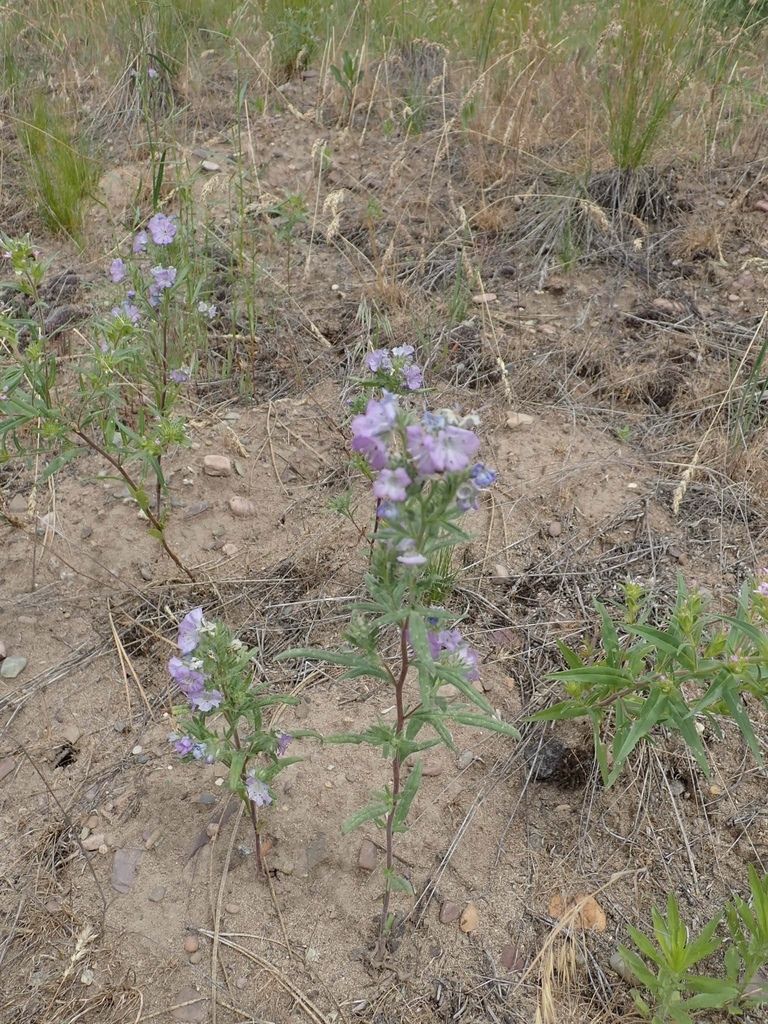
Identification
Linearleaf phacelia is described as herbaceous, with annual.2
The Lady Bird Johnson Wildflower Center describes plants up to about 2 feet tall.3
The Lady Bird Johnson Wildflower Center lists bloom colors as white and purple.3
When it blooms
The Lady Bird Johnson Wildflower Center lists April–June3. iNaturalist flowering sightings across the U.S. are most often in April–June1.
Where it grows
USDA PLANTS records it in 11 states.2 It is listed as native in the lower 48 states.2 The Lady Bird Johnson Wildflower Center describes the native range as “Southern British Columbia to northern California; east across much of Utah and Idaho to western Wyoming.”3 Habitat notes from the same record include among brush and in open grassy areas in foothills and on plains.3
See the full state list
Edibility and toxicity
The Lady Bird Johnson Wildflower Center warns: “Some Phacelia species produce a skin irritation in sensitive people, similar to that of poison oak or poison ivy.”3
Never eat a wild plant unless you are certain of its identity; this is not medical advice. For a person, call Poison Control at 1-800-222-1222. For a pet, call your vet.
Related plants
Sources and review date
Facts on this page are drawn from the sources below. Numbers in the text point here. Sources used for this page were retrieved between October 17, 2026 and November 16, 2026.
- iNaturalist (taxonomy, research-grade observation counts and “Flowering” annotations, retrieved October 17, 2026).
- USDA, NRCS. PLANTS Database (profile PHLI).
- Lady Bird Johnson Wildflower Center, Native Plant Information Network (record PHLI, retrieved November 16, 2026).
- Photo: John Brew via iNaturalist · CC BY 4.0 · resized.