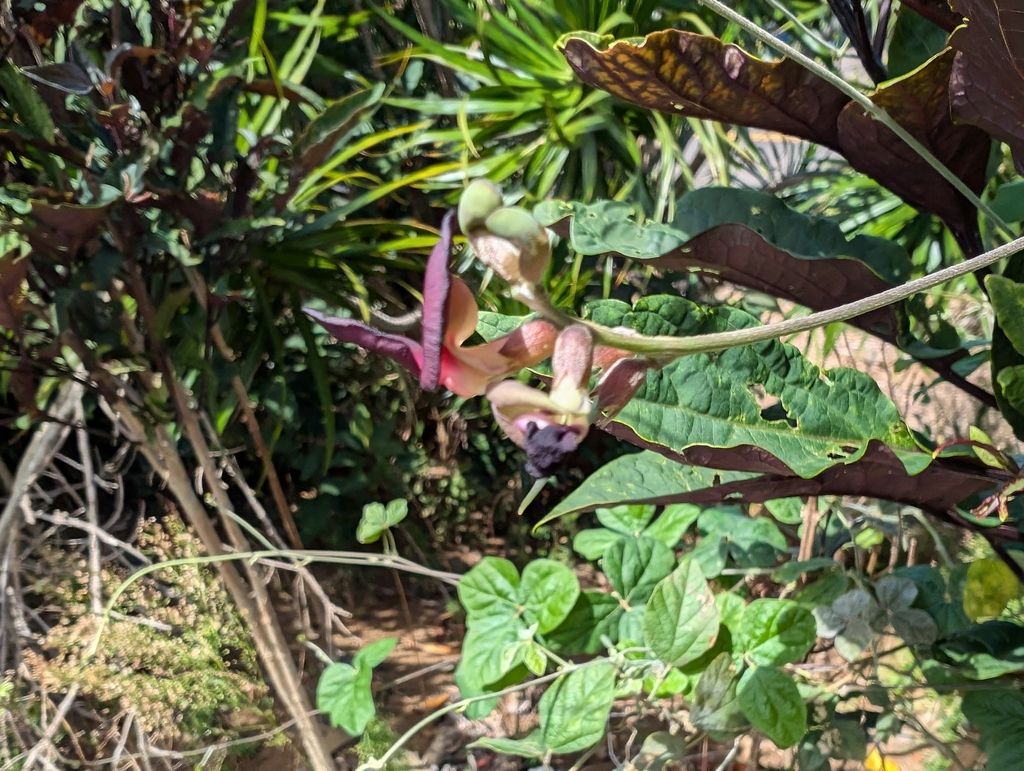
Flower profile
Purple bush-bean
Macroptilium atropurpureum
Purple bush-bean is a wildflower that USDA PLANTS lists as native in the lower 48 states. In Hawaii it's most often seen in bloom in January–December.
*iNaturalist research-grade observations, as of October 17, 2026.
On our lists for: Hawaii
Quick look
Macroptilium atropurpureum, commonly referred to as purple bush-bean, or siratro is a perennial legume recognized by its climbing, dense, green vines and deep purple flowers. The plant is indigenous to the tropical and subtropical regions of North, Central, and South America, as far north as Texas in the US and as far south as Peru and Brazil.
- It belongs to the Fabaceae family. iNaturalist
- USDA PLANTS describes it as an herb (forb) / a vine with a perennial life cycle. USDA PLANTS
- USDA PLANTS lists it as native in the lower 48 states and records it in 4 states. USDA PLANTS
- NatureServe lists it as not native to Hawaii. NatureServe
- In Hawaii, most iNaturalist sightings of it in flower come in January–December. iNaturalist
- USDA PLANTS lists its flower color as purple. USDA PLANTS
- USDA PLANTS gives its bloom period as indeterminate. USDA PLANTS
- USDA PLANTS lists a mature height of about 4 ft. USDA PLANTS
- iNaturalist has 497 research-grade sightings of it in Hawaii, ranking #100 among the 105 flowers on our Hawaii list. iNaturalist
Purple bush-bean gift ideas
Handmade purple bush-bean gifts from independent makers.
🌱 Sample spot. Handmade gift picks from independent shops will appear here once our shop partnership is approved. These cards are placeholders, not real products.
-
Placeholder
Purple bush-bean art print
-
Placeholder
Purple bush-bean greeting card
-
Placeholder
Purple bush-bean mug
-
Placeholder
Purple bush-bean earrings
-
Placeholder
Purple bush-bean embroidery pattern
-
Placeholder
Purple bush-bean sticker
When does it bloom?
In Hawaii, most flowering sightings come in January–December.
Conservation status
- Federal (U.S. ESA)
- Not listed No U.S. Endangered Species Act listing in the USFWS ECOS database. USFWS ECOS
- NatureServe global
- G5 Secure worldwide. NatureServe
- Hawaii
- Not listed Not on Hawaii threatened and endangered plants (HAR 13-107; the state list follows the federal list), DLNR Division of Forestry and Wildlife. NatureServe: SNA, not applicable (usually because it isn't native there) in Hawaii. HAR 13-107
- Rare elsewhere
- No other U.S. state ranks it S1, S2, SH or SX.
Checked October 17, 2026. Rankings and lists can change, so follow the links for the latest.
Can you eat it?
None of the sources we checked (NC State Extension (no page for this plant), USDA PLANTS) say whether it's edible or poisonous for people.
It isn't on the ASPCA plant list.
🌿 Never eat a wild plant unless you're certain of its ID; this isn't medical advice. Worried about a person? Call Poison Control at 1-800-222-1222. Worried about a pet? Call your vet.
Where does it grow?
USDA PLANTS records purple bush-bean in 4 states.
recorded by USDA PLANTS on our state lists not recorded
See the full list of states
Arizona, Florida, Hawaii, Texas.
Hawaii counties with USDA records: Hawaii, Honolulu, Maui.
More Hawaii flowers
Sources
- USDA, NRCS. PLANTS Database, profile MAAT80.
- iNaturalist, Macroptilium atropurpureum: taxonomy, research-grade observation counts and “Flowering” annotations, retrieved October 17, 2026.
- Wikipedia, Macroptilium atropurpureum (lead quoted under CC BY-SA 4.0).
- Hawaii: Hawaii threatened and endangered plants (HAR 13-107; the state list follows the federal list), DLNR Division of Forestry and Wildlife.
- Hawaii: Hawaii noxious weed list (HAR 4-68).
- USFWS, ECOS species database (ESA listing check), October 17, 2026.
- NatureServe Explorer, Macroptilium atropurpureum (global and state ranks).
- Edibility and toxicity: no source found (marked "not well documented").
- Photo: Shaun Case via iNaturalist · CC BY 4.0 · resized.