Official state flower
Sego lily
Calochortus nuttallii
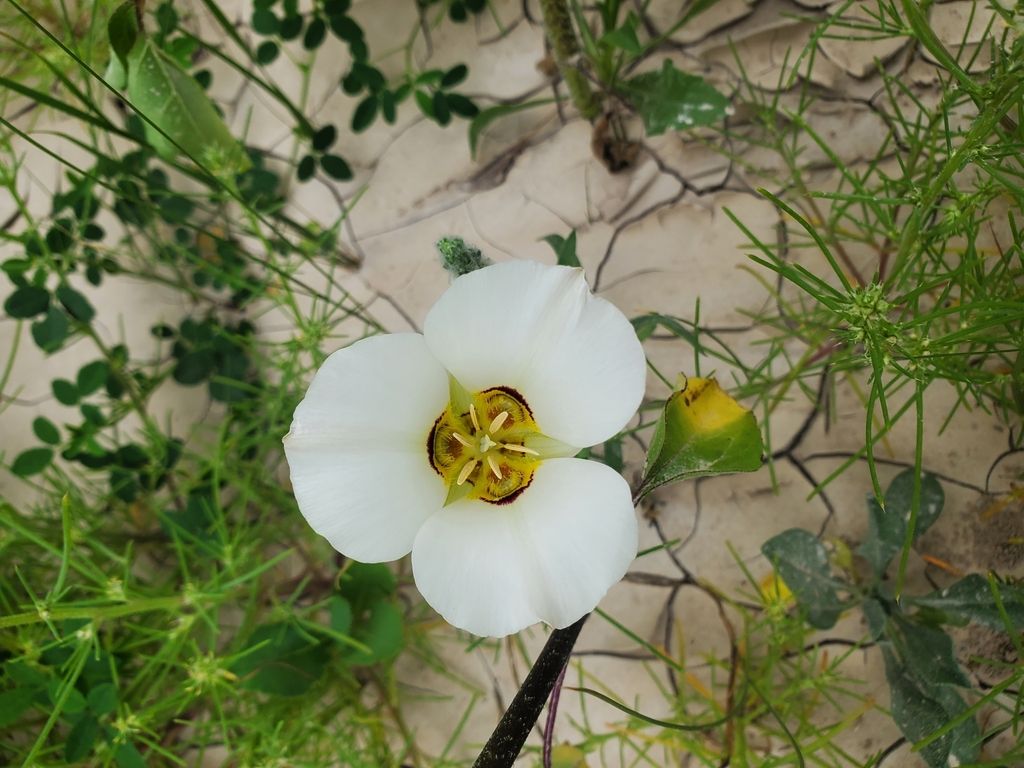
Identification
Sego lily is described as herbaceous, with perennial.3
The Lady Bird Johnson Wildflower Center describes plants up to about 20 inches tall.4
The Lady Bird Johnson Wildflower Center lists bloom colors as white, pink, yellow and purple.4
When it blooms
The Lady Bird Johnson Wildflower Center lists May–August4. iNaturalist flowering sightings across the U.S. are most often in May–July2.
| State | Type | Peak bloom | Obs.* |
|---|---|---|---|
| Utah ★ | Native | May–July | 2,312 |
| North Dakota | Native | June | 199 |
| South Dakota | Native | June | 255 |
| Wyoming | Native | June–July | 563 |
*iNaturalist research-grade observations, as of October 17, 2026.2
Where it grows
USDA PLANTS records it in 11 states.3 That includes Utah, where it has been the official state flower since 1911.1 The Lady Bird Johnson Wildflower Center describes the native range as “NM to the Dakotas, w. to ID & CA.”4 Habitat notes from the same record include dry, brushy or grassy slopes and desert high country.4
★ Official state flower of Utah (1911)
See the full state list
Look-alikes
The USDA Plant Guide warns that toxic death camas (Zigadenus species) can be confused with sego lily when the plants are not in flower. Be sure of the identification of sego lily bulbs before eating them.5
Growing and habitat
The Lady Bird Johnson record rates its needs as light: sun; soil moisture: dry; soil described as “Dry, well-drained soils”.4
Growing note from that record: “All Calochortus spp. are extremely difficult in cultivation. Flowering bulbs must be raised from seed for any success and bulbs must be kept completely dry from mid-summer to late fall. Bulbs will need protection from gophers and moles.”4
Wildflower Center ratings are general guidance for the species, not a guarantee for your garden.
Edibility and toxicity
For pets: ASPCA's entry “Calochortus nuttalli” (Calochortus spp), which covers the whole genus, lists it as non-toxic to dogs, cats and horses. Eating lots of any plant can still upset a pet's stomach6.
A USDA Plant Guide notes that people have eaten sego lily bulbs, but it cautions that toxic death camas can look similar when not in flower. Do not eat a wild bulb unless you are certain of the identification.5
Never eat a wild plant unless you are certain of its identity; this is not medical advice. For a person, call Poison Control at 1-800-222-1222. For a pet, call your vet.
State symbol
Sego lily has been the official state flower of Utah since 1911.1 Visit the Utah guide
Utah's pioneers ate sego lily bulbs when food ran short, which is part of why it was chosen.1
More Utah flowers
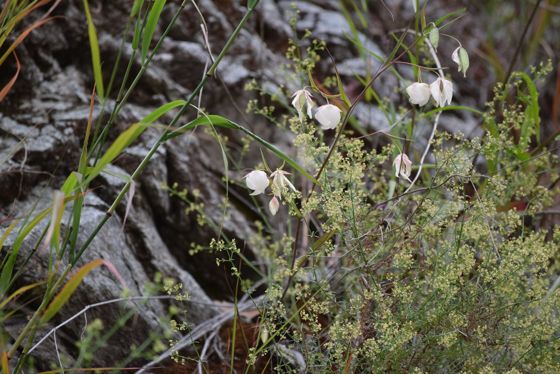
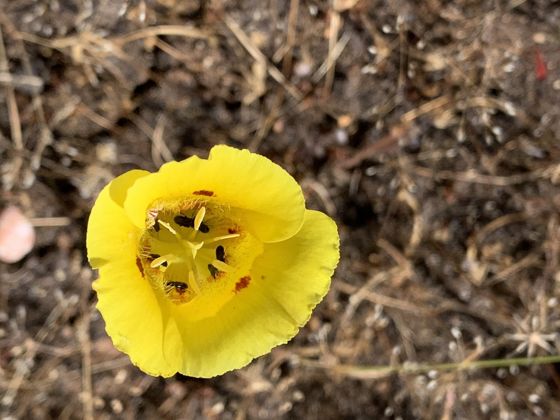
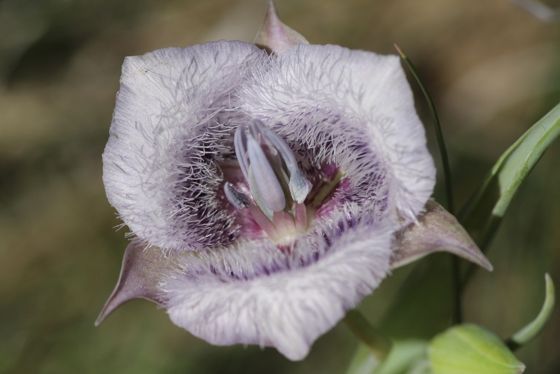
Sego lily prints and gifts on Etsy
Affiliate links: Bloomipedia may earn a small commission if you buy through these Etsy links, at no extra cost to you. How this works.
Botanical prints and flower-themed gifts from Etsy sellers. These buttons open Etsy search results, so what you see there changes over time.
Sources and review date
Facts on this page are drawn from the sources below. Numbers in the text point here. Sources used for this page were retrieved between October 17, 2026 and November 16, 2026.
- Utah Code § 63G-1-601(15) (Utah official state flower).
- iNaturalist (taxonomy, research-grade observation counts and “Flowering” annotations, retrieved October 17, 2026).
- USDA, NRCS. PLANTS Database (profile CANU3).
- Lady Bird Johnson Wildflower Center, Native Plant Information Network (record CANU3, retrieved November 16, 2026).
- USDA NRCS Plant Guide, Calochortus nuttallii.
- ASPCA.
- Photo: Rory O'Shea via iNaturalist · CC BY 4.0 · resized.