Flower profile
Threadleaf groundsel
Senecio flaccidus
Also called threadleaf ragwort
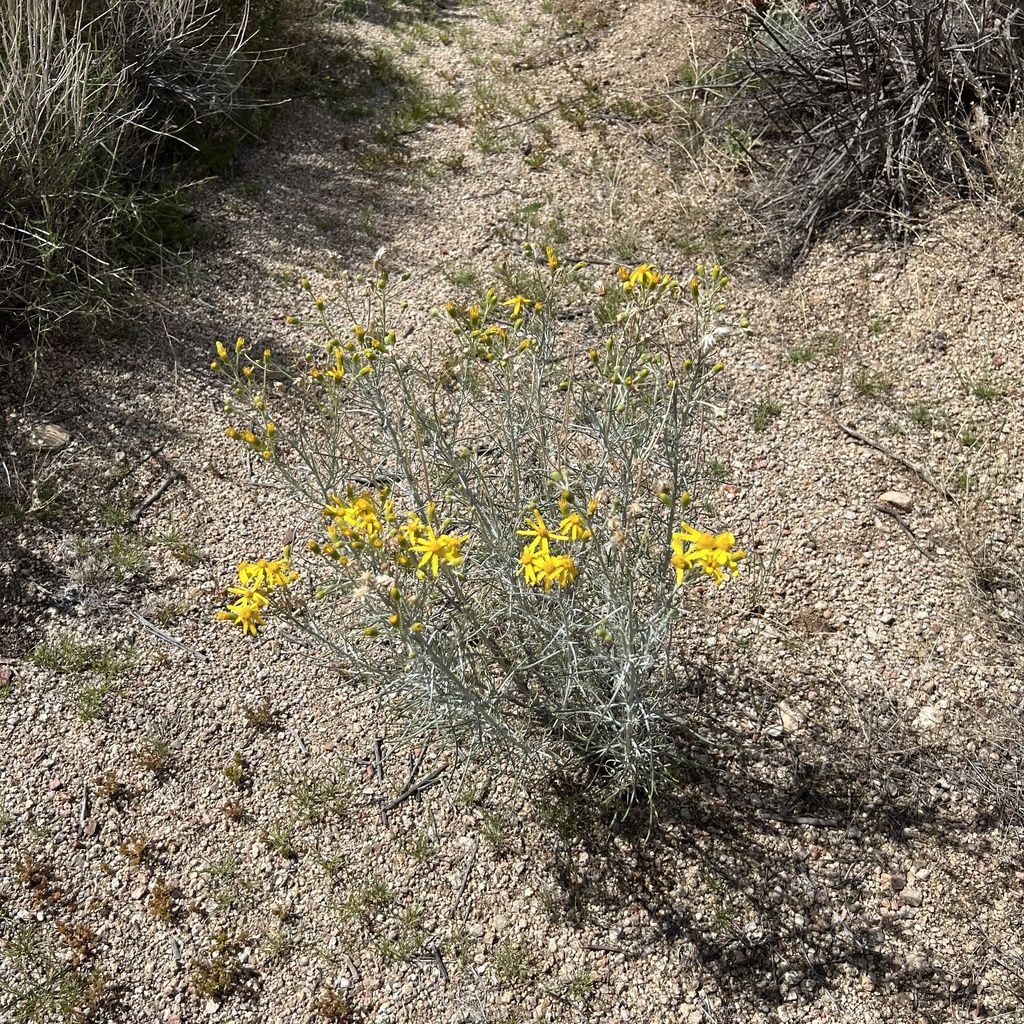
Threadleaf groundsel is a herbaceous wildflower, sometimes shrubby in the Asteraceae family.12 USDA PLANTS lists it as native in the lower 48 states.2 It is often found in dry rocky plains, deserts, and pinyon-juniper rangeland.3 Across the U.S., flowering sightings are most often in April–October.1
Identification
Threadleaf groundsel is described as herbaceous, subshrub, with perennial.2
The Lady Bird Johnson Wildflower Center describes plants up to about 4 feet tall.3
The Lady Bird Johnson Wildflower Center lists bloom colors as yellow.3
When it blooms
In New Mexico, most flowering sightings come in April–September.1
The Lady Bird Johnson Wildflower Center lists April–September3. iNaturalist flowering sightings across the U.S. are most often in April–October1.
Where it grows
USDA PLANTS records it in 9 states.2 It is listed as native in the lower 48 states.2 The Lady Bird Johnson Wildflower Center describes the native range as “S. Colorado and Utah to Arizona, Texas, and Mexico.”3 Habitat notes from the same record include dry rocky plains, deserts, and pinyon-juniper rangeland.3
See the full state list
Edibility and toxicity
For pets: ASPCA's entry “Golden Ragwort” (Senecio species), which covers the whole genus, lists it as toxic to dogs, cats and horses. Signs include: Horses: liver disease (must be ingested in large amount or over a long time…4.
Never eat a wild plant unless you are certain of its identity; this is not medical advice. For a person, call Poison Control at 1-800-222-1222. For a pet, call your vet.
Related plants
Sources and review date
Facts on this page are drawn from the sources below. Numbers in the text point here. Sources used for this page were retrieved between October 17, 2026 and November 16, 2026.
- iNaturalist (taxonomy, research-grade observation counts and “Flowering” annotations, retrieved October 17, 2026).
- USDA, NRCS. PLANTS Database (profile SEFL3).
- Lady Bird Johnson Wildflower Center, Native Plant Information Network (record SEFL3, retrieved November 16, 2026).
- ASPCA.
- Photo: Michael Pirrello via iNaturalist · CC BY 4.0 · resized.