Flowering shrub
Twisted-leaf yucca
Yucca rupicola
Also called Texas yucca
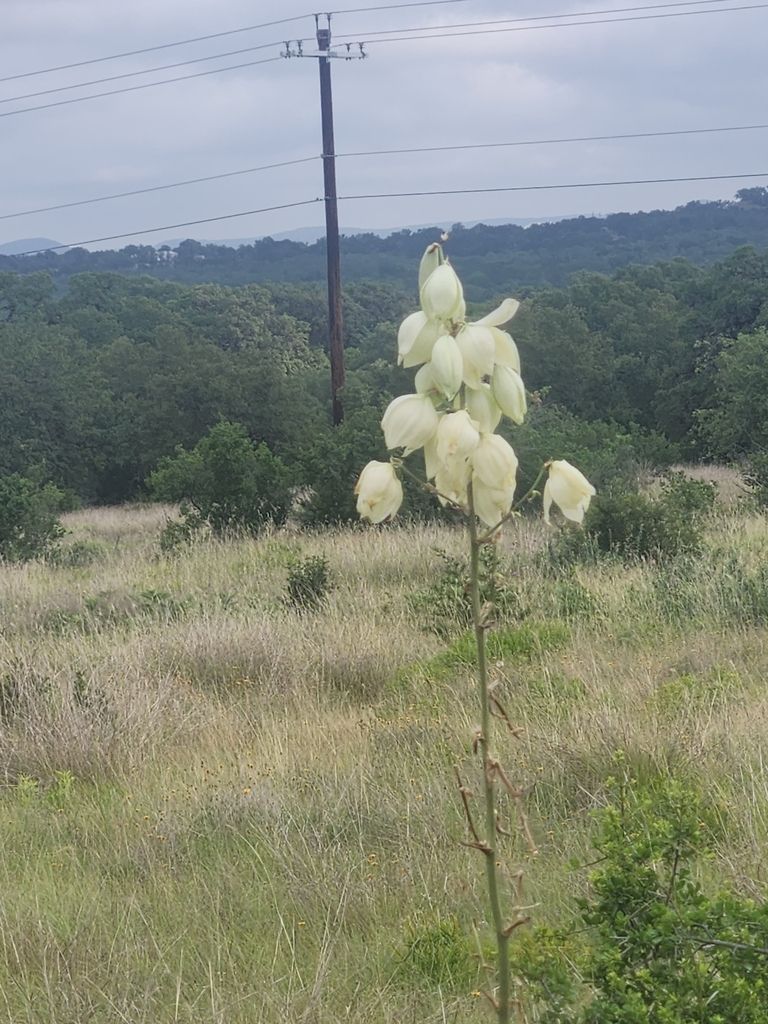
Twisted-leaf yucca is a herbaceous wildflower, sometimes shrubby in the Asparagaceae family.12 USDA PLANTS lists it as native in the lower 48 states.2 It is often found in dry, rocky, open areas and limestone ledges. mic. on limestone ledges and grass-covered plains of dense brush and open woodlands on the edwards plateau. ende.3 Across the U.S., flowering sightings are most often in April–May.1
Identification
Twisted-leaf yucca is described as herbaceous, shrub, subshrub, with perennial.2
The Lady Bird Johnson Wildflower Center describes plants up to about 2 feet tall not in bloom. Up to about 6 feet tall in bloom.3
The Lady Bird Johnson Wildflower Center lists bloom colors as white and green.3
The Wildflower Center describes the leaves as dark-green.3
When it blooms
In Texas, most flowering sightings come in April–May.1
The Lady Bird Johnson Wildflower Center lists April–June3. iNaturalist flowering sightings across the U.S. are most often in April–May1.
Where it grows
USDA PLANTS records it in 1 state.2 It is listed as native in the lower 48 states.2 The Lady Bird Johnson Wildflower Center describes the native range as “Endemic to the Edwards Plateau, TX.”3 Habitat notes from the same record include dry, rocky, open areas and limestone ledges. mic. on limestone ledges and grass-covered plains of dense brush and open woodlands on the edwards plateau. ende.3
See the full state list
In the garden
The Lady Bird Johnson record rates its needs as light: sun and part shade; soil moisture: dry; soil described as “Rocky, limestone soils. Caliche type, Sandy, Sandy Loam, Medium Loam, Clay Loam, Clay”.3
Growing note from that record: “Twist-leaf yucca is great to plant in dry, shady spots and shaded rock gardens. The white bell-shaped blossoms atop solitary flower spikes attract night-pollinating moths. The foliage is deer resistant, but they like to eat the blossoms.”3
The same record notes that it attracts butterflies.3
Wildflower Center ratings are general guidance for the species, not a guarantee for your garden.
Edibility and toxicity
For pets: ASPCA's entry “Yucca” (Yucca spp), which covers the whole genus, lists it as toxic to dogs, cats and horses. Signs include: Dogs, cats: Vomiting; Horses: liver disease…4.
Never eat a wild plant unless you are certain of its identity; this is not medical advice. For a person, call Poison Control at 1-800-222-1222. For a pet, call your vet.
Related plants
Sources and review date
Facts on this page are drawn from the sources below. Numbers in the text point here. Sources used for this page were retrieved between October 17, 2026 and November 16, 2026.
- iNaturalist (taxonomy, research-grade observation counts and “Flowering” annotations, retrieved October 17, 2026).
- USDA, NRCS. PLANTS Database (profile YURU).
- Lady Bird Johnson Wildflower Center, Native Plant Information Network (record YURU, retrieved November 16, 2026).
- ASPCA.
- Photo: Rachel via iNaturalist · CC BY 4.0 · resized.