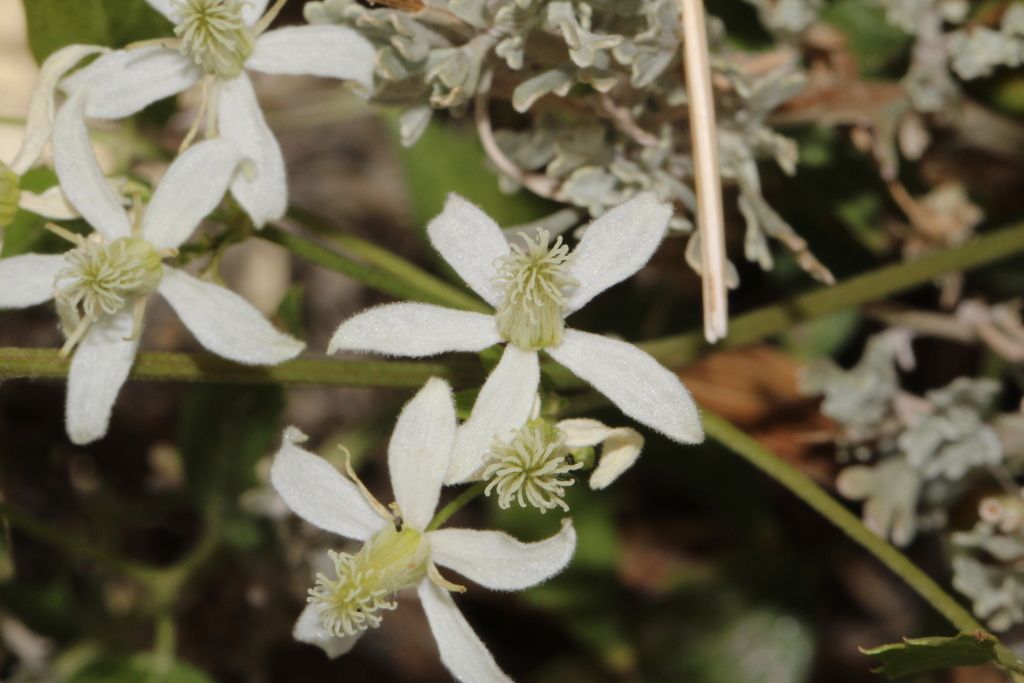
Flower profile
Western white clematis
Clematis ligusticifolia
Western white clematis (Clematis ligusticifolia) is a vine in the Ranunculaceae family, native in the lower 48 states, blooming mostly June–September across the U.S.
Western white clematis is a flowering plant that USDA PLANTS lists as native in the lower 48 states.
*iNaturalist research-grade observations, as of October 17, 2026.
On our lists for: Idaho
Quick look
Clematis ligusticifolia is a climbing, spreading vine with showy flowers. It is also known as old-man's beard, yerba de chiva, and virgin's bower,. It is native to North America where it is widespread across the western United States in streamside thickets, wooded hillsides, and coniferous forests up to 8,500 feet (2,600 m).
- It belongs to the Ranunculaceae family. iNaturalist
- USDA PLANTS describes it as a vine with a perennial life cycle. USDA PLANTS
- USDA PLANTS lists it as native in the lower 48 states and records it in 17 states. USDA PLANTS
- NatureServe lists it as native to Idaho. NatureServe
- USDA PLANTS lists its flower color as white. USDA PLANTS
- USDA PLANTS gives its bloom period as mid summer. USDA PLANTS
- USDA PLANTS lists a mature height of about 1 ft. USDA PLANTS
- iNaturalist has 431 research-grade sightings of it in Idaho, ranking #93 among the 143 flowers on our Idaho list. iNaturalist
When does it bloom?
There are only a handful of Idaho flowering records, so this chart uses records from across the U.S.
Conservation status
- Federal (U.S. ESA)
- Not listed No U.S. Endangered Species Act listing in the USFWS ECOS database. USFWS ECOS
- NatureServe global
- G5 Secure worldwide. NatureServe
- Idaho
- No list Idaho has no state law listing endangered or threatened plants, so we show NatureServe's Idaho ranks instead. NatureServe: SNR, not yet ranked in Idaho.
- Rare elsewhere
- Other states where NatureServe ranks it rare or missing: KS (S1). (S1 critically imperiled, S2 imperiled, SH possibly extirpated, SX presumed extirpated.)
Checked October 17, 2026. Rankings and lists can change, so follow the links for the latest.
Can you eat it?
None of the sources we checked (NC State Extension (no page for this plant), USDA PLANTS) say whether it's edible or poisonous for people.
ASPCA's entry “Leatherflower” (Clematis sp), which covers the whole genus, lists it as toxic to dogs, cats and horses. Signs include: Salivation, vomiting… ASPCA
🌿 Never eat a wild plant unless you're certain of its ID; this isn't medical advice. Worried about a person? Call Poison Control at 1-800-222-1222. Worried about a pet? Call your vet.
Where does it grow?
USDA PLANTS records Western white clematis in 17 states.
recorded by USDA PLANTS on our state lists not recorded
See the full list of states
Arizona, California, Colorado, Idaho, Kansas, Montana, Nebraska, Nevada, New Mexico, North Dakota, Oklahoma, Oregon, Pennsylvania, South Dakota, Utah, Washington, Wyoming.
Idaho counties with USDA records: Ada, Adams, Bannock, Bear Lake, Blaine, Boise, Bonner, Bonneville, Boundary, Canyon, Cassia, Clearwater, Elmore, Gem, Gooding, Idaho, Jefferson, Kootenai, Lincoln, Nez Perce, Owyhee, Payette, Twin Falls, Valley, Washington.
Growing conditions
USDA PLANTS gives Western white clematis a medium shade tolerance, medium drought tolerance and medium moisture use. It is rated for soil pH 5.6 to 8.4 and winter lows down to -23 °F.
- Shade tolerance
- Medium
- Drought tolerance
- Medium
- Moisture use
- Medium
- Soil textures it is adapted to
- coarse, medium
- Soil pH range
- 5.6 to 8.4
- Minimum temperature tolerated
- -23 °F
- Frost-free days needed (minimum)
- 120
- Annual precipitation range
- 12 to 20 inches
- Minimum root depth
- 16 inches
- Salinity tolerance
- Low
- Fertility requirement
- Medium
- Growth rate
- Moderate
- Lifespan
- Long
- Active growth period
- Spring and Summer
- Fruit or seed
- White · Summer to Fall
- Can be propagated by
- bare root, container, cuttings, seed
- Commercial availability
- Routinely Available
From the USDA PLANTS characteristics data for CLLI2. USDA ratings are general guidance for the species, not a guarantee for your garden.
Names, range and relatives
Native status by region (USDA PLANTS): Canada: Native; Lower 48 states: Native.
County records: USDA PLANTS lists it in 284 counties across 15 states; the most are in California (39), Montana (31), Colorado (30).
Other Clematis on Bloomipedia (6): Virgin's bower, Autumn clematis, Old man's beard clematis, Hairy clematis, Swamp leatherflower, Purple clematis.
More from the Ranunculaceae family (48 on Bloomipedia; most observed first): Lesser celandine, Rue anemone, Red columbine, Wood anemone, Western columbine, Marsh marigold, White baneberry, Round-lobed hepatica.
More Idaho flowers
Sources
- USDA, NRCS. PLANTS Database, profile CLLI2.
- iNaturalist, Clematis ligusticifolia: taxonomy, research-grade observation counts and “Flowering” annotations, retrieved October 17, 2026.
- Wikipedia, Clematis ligusticifolia (lead quoted under CC BY-SA 4.0).
- Idaho: Idaho noxious weeds (IDAPA 02.06.09, Section 220).
- USFWS, ECOS species database (ESA listing check), October 17, 2026.
- NatureServe Explorer, Clematis ligusticifolia (global and state ranks).
- Edibility and toxicity: ASPCA.
- Photo: Austin Saunders via iNaturalist · CC BY 4.0 · resized.