Flower profile
Wholeleaf paintbrush
Castilleja integra
Also called wholeleaf Indian paintbrush
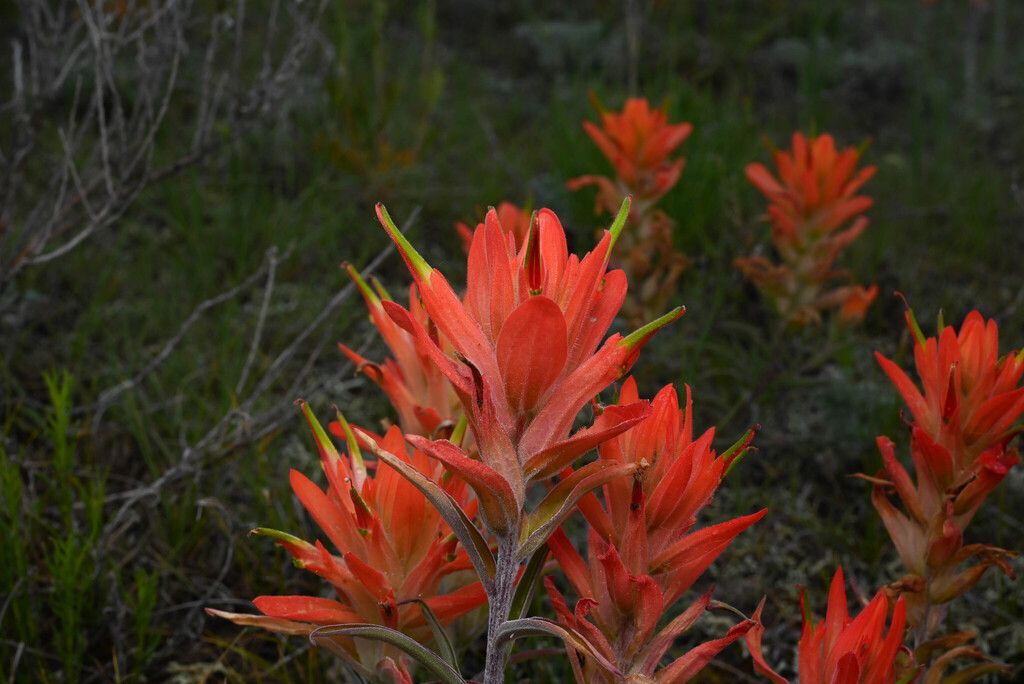
Identification
Wholeleaf paintbrush is described as herbaceous, subshrub, with perennial.2
The Lady Bird Johnson Wildflower Center describes plants up to about 40 inches tall, usually much shorter.3
The Lady Bird Johnson Wildflower Center lists bloom colors as red.3
When it blooms
The Lady Bird Johnson Wildflower Center lists March–September3. iNaturalist flowering sightings across the U.S. are most often in April–August1.
| State | Type | Peak bloom | Obs.* |
|---|---|---|---|
| Arizona | Native | May–September | 1,484 |
| Colorado | Native | May–July | 2,948 |
| New Mexico | Native | April–September | 1,762 |
*iNaturalist research-grade observations, as of October 17, 2026.1
Where it grows
USDA PLANTS records it in 4 states.2 It is listed as native in the lower 48 states.2 The Lady Bird Johnson Wildflower Center describes the native range as “W. TX to AZ & n. Mex., n. to CO.”3 Habitat notes from the same record include arid hills, plains & mesas.3
See the full state list
Growing and habitat
The Lady Bird Johnson record rates its needs as light: sun; soil described as “Gravelly soils”.3
Growing note from that record: “The roots of this plant will grow until they touch the roots of other plants, frequently grasses, penetrating these "host" roots to obtain a portion of their nutrients. Transplanting paintbrush may kill it.”3
Wildflower Center ratings are general guidance for the species, not a guarantee for your garden.
Related plants
Sources and review date
Facts on this page are drawn from the sources below. Numbers in the text point here. Sources used for this page were retrieved between October 17, 2026 and November 16, 2026.
- iNaturalist (taxonomy, research-grade observation counts and “Flowering” annotations, retrieved October 17, 2026).
- USDA, NRCS. PLANTS Database (profile CAIN14).
- Lady Bird Johnson Wildflower Center, Native Plant Information Network (record CAIN14, retrieved November 16, 2026).
- Photo: Anders Hastings via iNaturalist · CC BY 4.0 · resized.