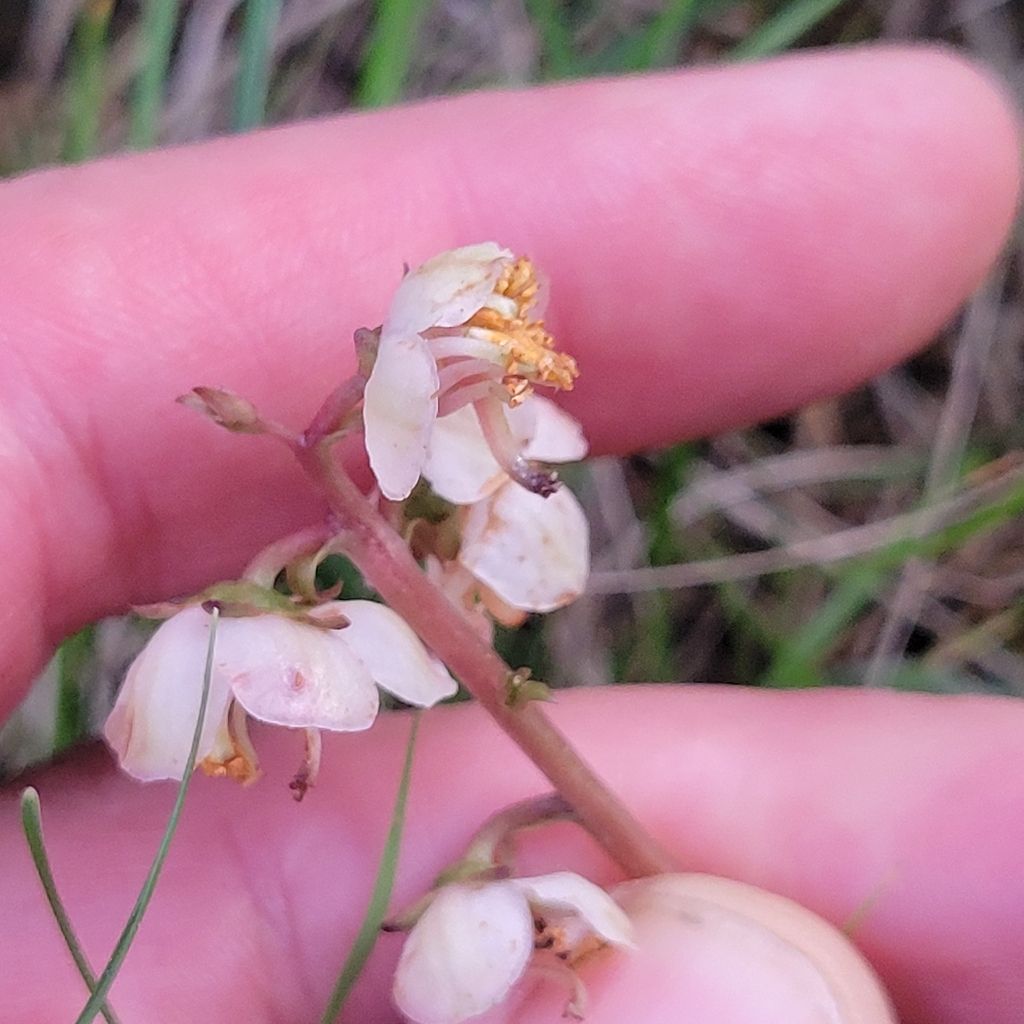
Flower profile
American wintergreen
Pyrola americana
American wintergreen (Pyrola americana) is a low shrub in the Ericaceae family, native in the lower 48 states, blooming mostly June–July across the U.S.
American wintergreen is a flowering plant that USDA PLANTS lists as native in the lower 48 states. It's on our flower lists for 5 states, and across the U.S. it's most often seen in bloom in June–July.
*iNaturalist research-grade observations, as of October 17, 2026.
On our lists for: Connecticut, Massachusetts, New Jersey, New York, Rhode Island
Quick look
Pyrola americana, the American wintergreen, is a plant species native to Canada and the United States.
- It belongs to the Ericaceae family. iNaturalist
- USDA PLANTS describes it as a subshrub with a perennial life cycle. USDA PLANTS
- USDA PLANTS lists it as native in the lower 48 states and records it in 23 states. USDA PLANTS
- NatureServe lists it as native to New Jersey, Connecticut, New York, Massachusetts and Rhode Island. NatureServe
- In New Jersey, most iNaturalist sightings of it in flower come in June–July. iNaturalist
- In Connecticut, most iNaturalist sightings of it in flower come in June–July. iNaturalist
- iNaturalist has 3,884 research-grade sightings of it in New Jersey, ranking #19 among the 186 flowers on our New Jersey list. iNaturalist
- iNaturalist has 3,288 research-grade sightings of it in Connecticut, ranking #5 among the 179 flowers on our Connecticut list. iNaturalist
- iNaturalist has 2,637 research-grade sightings of it in New York, ranking #90 among the 193 flowers on our New York list. iNaturalist
When does it bloom?
Bloom time in the 5 states whose Bloomipedia list includes it
| State | Type | Peak bloom | Sightings* |
|---|---|---|---|
| New Jersey | Native | June–July | 3,884 |
| Connecticut | Native | June–July | 3,288 |
| New York | Native | June–July | 2,637 |
| Massachusetts | Native | June–July | 2,157 |
| Rhode Island | Native | few records (18) | 502 |
Conservation status
- Federal (U.S. ESA)
- Not listed No U.S. Endangered Species Act listing in the USFWS ECOS database. USFWS ECOS
- NatureServe global
- G5 Secure worldwide. NatureServe
- State rare plant lists
- Not listed Not on the official rare plant list in 5 of our 5 states.
See each state
- New Jersey
- Not listed Not on New Jersey Endangered Plant Species List (N.J.A.C. 7:5C-5.1). NatureServe: S4, apparently secure in New Jersey. N.J.A.C. 7:5C-5.1
- Connecticut
- Not listed Not on Connecticut Endangered, Threatened and Special Concern Plants (RCSA 26-306; 2015 list). NatureServe: SNR, not yet ranked in Connecticut. CT E/T/SC list
- New York
- Not listed Not on New York protected native plants (6 NYCRR § 193.3). NatureServe: S5, secure in New York. 6 NYCRR § 193.3
- Massachusetts
- Not listed Not on Massachusetts Endangered Species Act list (321 CMR 10.90). NatureServe: SNR, not yet ranked in Massachusetts. MESA list
- Rhode Island
- Not listed Not on Rhode Island Rare Plants 2016 (RI Natural History Survey, from the RI Wildlife Action Plan; informational, Rhode Island has no state plant-protection listing law). NatureServe: SNR, not yet ranked in Rhode Island. RI rare plants 2016
- Rare elsewhere
- Other states where NatureServe ranks it rare or missing: DE (S2), IL (SX), IN (S2), KY (SX), NC (S2), TN (S2). (S1 critically imperiled, S2 imperiled, SH possibly extirpated, SX presumed extirpated.)
Checked October 17, 2026. Rankings and lists can change, so follow the links for the latest.
Can you eat it?
None of the sources we checked (NC State Extension (no page for this plant), USDA PLANTS) say whether it's edible or poisonous for people.
It isn't on the ASPCA plant list.
🌿 Never eat a wild plant unless you're certain of its ID; this isn't medical advice. Worried about a person? Call Poison Control at 1-800-222-1222. Worried about a pet? Call your vet.
Where does it grow?
USDA PLANTS records American wintergreen in 23 states plus Washington, D.C.
recorded by USDA PLANTS on our state lists not recorded
See the full list of states
Connecticut, Delaware, Illinois, Indiana, Kentucky, Maine, Maryland, Massachusetts, Michigan, Minnesota, New Hampshire, New Jersey, New York, North Carolina, Ohio, Pennsylvania, Rhode Island, South Dakota, Tennessee, Vermont, Virginia, West Virginia, Wisconsin; District of Columbia.
New Jersey counties with USDA records: Atlantic, Bergen, Burlington, Camden, Cape May, Cumberland, Essex, Gloucester, Hunterdon, Mercer, Middlesex, Monmouth, Morris, Ocean, Passaic, Somerset, Sussex, Union.
New York counties with USDA records: Albany, Allegany, Bronx, Broome, Cattaraugus, Chenango, Columbia, Delaware, Dutchess, Essex, Fulton, Genesee, Greene, Hamilton, Livingston, Monroe, Montgomery, Nassau, New York, Oneida, Onondaga, Ontario, Orange, Oswego, Putnam, Queens, Rensselaer, Richmond, Rockland, Saratoga, Schenectady, Schoharie, St. Lawrence, Steuben, Suffolk, Sullivan, Ulster, Warren, Washington, Westchester, Yates.
Names, range and relatives
Native status by region (USDA PLANTS): Canada: Native; Lower 48 states: Native.
Other scientific names (synonyms in USDA PLANTS): Pyrola obovata.
County records: USDA PLANTS lists it in 402 counties across 22 states; the most are in Pennsylvania (59), Virginia (59), Michigan (56).
Other Pyrola on Bloomipedia (2): Shinleaf, Bog wintergreen.
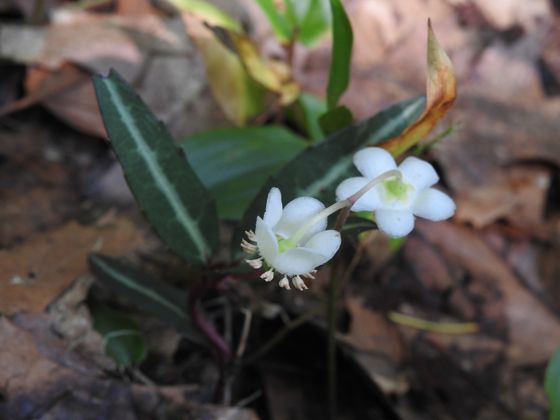
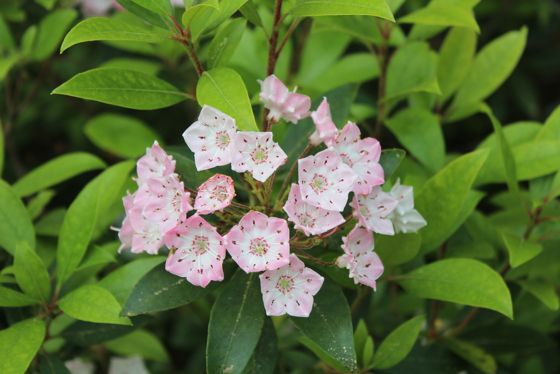
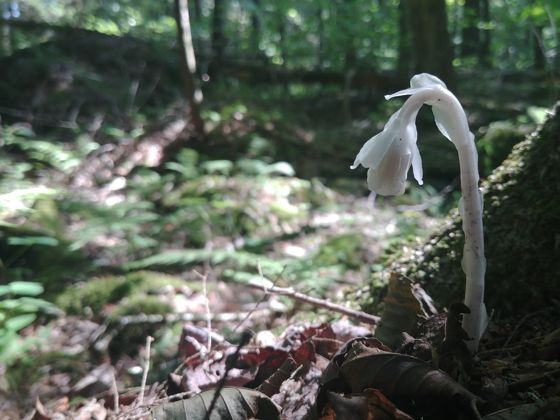
More from the Ericaceae family (55 on Bloomipedia; most observed first): Ghost pipe, Rhododendrons and azaleas, Striped wintergreen, Mountain laurel, Eastern teaberry (wintergreen), Salal, Woodland pinedrops, Pinesap.
More New Jersey flowers
Sources
- USDA, NRCS. PLANTS Database, profile PYAM.
- iNaturalist, Pyrola americana: taxonomy, research-grade observation counts and “Flowering” annotations, retrieved October 17, 2026.
- Wikipedia, Pyrola americana (lead quoted under CC BY-SA 4.0).
- State rare and invasive plant lists (9):
Show all 9 state lists
- New Jersey: New Jersey Endangered Plant Species List (N.J.A.C. 7:5C-5.1).
- New Jersey: New Jersey prohibited invasive plant species (Invasive Species Management Act; propagation banned from Jan 1, 2027, sale from Jan 1, 2030).
- Connecticut: Connecticut Endangered, Threatened and Special Concern Plants (RCSA 26-306; 2015 list).
- Connecticut: Connecticut prohibited invasive plants (Conn. Gen. Stat. § 22a-381d).
- New York: New York protected native plants (6 NYCRR § 193.3).
- New York: New York prohibited and regulated invasive species (6 NYCRR Part 575).
- Massachusetts: Massachusetts Endangered Species Act list (321 CMR 10.90).
- Massachusetts: Massachusetts Prohibited Plant List (MDAR) (Text from MDAR's 2023 scientific-name PDF (mass.gov blocks automated downloads); 2024-2026 additions listed on the mass.gov page: Alnus glutinosa, Pyrus calleryana, Miscanthus sinensis, Aralia elata, Rhodotypos scandens, Symplocos paniculata.).
- Rhode Island: Rhode Island Rare Plants 2016 (RI Natural History Survey, from the RI Wildlife Action Plan; informational, Rhode Island has no state plant-protection listing law).
- USFWS, ECOS species database (ESA listing check), October 17, 2026.
- NatureServe Explorer, Pyrola americana (global and state ranks).
- Edibility and toxicity: no source found (marked "not well documented").
- Photo: Matt Pelikan via iNaturalist · CC BY 4.0 · resized.