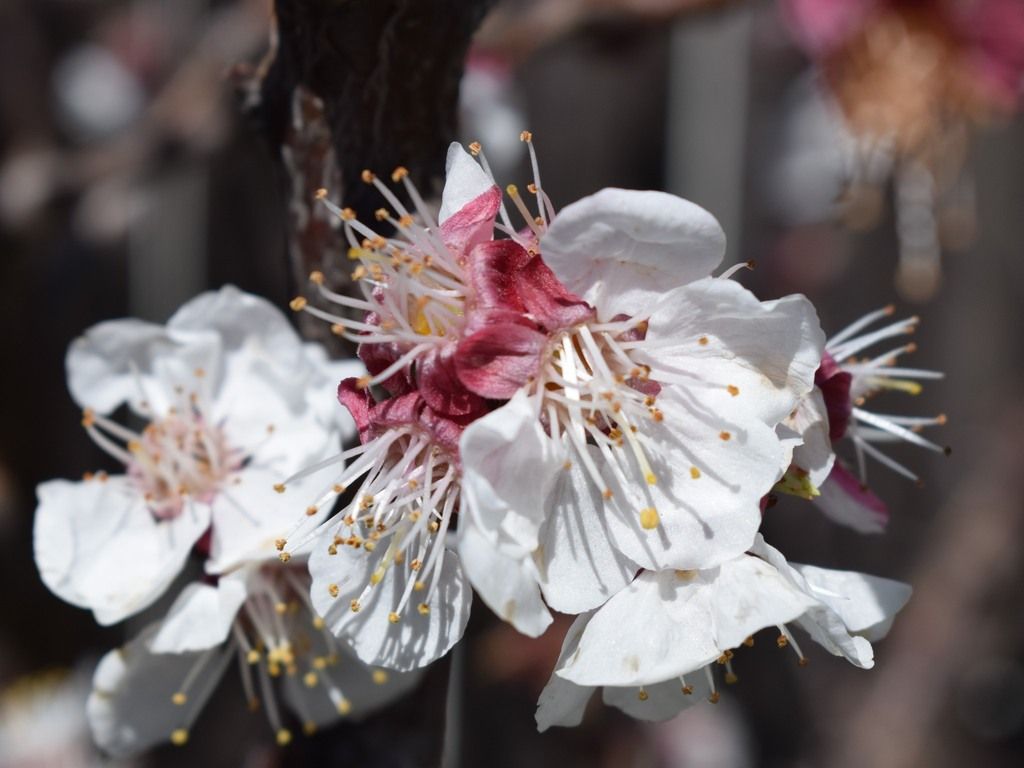
Fruit tree
Apricot
Prunus armeniaca
Apricot (Prunus armeniaca) is a tree in the Rosaceae family, introduced in the lower 48 states.
Apricot is a popular fruit tree. It's on our flower lists for 28 states.
*iNaturalist research-grade observations, as of October 23, 2026. Our state lists also include states where people grow it in gardens, so they can outnumber USDA's wild-plant records. Planted garden trees are mostly excluded from research grade.
On our lists for: Arizona, California, Colorado, Connecticut, Idaho, Illinois, Indiana, Maryland, Massachusetts, Michigan, Minnesota, Missouri, Montana, Nebraska, Nevada, New Jersey, New Mexico, New York, North Carolina, Ohio, Oregon, Pennsylvania, South Dakota, Texas, Utah, Virginia, Washington, Wisconsin
Quick look
Prunus armeniaca is the most commonly cultivated apricot species. The native range is somewhat uncertain due to its extensive prehistoric cultivation. Genetic studies indicate Central Asia is the center of origin. It is extensively cultivated in many countries and has escaped into the wild in many places. The specific epithet armeniaca refers to the country of Armenia.
- It belongs to the Rosaceae family. iNaturalist
- USDA PLANTS describes it as a tree with a perennial life cycle. USDA PLANTS
- USDA PLANTS lists it as introduced in the lower 48 states and records it in 11 states. USDA PLANTS
- iNaturalist has 51 research-grade sightings of it in New Mexico, ranking #103 among the 152 flowers on our New Mexico list. iNaturalist
- iNaturalist has 24 research-grade sightings of it in California, ranking #117 among the 178 flowers on our California list. iNaturalist
- iNaturalist has 23 research-grade sightings of it in Utah, ranking #107 among the 153 flowers on our Utah list. iNaturalist
When does it bloom?
Bloom time in the 28 states whose Bloomipedia list includes it
| State | Type | Peak bloom | Sightings* |
|---|---|---|---|
| New Mexico | 🌷 Garden | no flowering records | 51 |
| California | 🌷 Garden | no flowering records | 24 |
| Utah | 🌷 Garden | no flowering records | 23 |
| Colorado | 🌷 Garden | few records (1) | 20 |
| Washington | 🌷 Garden | no flowering records | 12 |
| Arizona | 🌷 Garden | no flowering records | 8 |
| Idaho | 🌷 Garden | no flowering records | 7 |
| New York | 🌷 Garden | few records (1) | 7 |
| Texas | 🌷 Garden | no flowering records | 5 |
| Nevada | 🌷 Garden | no flowering records | 4 |
| Michigan | 🌷 Garden | no flowering records | 3 |
| Nebraska | 🌷 Garden | no flowering records | 3 |
| Indiana | 🌷 Garden | no flowering records | 2 |
| New Jersey | 🌷 Garden | no flowering records | 2 |
| Oregon | 🌷 Garden | no flowering records | 2 |
| Maryland | 🌷 Garden | no flowering records | 1 |
| Missouri | 🌷 Garden | no flowering records | 1 |
| North Carolina | 🌷 Garden | no flowering records | 1 |
| Pennsylvania | 🌷 Garden | no flowering records | 1 |
| South Dakota | 🌷 Garden | no flowering records | 1 |
| Connecticut | 🌷 Garden | no flowering records | 0 |
| Illinois | 🌷 Garden | no flowering records | 0 |
| Massachusetts | 🌷 Garden | no flowering records | 0 |
| Minnesota | 🌷 Garden | no flowering records | 0 |
| Montana | 🌷 Garden | no flowering records | 0 |
| Ohio | 🌷 Garden | no flowering records | 0 |
| Virginia | 🌷 Garden | no flowering records | 0 |
| Wisconsin | 🌷 Garden | no flowering records | 0 |
Conservation status
- Federal (U.S. ESA)
- Not listed No U.S. Endangered Species Act listing in the USFWS ECOS database. USFWS ECOS
- NatureServe global
- G5 Secure worldwide. NatureServe
- State rare plant lists
- Not listed Not on the official rare plant list in 21 of our 28 states.
See each state
- New Mexico
- Not listed Not on New Mexico state endangered plant species (19.21.2.9 NMAC). NatureServe has no New Mexico rank for it. 19.21.2.9 NMAC
- California
- Not listed Not on California state-listed endangered, threatened and rare plants (14 CCR § 670.2), per CDFW's CNDDB list (July 2026). NatureServe: SNA, not applicable (usually because it isn't native there) in California. CNDDB listed plants (July 2026)
- Arizona
- Not listed Not on Arizona Native Plant Law protected plants (Ariz. Admin. Code R3-3 Art. 11, App. A, eff. Feb. 2, 2025). NatureServe has no Arizona rank for it. AAC R3-3 App. A
- New York
- Not listed Not on New York protected native plants (6 NYCRR § 193.3). NatureServe has no New York rank for it. 6 NYCRR § 193.3
- Texas
- Not listed Not on Texas endangered and threatened plants (31 Tex. Admin. Code § 69.8), as listed by Texas Parks and Wildlife. NatureServe has no Texas rank for it. 31 TAC 69.8
- Nevada
- Not listed Not on Nevada fully protected plants, critically endangered (NAC 527.010). NatureServe has no Nevada rank for it. NAC 527.010
- Michigan
- Not listed Not on Michigan endangered and threatened plants (Mich. Admin. Code R 299.1028, eff. March 20, 2023). NatureServe has no Michigan rank for it. R 299.1028
- Nebraska
- Not listed Not on Nebraska threatened and endangered species (163 Neb. Admin. Code ch. 4, § 004). NatureServe has no Nebraska rank for it. 163 NAC 4-004
- New Jersey
- Not listed Not on New Jersey Endangered Plant Species List (N.J.A.C. 7:5C-5.1). NatureServe has no New Jersey rank for it. N.J.A.C. 7:5C-5.1
- Oregon
- Not listed Not on Oregon endangered and threatened plants (OAR 603-073-0070). NatureServe has no Oregon rank for it. OAR 603-073-0070
- Maryland
- Not listed Not on Maryland threatened and endangered plants (COMAR 08.03.08.05, .06 and .08). NatureServe has no Maryland rank for it. COMAR 08.03.08
- Missouri
- Not listed Not on Missouri Wildlife Code endangered species (3 CSR 10-4.111), plants. NatureServe: SNA, not applicable (usually because it isn't native there) in Missouri. 3 CSR 10-4.111
- North Carolina
- Not listed Not on North Carolina Protected Plant Species List (02 NCAC 48F .0301). NatureServe has no North Carolina rank for it. 02 NCAC 48F .0301
- Pennsylvania
- Not listed Not on Pennsylvania classified native plants (17 Pa. Code Ch. 45, Subchapter B, as amended 2023). NatureServe: SNA, not applicable (usually because it isn't native there) in Pennsylvania. 17 Pa. Code Ch. 45
- Connecticut
- Not listed Not on Connecticut Endangered, Threatened and Special Concern Plants (RCSA 26-306; 2015 list). NatureServe has no Connecticut rank for it. CT E/T/SC list
- Illinois
- Not listed Not on Illinois List of Endangered and Threatened Flora (17 Ill. Adm. Code 1050), per the Endangered Species Protection Board's 2025 checklist. NatureServe: SNA, not applicable (usually because it isn't native there) in Illinois. IL E&T checklist 2025
- Massachusetts
- Not listed Not on Massachusetts Endangered Species Act list (321 CMR 10.90). NatureServe has no Massachusetts rank for it. MESA list
- Minnesota
- Not listed Not on Minnesota endangered, threatened and special concern plants (Minn. R. 6134.0300). NatureServe has no Minnesota rank for it. Minn. R. 6134.0300
- Ohio
- Not listed Not on Ohio endangered and threatened plants (Ohio Adm. Code 1501:18-1-03, eff. Dec. 26, 2024). NatureServe has no Ohio rank for it. OAC 1501:18-1-03
- Virginia
- Not listed Not on Virginia endangered and threatened plant and insect species (2VAC5-320-10). NatureServe has no Virginia rank for it. 2VAC5-320-10
- Wisconsin
- Not listed Not on Wisconsin endangered and threatened species list (Wis. Admin. Code NR 27.03). NatureServe has no Wisconsin rank for it. NR 27.03
- Utah
- No list Utah has no state law listing endangered or threatened plants, so we show NatureServe's Utah ranks instead. NatureServe: SNA, not applicable (usually because it isn't native there) in Utah.
- Colorado
- No list Colorado has no state law listing endangered or threatened plants, so we show NatureServe's Colorado ranks instead. NatureServe: SNA, not applicable (usually because it isn't native there) in Colorado.
- Washington
- No list Washington has no state law listing endangered or threatened plants (the Washington Natural Heritage Program's rare plant list isn't regulatory), so we show NatureServe's Washington ranks instead. NatureServe has no Washington rank for it.
- Idaho
- No list Idaho has no state law listing endangered or threatened plants, so we show NatureServe's Idaho ranks instead. NatureServe has no Idaho rank for it.
- Indiana
- No list Indiana has no state law listing endangered or threatened plants (the DNR keeps a rare plant list, but it isn't regulatory), so we show NatureServe's Indiana ranks instead. NatureServe has no Indiana rank for it.
- South Dakota
- No list South Dakota's endangered and threatened list (ARSD 41:10:02) covers animals only, so we show NatureServe's South Dakota ranks for plants. NatureServe has no South Dakota rank for it.
- Montana
- No list Montana has no state law listing endangered or threatened plants, so we show NatureServe's Montana ranks instead. NatureServe has no Montana rank for it.
- Rare elsewhere
- No other U.S. state ranks it S1, S2, SH or SX.
Checked October 23, 2026. Rankings and lists can change, so follow the links for the latest.
Can you eat it?
NC State Extension lists it as poisonous to humans (severity: medium). Poisonous parts: leaves, seeds, stems. Symptoms they list: “The pits contain cyanide compounds, which are poisonous. If a couple of pits are accidentally swallowed, it will not cause poisoning. The pits are more poisonous if they are ground up/crushed or the seeds are chewed. Fruit that has not been pitted should not…” They also note: “Fruit edible raw, dried, or cooked.” NC State Extension
ASPCA's entry “Apricot” (Prunus armeniaca) lists it as toxic to dogs, cats and horses. Signs include: Stems, leaves, seeds contain cyanide, particularly toxic in the process of wilting: brick red mucous membranes, dilated pupils, difficulty breathing, panting… ASPCA
🌿 Never eat a wild plant unless you're certain of its ID; this isn't medical advice. Worried about a person? Call Poison Control at 1-800-222-1222. Worried about a pet? Call your vet.
Where does it grow?
USDA PLANTS records apricot in 11 states.
recorded by USDA PLANTS on our state lists not recorded
See the full list of states
California, Colorado, Idaho, Illinois, Kansas, Missouri, Montana, Ohio, Oregon, Pennsylvania, Utah.
California counties with USDA records: Contra Costa.
Utah counties with USDA records: Beaver, Carbon, Daggett, Millard, Utah, Washington, Wayne.
Names, range and relatives
Other scientific names (synonyms in USDA PLANTS): Armeniaca vulgaris.
County records: USDA PLANTS lists it in 25 counties across 8 states; the most are in Idaho (7), Utah (7), Colorado (3).
Other Prunus on Bloomipedia (16): Black cherry, Chokecherry, Carolina laurelcherry, American plum, Beach plum, Peach, Cherry laurel, Fire cherry, Desert peach, Sweet cherry.
More from the Rosaceae family (103 on Bloomipedia; most observed first): Roses (genus Rosa), Multiflora rose, Mock strawberry, Toyon, Thimbleberry, Wineberry, Black raspberry, Trailing blackberry.
More New Mexico flowers
Sources
- USDA, NRCS. PLANTS Database, profile PRAR3.
- iNaturalist, Prunus armeniaca: taxonomy, research-grade observation counts and “Flowering” annotations, retrieved October 23, 2026.
- Wikipedia, Prunus armeniaca (lead quoted under CC BY-SA 4.0).
- State rare and invasive plant lists (49):
Show all 49 state lists
- New Mexico: New Mexico state endangered plant species (19.21.2.9 NMAC).
- New Mexico: New Mexico Noxious Weed List (NM Department of Agriculture, updated June 2020).
- California: California state-listed endangered, threatened and rare plants (14 CCR § 670.2), per CDFW's CNDDB list (July 2026).
- California: California noxious weed species (3 CCR § 4500).
- Utah: Utah noxious weed list (Utah Admin. Code R68-9-3).
- Colorado: Colorado noxious weed lists A, B and C (8 CCR 1206-2, eff. May 15, 2025).
- Washington: Washington State noxious weed list (WAC 16-750-005, -011, -015).
- Arizona: Arizona Native Plant Law protected plants (Ariz. Admin. Code R3-3 Art. 11, App. A, eff. Feb. 2, 2025).
- Arizona: Arizona prohibited noxious weeds (Ariz. Admin. Code R3-4-245).
- Idaho: Idaho noxious weeds (IDAPA 02.06.09, Section 220).
- New York: New York protected native plants (6 NYCRR § 193.3).
- New York: New York prohibited and regulated invasive species (6 NYCRR Part 575).
- Texas: Texas endangered and threatened plants (31 Tex. Admin. Code § 69.8), as listed by Texas Parks and Wildlife.
- Texas: Texas noxious and invasive plant list (4 Tex. Admin. Code § 19.300(a)).
- Nevada: Nevada fully protected plants, critically endangered (NAC 527.010).
- Nevada: Nevada noxious weeds (NAC 555.010).
- Michigan: Michigan endangered and threatened plants (Mich. Admin. Code R 299.1028, eff. March 20, 2023).
- Michigan: Michigan prohibited and restricted species (NREPA Part 413 and the 2026 Invasive Species Order), as listed by Michigan's Invasive Species Program.
- Nebraska: Nebraska threatened and endangered species (163 Neb. Admin. Code ch. 4, § 004).
- Nebraska: Nebraska noxious weeds (25 Neb. Admin. Code ch. 10, § 001.02).
- Indiana: Indiana prohibited invasive terrestrial plants (312 IAC 18-3-25).
- New Jersey: New Jersey Endangered Plant Species List (N.J.A.C. 7:5C-5.1).
- New Jersey: New Jersey prohibited invasive plant species (Invasive Species Management Act; propagation banned from Jan 1, 2027, sale from Jan 1, 2030).
- Oregon: Oregon endangered and threatened plants (OAR 603-073-0070).
- Oregon: Oregon noxious weed quarantine, A and B weeds (OAR 603-052-1200).
- Maryland: Maryland threatened and endangered plants (COMAR 08.03.08.05, .06 and .08).
- Maryland: Maryland Prohibited Invasive Plant List (COMAR 15.06.04.06; MDA, updated July 2026).
- Missouri: Missouri Wildlife Code endangered species (3 CSR 10-4.111), plants.
- Missouri: Missouri noxious weed list (2 CSR 70-45.005).
- North Carolina: North Carolina Protected Plant Species List (02 NCAC 48F .0301).
- North Carolina: North Carolina Noxious Weed List (02 NCAC 48A .1702) (the list names any non-native Lythrum; we apply it to purple loosestrife (Lythrum salicaria), which isn't native).
- Pennsylvania: Pennsylvania classified native plants (17 Pa. Code Ch. 45, Subchapter B, as amended 2023).
- Pennsylvania: Pennsylvania Noxious Weed List (3 Pa.C.S. § 1519, PA Dept. of Agriculture) (PDA's page spells garlic mustard “Allaria petiolata”; we match it as Alliaria petiolata).
- South Dakota: South Dakota statewide noxious weeds (ARSD 12:62:03:01.06).
- Connecticut: Connecticut Endangered, Threatened and Special Concern Plants (RCSA 26-306; 2015 list).
- Connecticut: Connecticut prohibited invasive plants (Conn. Gen. Stat. § 22a-381d).
- Illinois: Illinois List of Endangered and Threatened Flora (17 Ill. Adm. Code 1050), per the Endangered Species Protection Board's 2025 checklist.
- Illinois: Illinois Official List of Exotic Weeds (17 Ill. Adm. Code 1100.30, Illinois Exotic Weed Act).
- Massachusetts: Massachusetts Endangered Species Act list (321 CMR 10.90).
- Massachusetts: Massachusetts Prohibited Plant List (MDAR) (Text from MDAR's 2023 scientific-name PDF (mass.gov blocks automated downloads); 2024-2026 additions listed on the mass.gov page: Alnus glutinosa, Pyrus calleryana, Miscanthus sinensis, Aralia elata, Rhodotypos scandens, Symplocos paniculata.).
- Minnesota: Minnesota endangered, threatened and special concern plants (Minn. R. 6134.0300).
- Minnesota: Minnesota Noxious Weed List (Minn. Stat. § 18.79; Minnesota Department of Agriculture, updated January 2026).
- Montana: Montana noxious weed list (Admin. R. Mont. 4.5.206–4.5.210).
- Ohio: Ohio endangered and threatened plants (Ohio Adm. Code 1501:18-1-03, eff. Dec. 26, 2024).
- Ohio: Ohio invasive plant species (Ohio Adm. Code 901:5-30-01).
- Virginia: Virginia endangered and threatened plant and insect species (2VAC5-320-10).
- Virginia: Virginia noxious weeds (2VAC5-317-20, Tier 1, 2 and 3).
- Wisconsin: Wisconsin endangered and threatened species list (Wis. Admin. Code NR 27.03).
- Wisconsin: Wisconsin invasive species rule (Wis. Admin. Code NR 40.04 prohibited, NR 40.05 restricted).
- USFWS, ECOS species database (ESA listing check), October 23, 2026.
- NatureServe Explorer, Prunus armeniaca (global and state ranks).
- Edibility and toxicity: NC State Extension; ASPCA.
- Photo: Anne Parsons via iNaturalist · CC0 · resized.