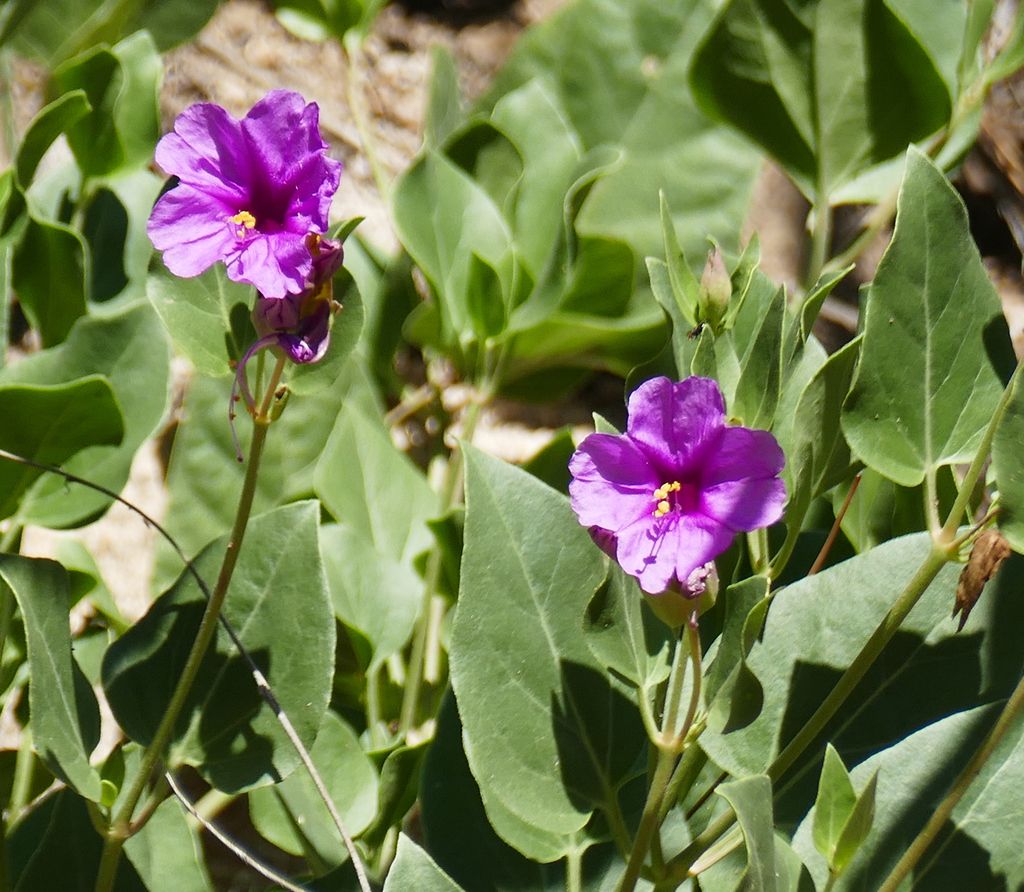
Flower profile
Colorado Four o'Clock
Mirabilis multiflora
Colorado Four o'Clock (Mirabilis multiflora) is a low shrub in the Nyctaginaceae family, native in the lower 48 states, blooming mostly April–October across the U.S.
Colorado Four o'Clock is a wildflower that USDA PLANTS lists as native in the lower 48 states. It's on our flower lists for 3 states, and across the U.S. it's most often seen in bloom in April–October.
*iNaturalist research-grade observations, as of October 17, 2026.
On our lists for: Nevada, New Mexico, Utah
Quick look
Mirabilis multiflora is a species of flowering plant in the four o'clock family known by the common names Colorado four-o'clock or desert four-o'clock that is native to the southwestern United States from California to Colorado and Texas, as well as far northern Mexico, where it grows in mostly dry habitat types in a number of regions.
- It belongs to the Nyctaginaceae family. iNaturalist
- USDA PLANTS describes it as an herb (forb) / a subshrub with a perennial life cycle. USDA PLANTS
- USDA PLANTS lists it as native in the lower 48 states and records it in 7 states. USDA PLANTS
- NatureServe lists it as native to New Mexico, Utah and Nevada. NatureServe
- In New Mexico, most iNaturalist sightings of it in flower come in June–October. iNaturalist
- In Utah, most iNaturalist sightings of it in flower come in April–September. iNaturalist
- USDA PLANTS lists its flower color as purple. USDA PLANTS
- USDA PLANTS gives its bloom period as late spring. USDA PLANTS
- USDA PLANTS lists a mature height of about 2 ft. USDA PLANTS
- iNaturalist has 1,168 research-grade sightings of it in New Mexico, ranking #34 among the 152 flowers on our New Mexico list. iNaturalist
- iNaturalist has 609 research-grade sightings of it in Utah, ranking #101 among the 153 flowers on our Utah list. iNaturalist
- iNaturalist has 520 research-grade sightings of it in Nevada, ranking #79 among the 132 flowers on our Nevada list. iNaturalist
When does it bloom?
Bloom time in the 3 states whose Bloomipedia list includes it
| State | Type | Peak bloom | Sightings* |
|---|---|---|---|
| New Mexico | Native | June–October | 1,168 |
| Utah | Native | April–September | 609 |
| Nevada | Native | April–June | 520 |
Conservation status
- Federal (U.S. ESA)
- Not listed No U.S. Endangered Species Act listing in the USFWS ECOS database. USFWS ECOS
- NatureServe global
- G5 Secure worldwide. NatureServe
- New Mexico
- Not listed Not on New Mexico state endangered plant species (19.21.2.9 NMAC). NatureServe: SNR, not yet ranked in New Mexico. 19.21.2.9 NMAC
- Utah
- No list Utah has no state law listing endangered or threatened plants, so we show NatureServe's Utah ranks instead. NatureServe: SNR, not yet ranked in Utah.
- Nevada
- Not listed Not on Nevada fully protected plants, critically endangered (NAC 527.010). NatureServe: SNR, not yet ranked in Nevada. NAC 527.010
- Rare elsewhere
- No other U.S. state ranks it S1, S2, SH or SX.
Checked October 17, 2026. Rankings and lists can change, so follow the links for the latest.
Can you eat it?
None of the sources we checked (NC State Extension (no page for this plant), USDA PLANTS) say whether it's edible or poisonous for people.
It isn't on the ASPCA plant list.
🌿 Never eat a wild plant unless you're certain of its ID; this isn't medical advice. Worried about a person? Call Poison Control at 1-800-222-1222. Worried about a pet? Call your vet.
Where does it grow?
USDA PLANTS records Colorado Four o'Clock in 7 states.
recorded by USDA PLANTS on our state lists not recorded
See the full list of states
Arizona, California, Colorado, Nevada, New Mexico, Texas, Utah.
New Mexico counties with USDA records: Bernalillo, Colfax, Dona Ana, Grant, Hidalgo, Lincoln, Los Alamos, Luna, McKinley, Mora, Otero, Rio Arriba, Roosevelt, San Juan, San Miguel, Sandoval, Santa Fe, Sierra, Socorro, Taos, Torrance.
Utah counties with USDA records: Carbon, Garfield, Grand, Iron, Kane, San Juan, Washington, Wayne.
Nevada counties with USDA records: Clark, Lincoln, Nye, White Pine.
Growing conditions
USDA PLANTS gives Colorado Four o'Clock a high shade tolerance, high drought tolerance and low moisture use. It is rated for soil pH 6.5 to 8.5 and winter lows down to -18 °F.
- Shade tolerance
- High
- Drought tolerance
- High
- Moisture use
- Low
- Soil textures it is adapted to
- coarse, medium
- Soil pH range
- 6.5 to 8.5
- Minimum temperature tolerated
- -18 °F
- Frost-free days needed (minimum)
- 130
- Annual precipitation range
- 8 to 18 inches
- Minimum root depth
- 12 inches
- Salinity tolerance
- Low
- Fertility requirement
- Low
- Growth rate
- Moderate
- Lifespan
- Moderate
- Active growth period
- Spring and Summer
- Fruit or seed
- Brown · Summer to Summer
- Can be propagated by
- seed
- Commercial availability
- Contracting Only
From the USDA PLANTS characteristics data for MIMU. USDA ratings are general guidance for the species, not a guarantee for your garden.
Names, range and relatives
County records: USDA PLANTS lists it in 81 counties across 7 states; the most are in New Mexico (21), Colorado (17), Arizona (14).
Other Mirabilis on Bloomipedia (3): Wishbone bush, Marvel of Peru, Wild Four o'Clock.
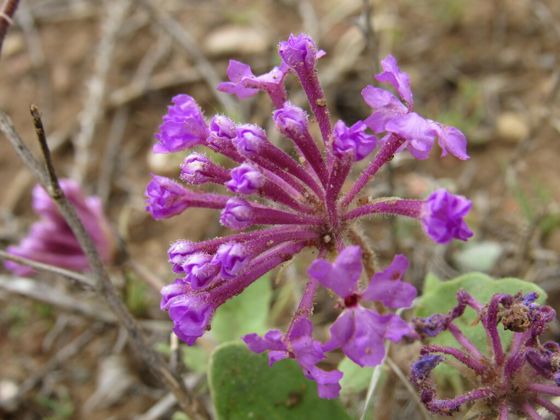
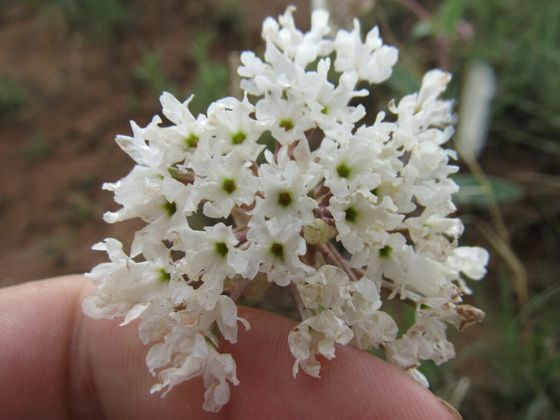
More from the Nyctaginaceae family (9 on Bloomipedia; most observed first): Trailing windmills, Scarlet spiderling, Great basin sand verbena, Snowball sand verbena, Purple sand verbena, Bougainvillea.
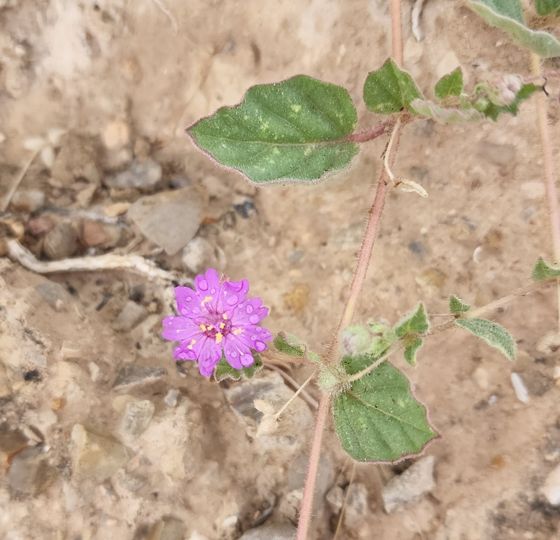
More New Mexico flowers
Sources
- USDA, NRCS. PLANTS Database, profile MIMU.
- iNaturalist, Mirabilis multiflora: taxonomy, research-grade observation counts and “Flowering” annotations, retrieved October 17, 2026.
- Wikipedia, Mirabilis multiflora (lead quoted under CC BY-SA 4.0).
- New Mexico: New Mexico state endangered plant species (19.21.2.9 NMAC).
- New Mexico: New Mexico Noxious Weed List (NM Department of Agriculture, updated June 2020).
- Utah: Utah noxious weed list (Utah Admin. Code R68-9-3).
- Nevada: Nevada fully protected plants, critically endangered (NAC 527.010).
- Nevada: Nevada noxious weeds (NAC 555.010).
- USFWS, ECOS species database (ESA listing check), October 17, 2026.
- NatureServe Explorer, Mirabilis multiflora (global and state ranks).
- Edibility and toxicity: no source found (marked "not well documented").
- Photo: Wendy McCrady via iNaturalist · CC BY 4.0 · resized.