Flower profile
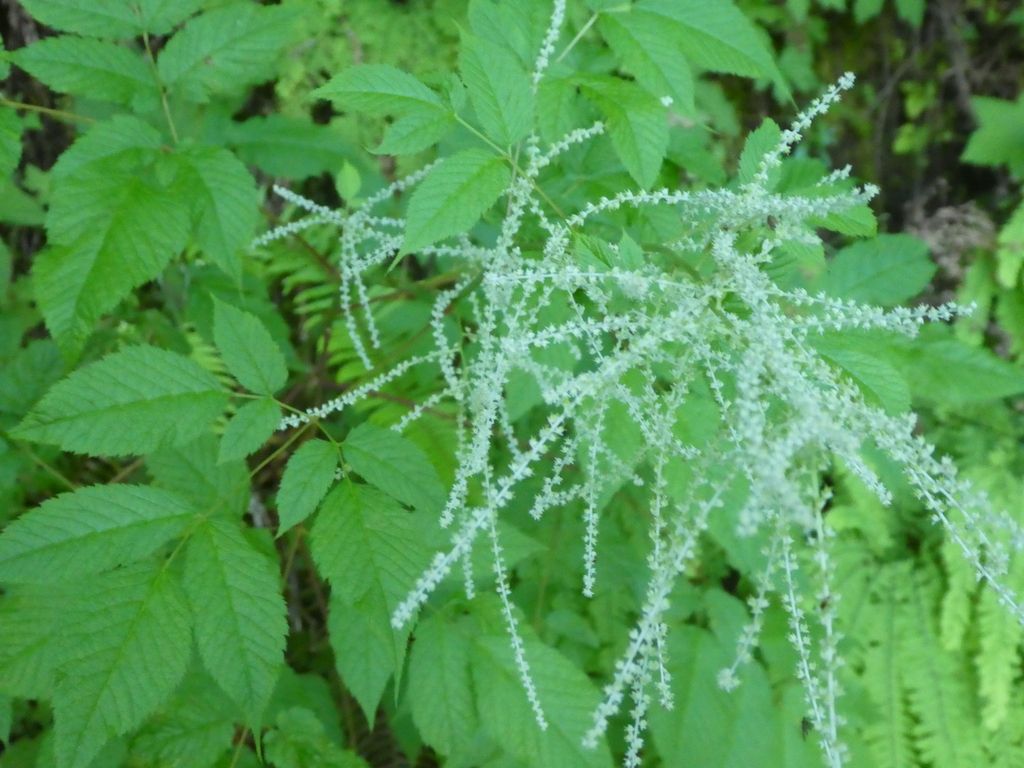
Goatsbeard
Aruncus dioicus
Also called bride's feathers
Identification
Goatsbeard is described as herbaceous, with perennial.2
The Lady Bird Johnson Wildflower Center describes plants up to about 6 feet tall.3
The Lady Bird Johnson Wildflower Center lists bloom colors as white.3
When it blooms
The Lady Bird Johnson Wildflower Center lists May–June3. iNaturalist flowering sightings across the U.S. are most often in May–July1.
| State | Type | Peak bloom | Obs.* |
|---|---|---|---|
| Alaska | Native | few records (28) | 1,374 |
| Washington | Native | May–July | 2,007 |
*iNaturalist research-grade observations, as of October 17, 2026.1
Where it grows
USDA PLANTS records it in 28 states, plus Washington, D.C.2 It is listed as native and introduced in the lower 48 states.2 The Lady Bird Johnson Wildflower Center describes the native range as “PA and IA, south to NC, AL, & AR.”3 Habitat notes from the same record include damp, fertile woods, mountainous areas.3
Growing and habitat
The Lady Bird Johnson record rates its needs as light: sun, part shade and shade; soil moisture: moist and wet; soil described as “Average to acid, mesic to moist soil”.3
Growing note from that record: “Tolerates seasonal flooding. Needs a lot of space.”3
The same record notes that it attracts butterflies.3
Wildflower Center ratings are general guidance for the species, not a guarantee for your garden.
Conservation
Other states where NatureServe ranks it rare or missing: OK (S1). (S1 critically imperiled, S2 imperiled, SH possibly extirpated, SX presumed extirpated.)4
Related plants
Sources and review date
Facts on this page are drawn from the sources below. Numbers in the text point here. Sources used for this page were retrieved between October 17, 2026 and November 16, 2026.
- iNaturalist (taxonomy, research-grade observation counts and “Flowering” annotations, retrieved October 17, 2026).
- USDA, NRCS. PLANTS Database (profile ARDI8).
- Lady Bird Johnson Wildflower Center, Native Plant Information Network (record ARDI8, retrieved November 16, 2026).
- NatureServe Explorer (global and state ranks for Aruncus dioicus).
- Photo: datadan via iNaturalist · CC BY 4.0 · resized.