Flower profile
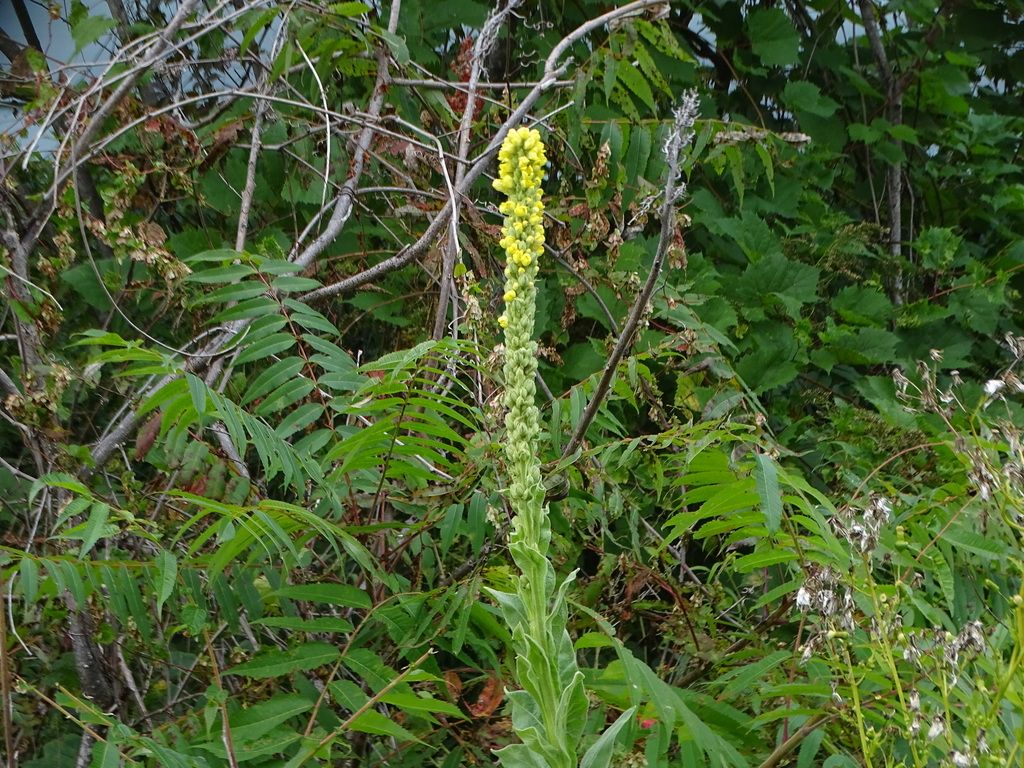
Great mullein
Verbascum thapsus
Also called common mullein
Identification
Great mullein is described as herbaceous, with biennial.2
When it blooms
iNaturalist flowering sightings across the U.S. are most often in June–September1.
| State | Type | Peak bloom | Obs.* |
|---|---|---|---|
| Alabama | Introduced | few records (19) | 729 |
| Arizona | Introduced | July–October | 3,472 |
| Arkansas | Introduced | few records (21) | 989 |
See bloom time in all 43 states on our lists
| State | Type | Peak bloom | Obs.* |
|---|---|---|---|
| Alabama | Introduced | few records (19) | 729 |
| Arizona | Introduced | July–October | 3,472 |
| Arkansas | Introduced | few records (21) | 989 |
| Colorado | Introduced | July–October | 10,366 |
| Connecticut | Introduced | few records (29) | 1,730 |
| Delaware | Introduced | few records (5) | 342 |
| Georgia | Introduced | few records (19) | 1,307 |
| Hawaii | Introduced | few records (9) | 506 |
| Idaho | Introduced | few records (47) | 2,651 |
| Illinois | Introduced | June–August | 3,333 |
| Indiana | Introduced | few records (45) | 1,843 |
| Iowa | Introduced | few records (30) | 1,144 |
| Kansas | Introduced | few records (12) | 872 |
| Kentucky | Introduced | June–July | 1,122 |
| Maine | Introduced | few records (31) | 1,176 |
| Maryland | Introduced | June–July | 3,023 |
| Massachusetts | Introduced | June–July | 6,167 |
| Michigan | Introduced | June–August | 5,794 |
| Minnesota | Introduced | June–August | 5,350 |
| Missouri | Introduced | few records (32) | 2,014 |
| Montana | Introduced | few records (29) | 1,535 |
| Nebraska | Introduced | few records (16) | 862 |
| Nevada | Introduced | June–August | 796 |
| New Jersey | Introduced | June–August | 3,859 |
| New Mexico | Introduced | July–September | 3,499 |
| New York | Introduced | June–August | 7,883 |
| North Carolina | Introduced | June–September | 2,515 |
| Ohio | Introduced | June–July | 3,560 |
| Oklahoma | Introduced | few records (10) | 761 |
| Oregon | Introduced | June–September | 2,728 |
| Pennsylvania | Introduced | June–August | 5,787 |
| Rhode Island | Introduced | few records (5) | 611 |
| South Carolina | Introduced | few records (15) | 524 |
| South Dakota | Introduced | few records (26) | 839 |
| Tennessee | Introduced | few records (24) | 1,810 |
| Texas | Introduced | May–November | 7,234 |
| Utah | Introduced | July–September | 1,944 |
| Vermont | Introduced | June–September | 1,805 |
| Virginia | Introduced | June–August | 3,974 |
| Washington | Introduced | June–September | 2,959 |
| West Virginia | Introduced | few records (36) | 960 |
| Wisconsin | Introduced | June–August | 4,664 |
| Wyoming | Introduced | few records (24) | 646 |
*iNaturalist research-grade observations, as of October 17, 2026.1
Where it grows
USDA PLANTS records it in 50 states, plus Washington, D.C.2 It is listed as introduced in the lower 48 states.2
See the full state list
- Alabama
- Arizona
- Arkansas
- Colorado
- Connecticut
- Delaware
- Georgia
- Hawaii
- Idaho
- Illinois
- Indiana
- Iowa
- Kansas
- Kentucky
- Maine
- Maryland
- Massachusetts
- Michigan
- Minnesota
- Missouri
- Montana
- Nebraska
- Nevada
- New Jersey
- New Mexico
- New York
- North Carolina
- Ohio
- Oklahoma
- Oregon
- Pennsylvania
- Rhode Island
- South Carolina
- South Dakota
- Tennessee
- Texas
- Utah
- Vermont
- Virginia
- Washington
- West Virginia
- Wisconsin
- Wyoming
- Alaska
- California
- Florida
- Louisiana
- Mississippi
- New Hampshire
- North Dakota
- District of Columbia
Invasive status
Regulated invasive plant in Colorado, Wyoming and Hawaii. It's on those states' official invasive plant list (Colorado: List C noxious weed; Wyoming: State designated noxious weed; Hawaii: Noxious weed (HDOA eradication/control list)). Please don't plant or share it there.345
Related plants
Sources and review date
Facts on this page are drawn from the sources below. Numbers in the text point here. Sources used for this page were retrieved as of October 17, 2026.
- iNaturalist (taxonomy, research-grade observation counts and “Flowering” annotations, retrieved October 17, 2026).
- USDA, NRCS. PLANTS Database (profile VETH).
- Colorado noxious weed lists A, B and C (8 CCR 1206-2, eff. May 15, 2025).
- Wyoming state designated noxious weeds (W.S. 11-5-102(a)(xi)), as listed by the Wyoming Weed & Pest Council.
- Hawaii noxious weed list (HAR 4-68).
- Photo: Shirley Zundell via iNaturalist · CC BY 4.0 · resized.