Fruit tree
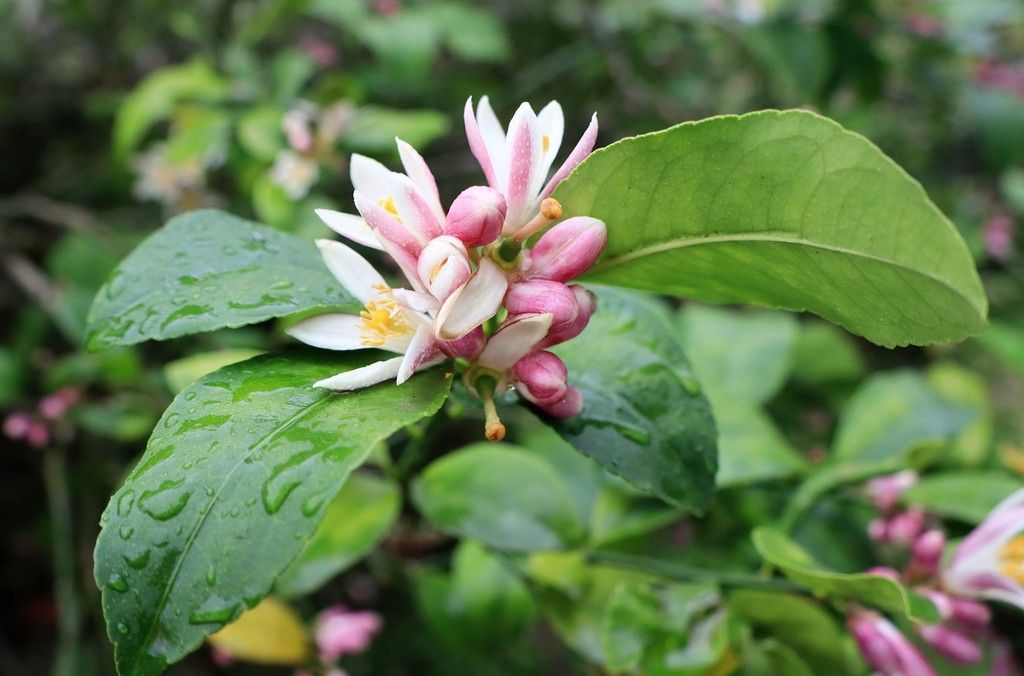
Lemon
Citrus × limon
Lemon is a popular fruit tree. It's on our flower lists for 41 states.
*iNaturalist research-grade observations, as of October 23, 2026. Planted garden trees are mostly excluded from research grade.
On our lists for: Alabama, Arizona, Arkansas, California, Colorado, Connecticut, Florida, Georgia, Hawaii, Idaho, Illinois, Indiana, Kansas, Kentucky, Louisiana, Maine, Maryland, Massachusetts, Michigan, Minnesota, Mississippi, Missouri, Nevada, New Jersey, New Mexico, New York, North Carolina, Ohio, Oklahoma, Oregon, Pennsylvania, Rhode Island, South Carolina, Tennessee, Texas, Utah, Vermont, Virginia, Washington, West Virginia, Wisconsin
Quick look
The lemon is a species of small evergreen tree in the Citrus genus of the flowering plant family Rutaceae. A true lemon is a hybrid of the citron and the bitter orange. Its origins are uncertain, but some evidence suggests lemons originated during the 1st millennium BC in what is now northeastern India. Some other citrus fruits are called lemon.
- It belongs to the Rutaceae family. iNaturalist
- iNaturalist has 7 research-grade sightings of it in Florida, ranking #126 among the 151 flowers on our Florida list. iNaturalist
- iNaturalist has 2 research-grade sightings of it in California, ranking #131 among the 178 flowers on our California list. iNaturalist
- iNaturalist has 2 research-grade sightings of it in Hawaii, ranking #106 among the 118 flowers on our Hawaii list. iNaturalist
Lemon gift ideas
Handmade lemon gifts from independent makers.
🌱 Sample spot. Handmade gift picks from independent shops will appear here once our shop partnership is approved. These cards are placeholders, not real products.
-
Placeholder
Lemon art print
-
Placeholder
Lemon greeting card
-
Placeholder
Lemon mug
-
Placeholder
Lemon earrings
-
Placeholder
Lemon embroidery pattern
-
Placeholder
Lemon sticker
When does it bloom?
Not enough flowering records on iNaturalist to chart yet.
Bloom time in each of our 41 states
| State | Type | Peak bloom | Sightings* |
|---|---|---|---|
| Florida | 🌷 Garden | few records | 7 |
| California | 🌷 Garden | few records | 2 |
| Hawaii | 🌷 Garden | few records | 2 |
| Nevada | 🌷 Garden | few records | 2 |
| Texas | 🌷 Garden | few records | 2 |
| Alabama | 🌷 Garden | few records | 0 |
| Arkansas | 🌷 Garden | few records | 0 |
| Arizona | 🌷 Garden | few records | 0 |
| Colorado | 🌷 Garden | few records | 0 |
| Connecticut | 🌷 Garden | few records | 0 |
| Georgia | 🌷 Garden | few records | 0 |
| Idaho | 🌷 Garden | few records | 0 |
| Illinois | 🌷 Garden | few records | 0 |
| Indiana | 🌷 Garden | few records | 0 |
| Kansas | 🌷 Garden | few records | 0 |
| Kentucky | 🌷 Garden | few records | 0 |
| Louisiana | 🌷 Garden | few records | 0 |
| Massachusetts | 🌷 Garden | few records | 0 |
| Maryland | 🌷 Garden | few records | 0 |
| Maine | 🌷 Garden | few records | 0 |
| Michigan | 🌷 Garden | few records | 0 |
| Minnesota | 🌷 Garden | few records | 0 |
| Missouri | 🌷 Garden | few records | 0 |
| Mississippi | 🌷 Garden | few records | 0 |
| North Carolina | 🌷 Garden | few records | 0 |
| New Jersey | 🌷 Garden | few records | 0 |
| New Mexico | 🌷 Garden | few records | 0 |
| New York | 🌷 Garden | few records | 0 |
| Ohio | 🌷 Garden | few records | 0 |
| Oklahoma | 🌷 Garden | few records | 0 |
| Oregon | 🌷 Garden | few records | 0 |
| Pennsylvania | 🌷 Garden | few records | 0 |
| Rhode Island | 🌷 Garden | few records | 0 |
| South Carolina | 🌷 Garden | few records | 0 |
| Tennessee | 🌷 Garden | few records | 0 |
| Utah | 🌷 Garden | few records | 0 |
| Virginia | 🌷 Garden | few records | 0 |
| Vermont | 🌷 Garden | few records | 0 |
| Washington | 🌷 Garden | few records | 0 |
| Wisconsin | 🌷 Garden | few records | 0 |
| West Virginia | 🌷 Garden | few records | 0 |
Conservation status
- Federal (U.S. ESA)
- Not listed No U.S. Endangered Species Act listing in the USFWS ECOS database. USFWS ECOS
- NatureServe
- Unknown We couldn't find this name in NatureServe Explorer. NatureServe
- Florida
- n/a Florida's list is by species, so a whole genus isn't assessed. FAC 5B-40.0055
- California
- n/a California's list is by species, so a whole genus isn't assessed. CNDDB listed plants (July 2026)
- Hawaii
- n/a Hawaii's list is by species, so a whole genus isn't assessed. HAR 13-107
- Nevada
- n/a Nevada's list is by species, so a whole genus isn't assessed. NAC 527.010
- Texas
- n/a Texas's list is by species, so a whole genus isn't assessed. 31 TAC 69.8
- Alabama
- No list Alabama has no state law listing endangered or threatened plants, so we show NatureServe's Alabama ranks instead.
- Arkansas
- No list Arkansas has no state law listing endangered or threatened plants, so we show NatureServe's Arkansas ranks instead.
- Arizona
- n/a Arizona's list is by species, so a whole genus isn't assessed. AAC R3-3 App. A
- Colorado
- No list Colorado has no state law listing endangered or threatened plants, so we show NatureServe's Colorado ranks instead.
- Connecticut
- n/a Connecticut's list is by species, so a whole genus isn't assessed. CT E/T/SC list
- Georgia
- n/a Georgia's list is by species, so a whole genus isn't assessed. Ga. R. 391-4-10-.09
- Idaho
- No list Idaho has no state law listing endangered or threatened plants, so we show NatureServe's Idaho ranks instead.
- Illinois
- n/a Illinois's list is by species, so a whole genus isn't assessed. IL E&T checklist 2025
- Indiana
- No list Indiana has no state law listing endangered or threatened plants (the DNR keeps a rare plant list, but it isn't regulatory), so we show NatureServe's Indiana ranks instead.
- Kansas
- No list Kansas's endangered and threatened list (K.A.R. 115-15-1) covers animals only, so we show NatureServe's Kansas ranks for plants.
- Kentucky
- n/a Kentucky's list is by species, so a whole genus isn't assessed. 400 KAR 3:040
- Louisiana
- No list Louisiana has no state list of endangered or threatened plants separate from the federal list, so we show federal status and NatureServe's Louisiana ranks.
- Massachusetts
- n/a Massachusetts's list is by species, so a whole genus isn't assessed. MESA list
- Maryland
- n/a Maryland's list is by species, so a whole genus isn't assessed. COMAR 08.03.08
- Maine
- n/a Maine's list is by species, so a whole genus isn't assessed. Maine rare plant list
- Michigan
- n/a Michigan's list is by species, so a whole genus isn't assessed. R 299.1028
- Minnesota
- n/a Minnesota's list is by species, so a whole genus isn't assessed. Minn. R. 6134.0300
- Missouri
- n/a Missouri's list is by species, so a whole genus isn't assessed. 3 CSR 10-4.111
- Mississippi
- No list Mississippi has no state law listing endangered or threatened plants, so we show NatureServe's Mississippi ranks instead.
- North Carolina
- n/a North Carolina's list is by species, so a whole genus isn't assessed. 02 NCAC 48F .0301
- New Jersey
- n/a New Jersey's list is by species, so a whole genus isn't assessed. N.J.A.C. 7:5C-5.1
- New Mexico
- n/a New Mexico's list is by species, so a whole genus isn't assessed. 19.21.2.9 NMAC
- New York
- n/a New York's list is by species, so a whole genus isn't assessed. 6 NYCRR § 193.3
- Ohio
- n/a Ohio's list is by species, so a whole genus isn't assessed. OAC 1501:18-1-03
- Oklahoma
- No list Oklahoma has no state law listing endangered or threatened plants, so we show NatureServe's Oklahoma ranks instead.
- Oregon
- n/a Oregon's list is by species, so a whole genus isn't assessed. OAR 603-073-0070
- Pennsylvania
- n/a Pennsylvania's list is by species, so a whole genus isn't assessed. 17 Pa. Code Ch. 45
- Rhode Island
- n/a Rhode Island's list is by species, so a whole genus isn't assessed. RI rare plants 2016
- South Carolina
- No list South Carolina has no state law listing endangered or threatened plants, so we show NatureServe's South Carolina ranks instead.
- Tennessee
- n/a Tennessee's list is by species, so a whole genus isn't assessed. TN rule 0400-06-02-.04
- Utah
- No list Utah has no state law listing endangered or threatened plants, so we show NatureServe's Utah ranks instead.
- Virginia
- n/a Virginia's list is by species, so a whole genus isn't assessed. 2VAC5-320-10
- Vermont
- n/a Vermont's list is by species, so a whole genus isn't assessed. Vermont E&T list
- Washington
- No list Washington has no state law listing endangered or threatened plants (the Washington Natural Heritage Program's rare plant list isn't regulatory), so we show NatureServe's Washington ranks instead.
- Wisconsin
- n/a Wisconsin's list is by species, so a whole genus isn't assessed. NR 27.03
- West Virginia
- No list West Virginia has no state law listing endangered or threatened plants (only federally listed species are protected), so we show NatureServe's West Virginia ranks instead.
Checked October 23, 2026. Rankings and lists can change, so follow the links for the latest.
Can you eat it?
None of the sources we checked (NC State Extension (no page for this plant)) say whether it's edible or poisonous for people.
It isn't on the ASPCA plant list. For context only: ASPCA lists a related species, Citrus Aurantium (“Bergamot Orange”), as toxic to dogs and cats. That doesn't tell us about this species, so keep pets away to be safe. ASPCA
🌿 Never eat a wild plant unless you're certain of its ID; this isn't medical advice. Worried about a person? Call Poison Control at 1-800-222-1222. Worried about a pet? Call your vet.
Where does it grow?
USDA PLANTS has no state-by-state distribution for this name, so we can't map it yet.
More Florida flowers
Sources
- USDA PLANTS: no profile matched this name.
- iNaturalist, Citrus × limon: taxonomy, research-grade observation counts and “Flowering” annotations, retrieved October 23, 2026.
- Wikipedia, Lemon (lead quoted under CC BY-SA 4.0).
- Florida: Florida Regulated Plant Index (Fla. Admin. Code 5B-40.0055).
- Florida: Florida Noxious Weed List (Fla. Admin. Code 5B-57.007).
- California: California state-listed endangered, threatened and rare plants (14 CCR § 670.2), per CDFW's CNDDB list (July 2026).
- California: California noxious weed species (3 CCR § 4500).
- Hawaii: Hawaii threatened and endangered plants (HAR 13-107; the state list follows the federal list), DLNR Division of Forestry and Wildlife.
- Hawaii: Hawaii noxious weed list (HAR 4-68).
- Nevada: Nevada fully protected plants, critically endangered (NAC 527.010).
- Nevada: Nevada noxious weeds (NAC 555.010).
- Texas: Texas endangered and threatened plants (31 Tex. Admin. Code § 69.8), as listed by Texas Parks and Wildlife.
- Texas: Texas noxious and invasive plant list (4 Tex. Admin. Code § 19.300(a)).
- Alabama: Alabama noxious weeds (Ala. Admin. Code r. 80-10-14-.04).
- Arkansas: Arkansas State Plant Board noxious weeds and prohibited plants (2 CAR § 50-101).
- Arizona: Arizona Native Plant Law protected plants (Ariz. Admin. Code R3-3 Art. 11, App. A, eff. Feb. 2, 2025).
- Arizona: Arizona prohibited noxious weeds (Ariz. Admin. Code R3-4-245).
- Colorado: Colorado noxious weed lists A, B and C (8 CCR 1206-2, eff. May 15, 2025).
- Connecticut: Connecticut Endangered, Threatened and Special Concern Plants (RCSA 26-306; 2015 list).
- Connecticut: Connecticut prohibited invasive plants (Conn. Gen. Stat. § 22a-381d).
- Georgia: Georgia protected plants (Ga. Comp. R. & Regs. 391-4-10-.09; a 2026 update is proposed).
- Idaho: Idaho noxious weeds (IDAPA 02.06.09, Section 220).
- Illinois: Illinois List of Endangered and Threatened Flora (17 Ill. Adm. Code 1050), per the Endangered Species Protection Board's 2025 checklist.
- Illinois: Illinois Official List of Exotic Weeds (17 Ill. Adm. Code 1100.30, Illinois Exotic Weed Act).
- Indiana: Indiana prohibited invasive terrestrial plants (312 IAC 18-3-25).
- Kansas: Kansas noxious weeds (K.A.R. 4-8-44, as amended 2026).
- Kentucky: Kentucky endangered and threatened plant lists (400 KAR 3:040, eff. 2026).
- Kentucky: Kentucky noxious weeds and invasive plants on state rights-of-way (KRS 176.051; species list from the Kentucky Transportation Cabinet).
- Massachusetts: Massachusetts Endangered Species Act list (321 CMR 10.90).
- Massachusetts: Massachusetts Prohibited Plant List (MDAR) (Text from MDAR's 2023 scientific-name PDF (mass.gov blocks automated downloads); 2024-2026 additions listed on the mass.gov page: Alnus glutinosa, Pyrus calleryana, Miscanthus sinensis, Aralia elata, Rhodotypos scandens, Symplocos paniculata.).
- Maryland: Maryland threatened and endangered plants (COMAR 08.03.08.05, .06 and .08).
- Maryland: Maryland Prohibited Invasive Plant List (COMAR 15.06.04.06; MDA, updated July 2026).
- Maine: Maine Rare Plant List (Maine Natural Areas Program, 2021). E and T are Maine's official endangered and threatened plants (12 M.R.S.); SC and PE are tracking categories.
- Maine: Maine Do Not Sell invasive plant list (01-001 C.M.R. ch. 273).
- Michigan: Michigan endangered and threatened plants (Mich. Admin. Code R 299.1028, eff. March 20, 2023).
- Michigan: Michigan prohibited and restricted species (NREPA Part 413 and the 2026 Invasive Species Order), as listed by Michigan's Invasive Species Program.
- Minnesota: Minnesota endangered, threatened and special concern plants (Minn. R. 6134.0300).
- Minnesota: Minnesota Noxious Weed List (Minn. Stat. § 18.79; Minnesota Department of Agriculture, updated January 2026).
- Missouri: Missouri Wildlife Code endangered species (3 CSR 10-4.111), plants.
- Missouri: Missouri noxious weed list (2 CSR 70-45.005).
- Mississippi: Mississippi Noxious Weed List (2 Miss. Code R. 1-3-01-136.01).
- North Carolina: North Carolina Protected Plant Species List (02 NCAC 48F .0301).
- North Carolina: North Carolina Noxious Weed List (02 NCAC 48A .1702) (the list names any non-native Lythrum; we apply it to purple loosestrife (Lythrum salicaria), which isn't native).
- New Jersey: New Jersey Endangered Plant Species List (N.J.A.C. 7:5C-5.1).
- New Jersey: New Jersey prohibited invasive plant species (Invasive Species Management Act; propagation banned from Jan 1, 2027, sale from Jan 1, 2030).
- New Mexico: New Mexico state endangered plant species (19.21.2.9 NMAC).
- New Mexico: New Mexico Noxious Weed List (NM Department of Agriculture, updated June 2020).
- New York: New York protected native plants (6 NYCRR § 193.3).
- New York: New York prohibited and regulated invasive species (6 NYCRR Part 575).
- Ohio: Ohio endangered and threatened plants (Ohio Adm. Code 1501:18-1-03, eff. Dec. 26, 2024).
- Ohio: Ohio invasive plant species (Ohio Adm. Code 901:5-30-01).
- Oklahoma: Oklahoma Noxious Weed Law (2 O.S. § 3-220).
- Oregon: Oregon endangered and threatened plants (OAR 603-073-0070).
- Oregon: Oregon noxious weed quarantine, A and B weeds (OAR 603-052-1200).
- Pennsylvania: Pennsylvania classified native plants (17 Pa. Code Ch. 45, Subchapter B, as amended 2023).
- Pennsylvania: Pennsylvania Noxious Weed List (3 Pa.C.S. § 1519, PA Dept. of Agriculture) (PDA's page spells garlic mustard “Allaria petiolata”; we match it as Alliaria petiolata).
- Rhode Island: Rhode Island Rare Plants 2016 (RI Natural History Survey, from the RI Wildlife Action Plan; informational, Rhode Island has no state plant-protection listing law).
- South Carolina: South Carolina State Plant Pest List, plants (S.C. Code Regs. 27-135; Clemson Dept. of Plant Industry).
- Tennessee: Tennessee endangered plants (Tenn. Comp. R. & Regs. 0400-06-02-.04, Rare Plant Protection and Conservation Act).
- Tennessee: Tennessee Pest Plant List (Tenn. Comp. R. & Regs. 0080-06-24-.02).
- Utah: Utah noxious weed list (Utah Admin. Code R68-9-3).
- Virginia: Virginia endangered and threatened plant and insect species (2VAC5-320-10).
- Virginia: Virginia noxious weeds (2VAC5-317-20, Tier 1, 2 and 3).
- Vermont: Endangered and Threatened Plants of Vermont (10 V.S.A. chap. 123; list of Feb 10, 2022).
- Vermont: Vermont Quarantine List, Regulated Introduced Plant Species Rule (eff. June 16, 2026).
- Washington: Washington State noxious weed list (WAC 16-750-005, -011, -015).
- Wisconsin: Wisconsin endangered and threatened species list (Wis. Admin. Code NR 27.03).
- Wisconsin: Wisconsin invasive species rule (Wis. Admin. Code NR 40.04 prohibited, NR 40.05 restricted).
- West Virginia: West Virginia noxious weeds (W. Va. Code R. § 61-14A-5) (the rule abbreviates some names (e.g. “P. cuspidatum”); we expand them to match).
- USFWS, ECOS species database (ESA listing check), October 23, 2026.
- Edibility and toxicity: ASPCA.
- Photo: Vicki Miller via iNaturalist · CC0 · resized.