Flower profile
Obedient plant
Physostegia virginiana
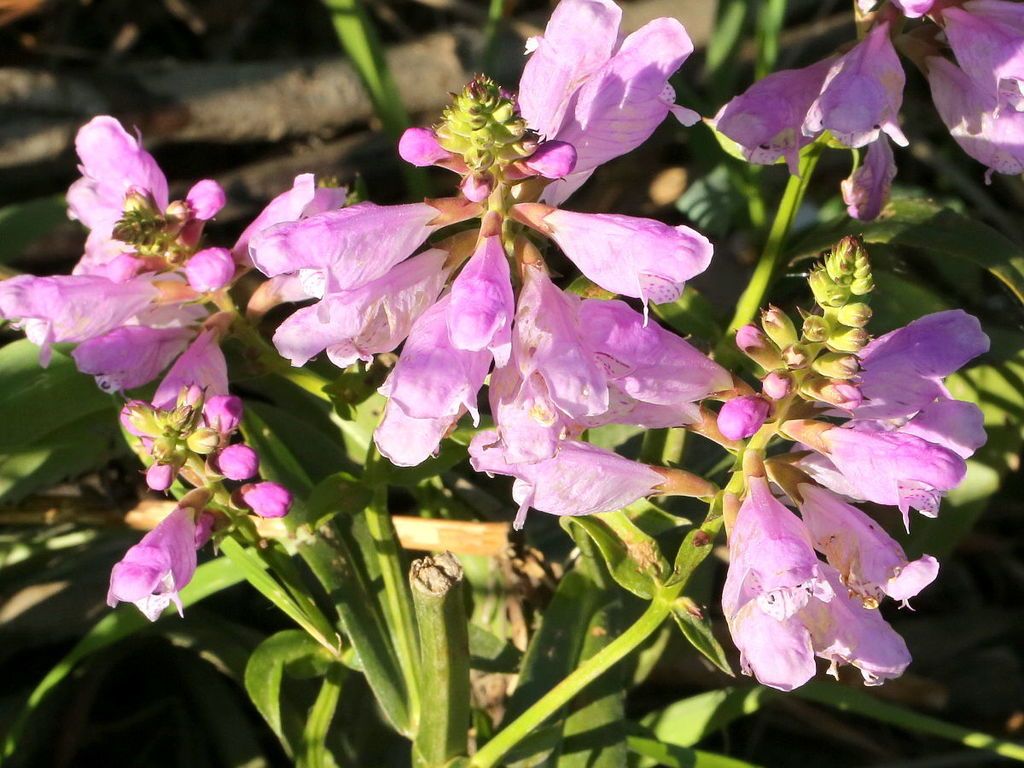
Obedient plant is a wildflower in the Lamiaceae family.12 USDA PLANTS lists it as native in the lower 48 states.2 It is often found in river banks, wet thickets, prairies, river banks, swamps, and low grounds in east and north central texas. sand, clay, limestone and poor drainage okay.3 Across the U.S., flowering sightings are most often in July–September.1
Identification
Obedient plant is described as herbaceous, with perennial.2
The Lady Bird Johnson Wildflower Center describes plants up to about 5 feet tall.3
The Lady Bird Johnson Wildflower Center lists bloom colors as white, pink and purple.3
When it blooms
In Illinois, most flowering sightings come in July–September.1
The Lady Bird Johnson Wildflower Center lists August–November3. iNaturalist flowering sightings across the U.S. are most often in July–September1.
Where it grows
USDA PLANTS records it in 40 states, plus Washington, D.C.2 It is listed as native in the lower 48 states.2 The Lady Bird Johnson Wildflower Center describes the native range as “Que. to MN & e. SD, s. to FL, TX, and Coahuila in northern Mexico; reported in MT.”3 Habitat notes from the same record include river banks, wet thickets, prairies, river banks, swamps, and low grounds in east and north central texas. sand, clay, limestone and poor drainage okay.3
See the full state list
- Illinois
- Alabama
- Arkansas
- Connecticut
- Delaware
- Florida
- Georgia
- Indiana
- Iowa
- Kansas
- Kentucky
- Louisiana
- Maine
- Maryland
- Massachusetts
- Michigan
- Minnesota
- Mississippi
- Missouri
- Montana
- Nebraska
- New Hampshire
- New Jersey
- New Mexico
- New York
- North Carolina
- North Dakota
- Ohio
- Oklahoma
- Pennsylvania
- Rhode Island
- South Carolina
- South Dakota
- Tennessee
- Texas
- Utah
- Vermont
- Virginia
- West Virginia
- Wisconsin
- District of Columbia
Growing and habitat
The Lady Bird Johnson record rates its needs as light: sun, part shade and shade; soil moisture: moist; soil described as “Moist, humus-rich soils”.3
Growing note from that record: “Obedient plant receives its name from the characteristic fact that if you manipulate an individual flower back and forth on its axis, it will stay in position you place it. It is wonderfully adaptable, tolerating both drought and poor…”3
The same record notes that it attracts butterflies and hummingbirds.3
Wildflower Center ratings are general guidance for the species, not a guarantee for your garden.
Conservation
Other states where NatureServe ranks it rare or missing: VT (S2). (S1 critically imperiled, S2 imperiled, SH possibly extirpated, SX presumed extirpated.)4
Related plants
Sources and review date
Facts on this page are drawn from the sources below. Numbers in the text point here. Sources used for this page were retrieved between October 17, 2026 and November 16, 2026.
- iNaturalist (taxonomy, research-grade observation counts and “Flowering” annotations, retrieved October 17, 2026).
- USDA, NRCS. PLANTS Database (profile PHVI8).
- Lady Bird Johnson Wildflower Center, Native Plant Information Network (record PHVI8, retrieved November 16, 2026).
- NatureServe Explorer (global and state ranks for Physostegia virginiana).
- Photo: Peter Chen 2.0 via iNaturalist · CC BY 4.0 · resized.