Garden flower
Orange daylily
Hemerocallis fulva
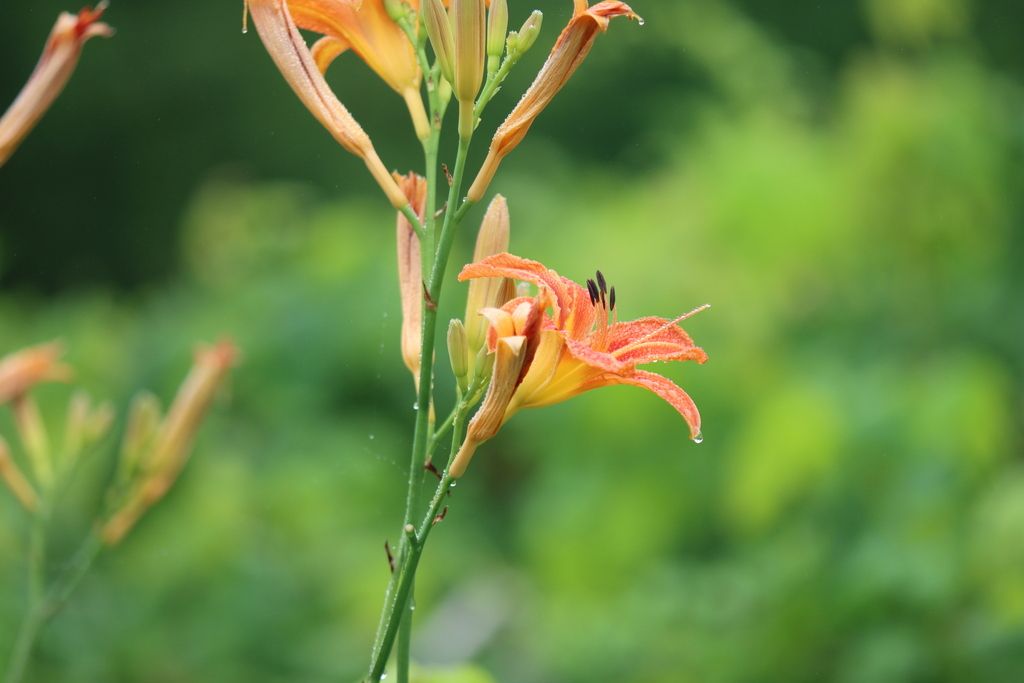
Identification
Orange daylily is described as herbaceous, with perennial.2
When it blooms
iNaturalist flowering sightings across the U.S. are most often in June–July1.
| State | Type | Peak bloom | Obs.* |
|---|---|---|---|
| Alabama | Garden | few records (16) | 157 |
| Arizona | Garden | no flowering records | 0 |
| Arkansas | Garden | few records (14) | 127 |
See bloom time in all 48 states on our lists
| State | Type | Peak bloom | Obs.* |
|---|---|---|---|
| Alabama | Garden | few records (16) | 157 |
| Arizona | Garden | no flowering records | 0 |
| Arkansas | Garden | few records (14) | 127 |
| California | Garden | no flowering records | 1 |
| Colorado | Garden | few records (6) | 29 |
| Connecticut | Garden | few records (13) | 208 |
| Delaware | Garden | few records (19) | 53 |
| Florida | Garden | few records (2) | 17 |
| Georgia | Garden | few records (16) | 263 |
| Idaho | Garden | no flowering records | 2 |
| Illinois | Garden | few records (44) | 652 |
| Indiana | Garden | few records (39) | 322 |
| Iowa | Garden | few records (10) | 159 |
| Kansas | Garden | few records (7) | 53 |
| Kentucky | Garden | June | 192 |
| Louisiana | Garden | no flowering records | 8 |
| Maine | Garden | few records (28) | 148 |
| Maryland | Garden | June–July | 716 |
| Massachusetts | Garden | June–July | 563 |
| Michigan | Garden | few records (41) | 542 |
| Minnesota | Garden | June–August | 471 |
| Mississippi | Garden | few records (10) | 57 |
| Missouri | Garden | few records (13) | 157 |
| Montana | Garden | no flowering records | 2 |
| Nebraska | Garden | few records (2) | 44 |
| Nevada | Garden | no flowering records | 1 |
| New Hampshire | Garden | few records (15) | 139 |
| New Jersey | Garden | June–July | 377 |
| New Mexico | Garden | no flowering records | 0 |
| New York | Garden | June–July | 1,357 |
| North Carolina | Garden | few records (48) | 485 |
| North Dakota | Garden | few records (1) | 2 |
| Ohio | Garden | June–July | 775 |
| Oklahoma | Garden | few records (8) | 54 |
| Oregon | Garden | few records (1) | 43 |
| Pennsylvania | Garden | June–July | 1,352 |
| Rhode Island | Garden | few records (2) | 61 |
| South Carolina | Garden | few records (2) | 97 |
| South Dakota | Garden | no flowering records | 18 |
| Tennessee | Garden | few records (18) | 352 |
| Texas | Garden | few records (8) | 90 |
| Utah | Garden | few records (1) | 12 |
| Vermont | Garden | June–July | 303 |
| Virginia | Garden | few records (47) | 718 |
| Washington | Garden | few records (2) | 16 |
| West Virginia | Garden | few records (32) | 168 |
| Wisconsin | Garden | June–August | 566 |
| Wyoming | Garden | no flowering records | 2 |
*iNaturalist research-grade observations, as of October 17, 2026.1
Where it grows
USDA PLANTS records it in 42 states, plus Washington, D.C.2 Our state guides include it in 48 states, because those lists also cover garden plantings. It is listed as introduced in the lower 48 states.2
See the full state list
- Alabama
- Arizona
- Arkansas
- California
- Colorado
- Connecticut
- Delaware
- Florida
- Georgia
- Idaho
- Illinois
- Indiana
- Iowa
- Kansas
- Kentucky
- Louisiana
- Maine
- Maryland
- Massachusetts
- Michigan
- Minnesota
- Mississippi
- Missouri
- Montana
- Nebraska
- Nevada
- New Hampshire
- New Jersey
- New Mexico
- New York
- North Carolina
- North Dakota
- Ohio
- Oklahoma
- Oregon
- Pennsylvania
- Rhode Island
- South Carolina
- South Dakota
- Tennessee
- Texas
- Utah
- Vermont
- Virginia
- Washington
- West Virginia
- Wisconsin
- Wyoming
- District of Columbia
Invasive status
Regulated invasive plant in Maryland and Delaware. It's on those states' official invasive plant list (Maryland: Prohibited invasive plant (some phase-outs run to 2028); Delaware: Invasive Plant List (sale and propagation prohibited)). Please don't plant or share it there.34
Edibility and toxicity
For people: NC State Extension notes: “Buds and flowers are edible and have been described as having a sweet-spicy or peppery flavor.”5.
For pets: ASPCA's entry “Day Lilies (many varieties)” (Hemerocallis spp), which covers the whole genus, lists it as toxic to cats, but non-toxic to dogs. Signs include: Vomiting, inappetence, lethargy, kidney failure, and death is possible. Cats are only species known to be…6.
Never eat a wild plant unless you are certain of its identity; this is not medical advice. For a person, call Poison Control at 1-800-222-1222. For a pet, call your vet.
Related plants
Sources and review date
Facts on this page are drawn from the sources below. Numbers in the text point here. Sources used for this page were retrieved as of October 17, 2026.
- iNaturalist (taxonomy, research-grade observation counts and “Flowering” annotations, retrieved October 17, 2026).
- USDA, NRCS. PLANTS Database (profile HEFU).
- Maryland Prohibited Invasive Plant List (COMAR 15.06.04.06; MDA, updated July 2026).
- Delaware Invasive Plant List (3 Del. Admin. Code § 806-3.0).
- NC State Extension.
- ASPCA.
- Photo: Steven Lamonde via iNaturalist · CC BY 4.0 · resized.