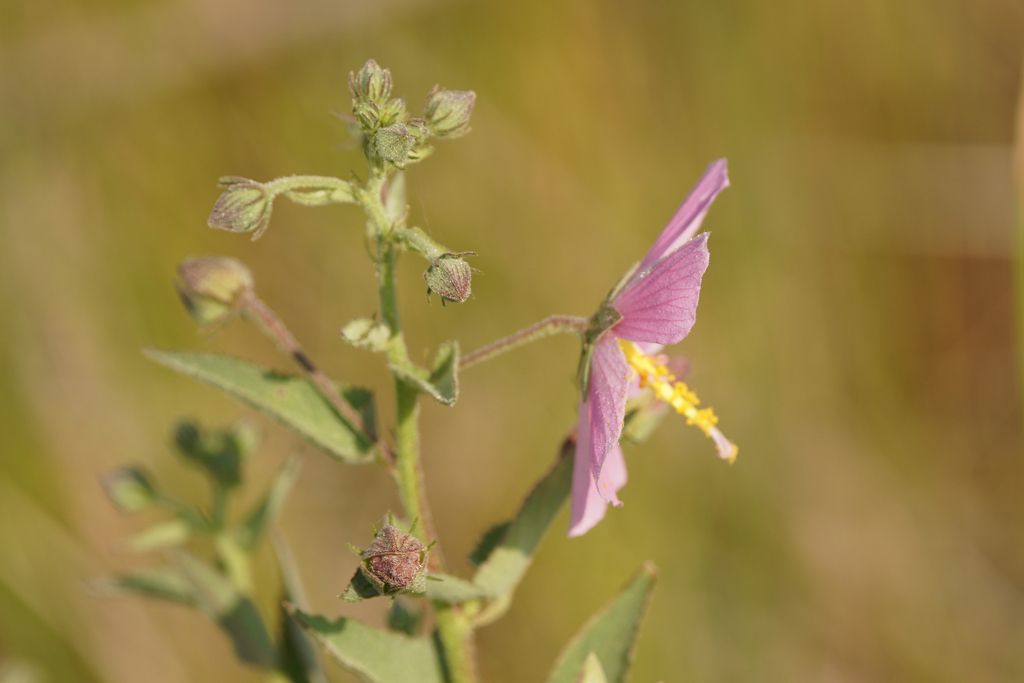
Flower profile
Saltmarsh mallow
Kosteletzkya pentacarpos
Saltmarsh mallow (Kosteletzkya pentacarpos) is a low shrub in the Malvaceae family, native in the lower 48 states, blooming mostly June–September across the U.S.
Saltmarsh mallow is a wildflower that USDA PLANTS lists as native in the lower 48 states.
*iNaturalist research-grade observations, as of October 17, 2026.
On our lists for: Louisiana
Quick look
Kosteletzkya pentacarpos, the seashore mallow, also known as the saltmarsh mallow, sweat weed, Virginia saltmarsh mallow, or hibiscus à cinq carpelles, is an herb found in marshes along the eastern seashore of North America, parts of coastal Southern Europe, southwestern Russia, and Western Asia.
- It belongs to the Malvaceae family. iNaturalist
- USDA PLANTS describes it as an herb (forb) / a subshrub with a perennial life cycle. USDA PLANTS
- USDA PLANTS lists it as native in the lower 48 states and records it in 14 states. USDA PLANTS
- NatureServe lists it as native to Louisiana. NatureServe
- iNaturalist has 538 research-grade sightings of it in Louisiana, ranking #66 among the 154 flowers on our Louisiana list. iNaturalist
When does it bloom?
Conservation status
- Federal (U.S. ESA)
- Not listed Not listed under the Endangered Species Act. USFWS ECOS does track it with the label “Resolved Taxon,” which is informal and gives no legal protection. USFWS ECOS
- NatureServe global
- GNR Not yet ranked worldwide. NatureServe
- Louisiana
- No list Louisiana has no state list of endangered or threatened plants separate from the federal list, so we show federal status and NatureServe's Louisiana ranks. NatureServe: SNR, not yet ranked in Louisiana.
- Rare elsewhere
- Other states where NatureServe ranks it rare or missing: AL (S1), NY (SX). (S1 critically imperiled, S2 imperiled, SH possibly extirpated, SX presumed extirpated.)
Checked October 17, 2026. Rankings and lists can change, so follow the links for the latest.
Can you eat it?
NC State Extension notes: “Flowers can be eaten fresh on salads or used to make tea. Leaves are edible cooked or raw but best if cooked. Roots can also be eaten raw or cooked.” NC State Extension
It isn't on the ASPCA plant list, and NC State Extension doesn't flag it for pets.
🌿 Never eat a wild plant unless you're certain of its ID; this isn't medical advice. Worried about a person? Call Poison Control at 1-800-222-1222. Worried about a pet? Call your vet.
Where does it grow?
USDA PLANTS records saltmarsh mallow in 14 states.
recorded by USDA PLANTS on our state lists not recorded
See the full list of states
Alabama, Delaware, Florida, Georgia, Louisiana, Maryland, Mississippi, New Jersey, New York, North Carolina, Pennsylvania, South Carolina, Texas, Virginia.
Louisiana counties with USDA records: Calcasieu, Cameron, Iberia, Jefferson, Lafourche, Livingston, Orleans, Plaquemines, St. Bernard, St. Charles, St. James, St. John the Baptist, St. Mary, St. Tammany, Tangipahoa, Terrebonne, Vermilion.
Names, range and relatives
Other scientific names (synonyms in USDA PLANTS): Kosteletzkya althaeifolia, Kosteletzkya smilacifolia.
County records: USDA PLANTS lists it in 148 counties across 13 states; the most are in Florida (46), Virginia (27), Louisiana (17).
More from the Malvaceae family (29 on Bloomipedia; most observed first): Turk's cap, Common hibiscus, Swamp rose mallow, Velvetleaf, Dwarf mallow, Apricot globemallow, Checkerbloom, Scarlet globemallow.
More Louisiana flowers
Sources
- USDA, NRCS. PLANTS Database, profile KOVI.
- iNaturalist, Kosteletzkya pentacarpos: taxonomy, research-grade observation counts and “Flowering” annotations, retrieved October 17, 2026.
- Wikipedia, Kosteletzkya pentacarpos (lead quoted under CC BY-SA 4.0).
- USFWS, ECOS species database (ESA listing check), October 17, 2026.
- NatureServe Explorer, Kosteletzkya pentacarpos (global and state ranks).
- Edibility and toxicity: NC State Extension.
- Photo: Dr. Sven Gippner via iNaturalist · CC BY 4.0 · resized.