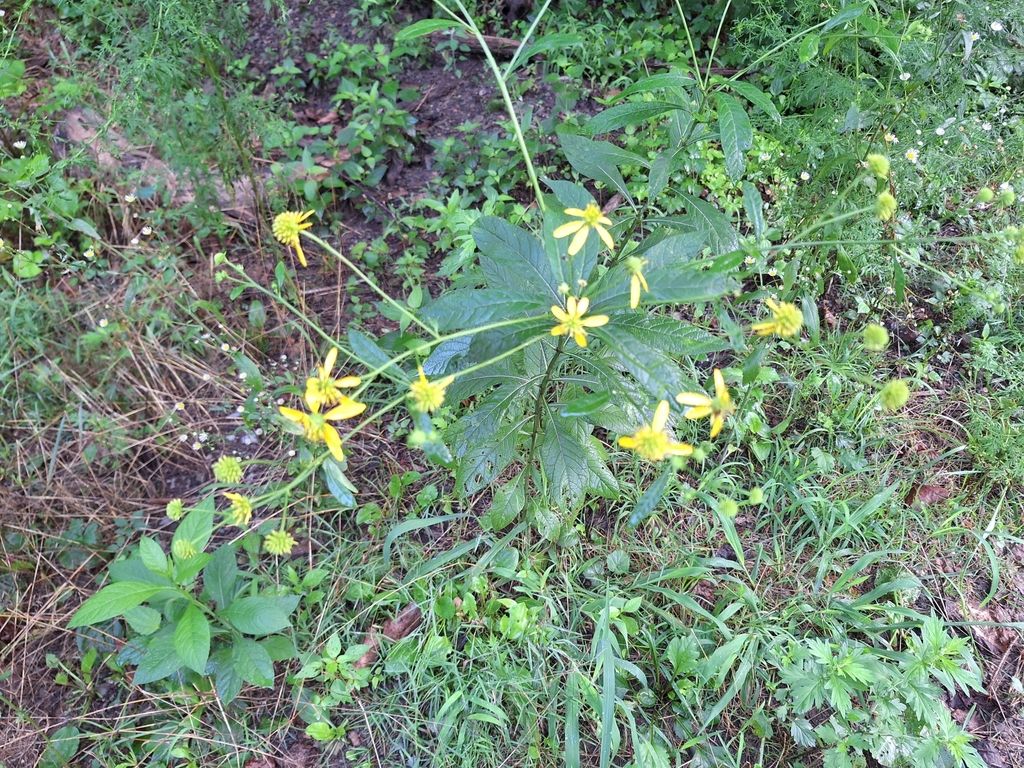
Flower profile
Wingstem
Verbesina alternifolia
Wingstem (Verbesina alternifolia) is a flowering plant in the Asteraceae family, native in the lower 48 states, blooming mostly August–September across the U.S.
Wingstem is a wildflower that USDA PLANTS lists as native in the lower 48 states. It's on our flower lists for 15 states, and across the U.S. it's most often seen in bloom in August–September.
*iNaturalist research-grade observations, as of October 17, 2026.
On our lists for: Arkansas, Illinois, Indiana, Kansas, Kentucky, Maryland, Missouri, Nebraska, North Carolina, Ohio, Oklahoma, Pennsylvania, Tennessee, Virginia, West Virginia
Quick look
Verbesina alternifolia is a species of flowering plant in the family Asteraceae. It is commonly known as wingstem or yellow ironweed. It is native to North America.
- It belongs to the Asteraceae family. iNaturalist
- USDA PLANTS describes it as an herb (forb) with a perennial life cycle. USDA PLANTS
- USDA PLANTS lists it as native in the lower 48 states and records it in 30 states. USDA PLANTS
- In Ohio, most iNaturalist sightings of it in flower come in August–September. iNaturalist
- In Virginia, most iNaturalist sightings of it in flower come in August–October. iNaturalist
- iNaturalist has 6,213 research-grade sightings of it in Ohio, ranking #17 among the 186 flowers on our Ohio list. iNaturalist
- iNaturalist has 4,062 research-grade sightings of it in Virginia, ranking #36 among the 189 flowers on our Virginia list. iNaturalist
- iNaturalist has 3,841 research-grade sightings of it in Pennsylvania, ranking #49 among the 190 flowers on our Pennsylvania list. iNaturalist
When does it bloom?
Bloom time in the 15 states whose Bloomipedia list includes it
| State | Type | Peak bloom | Sightings* |
|---|---|---|---|
| Ohio | Native | August–September | 6,213 |
| Virginia | Native | August–October | 4,062 |
| Pennsylvania | Native | August–September | 3,841 |
| Maryland | Native | August–September | 2,842 |
| Illinois | Native | August–September | 2,286 |
| North Carolina | Native | August–September | 2,079 |
| Indiana | Native | August–September | 2,049 |
| Tennessee | Native | August–October | 1,881 |
| Missouri | Native | August–September | 1,715 |
| Kentucky | Native | August–October | 1,436 |
| West Virginia | Native | August–September | 1,153 |
| Arkansas | Native | August–October | 711 |
| Kansas | Native | few records (17) | 466 |
| Oklahoma | Native | few records (21) | 386 |
| Nebraska | Native | few records (9) | 206 |
Conservation status
- Federal (U.S. ESA)
- Not listed No U.S. Endangered Species Act listing in the USFWS ECOS database. USFWS ECOS
- NatureServe global
- G5 Secure worldwide. NatureServe
- State rare plant lists
- Not listed Not on the official rare plant list in 10 of our 15 states.
See each state
- Ohio
- Not listed Not on Ohio endangered and threatened plants (Ohio Adm. Code 1501:18-1-03, eff. Dec. 26, 2024). NatureServe: SNR, not yet ranked in Ohio. OAC 1501:18-1-03
- Virginia
- Not listed Not on Virginia endangered and threatened plant and insect species (2VAC5-320-10). NatureServe: S5, secure in Virginia. 2VAC5-320-10
- Pennsylvania
- Not listed Not on Pennsylvania classified native plants (17 Pa. Code Ch. 45, Subchapter B, as amended 2023). NatureServe: S5, secure in Pennsylvania. 17 Pa. Code Ch. 45
- Maryland
- Not listed Not on Maryland threatened and endangered plants (COMAR 08.03.08.05, .06 and .08). NatureServe: SNR, not yet ranked in Maryland. COMAR 08.03.08
- Illinois
- Not listed Not on Illinois List of Endangered and Threatened Flora (17 Ill. Adm. Code 1050), per the Endangered Species Protection Board's 2025 checklist. NatureServe: SNR, not yet ranked in Illinois. IL E&T checklist 2025
- North Carolina
- Not listed Not on North Carolina Protected Plant Species List (02 NCAC 48F .0301). NatureServe: S5, secure in North Carolina. 02 NCAC 48F .0301
- Tennessee
- Not listed Not on Tennessee endangered plants (Tenn. Comp. R. & Regs. 0400-06-02-.04, Rare Plant Protection and Conservation Act). NatureServe: SNR, not yet ranked in Tennessee. TN rule 0400-06-02-.04
- Missouri
- Not listed Not on Missouri Wildlife Code endangered species (3 CSR 10-4.111), plants. NatureServe: SNR, not yet ranked in Missouri. 3 CSR 10-4.111
- Kentucky
- Not listed Not on Kentucky endangered and threatened plant lists (400 KAR 3:040, eff. 2026). NatureServe: S5, secure in Kentucky. 400 KAR 3:040
- Nebraska
- Not listed Not on Nebraska threatened and endangered species (163 Neb. Admin. Code ch. 4, § 004). NatureServe: SNR, not yet ranked in Nebraska. 163 NAC 4-004
- Indiana
- No list Indiana has no state law listing endangered or threatened plants (the DNR keeps a rare plant list, but it isn't regulatory), so we show NatureServe's Indiana ranks instead. NatureServe: S5, secure in Indiana.
- West Virginia
- No list West Virginia has no state law listing endangered or threatened plants (only federally listed species are protected), so we show NatureServe's West Virginia ranks instead. NatureServe: S5, secure in West Virginia.
- Arkansas
- No list Arkansas has no state law listing endangered or threatened plants, so we show NatureServe's Arkansas ranks instead. NatureServe: SNR, not yet ranked in Arkansas.
- Kansas
- No list Kansas's endangered and threatened list (K.A.R. 115-15-1) covers animals only, so we show NatureServe's Kansas ranks for plants. NatureServe: S5, secure in Kansas.
- Oklahoma
- No list Oklahoma has no state law listing endangered or threatened plants, so we show NatureServe's Oklahoma ranks instead. NatureServe: SNR, not yet ranked in Oklahoma.
- Rare elsewhere
- Other states where NatureServe ranks it rare or missing: DE (SH), FL (S2). (S1 critically imperiled, S2 imperiled, SH possibly extirpated, SX presumed extirpated.)
Checked October 17, 2026. Rankings and lists can change, so follow the links for the latest.
Can you eat it?
None of the sources we checked (NC State Extension (no edibility or poison notes on its page), USDA PLANTS) say whether it's edible or poisonous for people. NC State Extension
It isn't on the ASPCA plant list, and NC State Extension doesn't flag it for pets.
🌿 Never eat a wild plant unless you're certain of its ID; this isn't medical advice. Worried about a person? Call Poison Control at 1-800-222-1222. Worried about a pet? Call your vet.
Where does it grow?
USDA PLANTS records wingstem in 30 states plus Washington, D.C.
recorded by USDA PLANTS on our state lists not recorded
See the full list of states
Alabama, Arkansas, Delaware, Florida, Georgia, Illinois, Indiana, Iowa, Kansas, Kentucky, Louisiana, Maryland, Massachusetts, Michigan, Mississippi, Missouri, Nebraska, New Jersey, New York, North Carolina, Ohio, Oklahoma, Pennsylvania, Rhode Island, South Carolina, Tennessee, Texas, Virginia, West Virginia, Wisconsin; District of Columbia.
Ohio counties with USDA records: Adams, Allen, Ashland, Ashtabula, Athens, Auglaize, Belmont, Brown, Butler, Carroll, Champaign, Clark, Clermont, Clinton, Columbiana, Coshocton, Crawford, Cuyahoga, Darke, Defiance, Delaware, Erie, Fairfield, Fayette, Franklin, Gallia, Geauga, Greene, Guernsey, Harrison, Henry, Highland, Hocking, Holmes, Huron, Jackson, Jefferson, Knox, Lake, Lawrence, Licking, Logan, Lorain, Lucas, Madison, Marion, Medina, Meigs, Mercer, Miami, Monroe, Montgomery, Morgan, Morrow, Muskingum, Noble, Ottawa, Perry, Pickaway, Pike, Portage, Preble, Putnam, Richland, Ross, Sandusky, Scioto, Seneca, Stark, Summit, Trumbull, Tuscarawas, Union, Van Wert, Vinton, Washington, Wayne, Wood, Wyandot.
Virginia counties with USDA records: Albemarle, Alleghany, Amelia, Amherst, Arlington, Augusta, Bath, Bedford, Bland, Botetourt, Buchanan, Buckingham, Campbell, Caroline, Carroll, Charlotte, Chesterfield, Clarke, Craig, Culpeper, Cumberland, Dickenson, Dinwiddie, Fairfax, Fauquier, Floyd, Fluvanna, Franklin, Frederick, Giles, Goochland, Grayson, Greene, Halifax, Hanover, Henrico, Henry, Highland, King George, King William, Lee, Loudoun, Louisa, Lunenburg, Madison, Mecklenburg, Montgomery, Nelson, Northampton, Nottoway, Orange, Page, Patrick, Pittsylvania, Powhatan, Prince Edward, Prince George, Prince William, Pulaski, Rappahannock, Rockbridge, Rockingham, Russell, Scott, Shenandoah, Smyth, Spotsylvania, Stafford, Surry, Sussex, Tazewell, Virginia Beach , Warren, Washington, Wise, Wythe.
Pennsylvania counties with USDA records: Adams, Allegheny, Armstrong, Beaver, Bedford, Blair, Bucks, Butler, Cambria, Chester, Crawford, Cumberland, Dauphin, Elk, Erie, Fayette, Forest, Franklin, Fulton, Greene, Huntingdon, Indiana, Juniata, Lancaster, Lawrence, Lebanon, Lehigh, Mercer, Mifflin, Montgomery, Montour, Northampton, Perry, Philadelphia, Somerset, Venango, Warren, Washington, Westmoreland, York.
Names, range and relatives
Native status by region (USDA PLANTS): Canada: Native; Lower 48 states: Native.
Other scientific names (synonyms in USDA PLANTS): Actinomeris alternifolia, Ridan alternifolia.
County records: USDA PLANTS lists it in 830 counties across 29 states; the most are in Missouri (103), Illinois (81), Ohio (79).
Other Verbesina on Bloomipedia (3): Frostweed, Cowpen daisy, Yellow crownbeard.
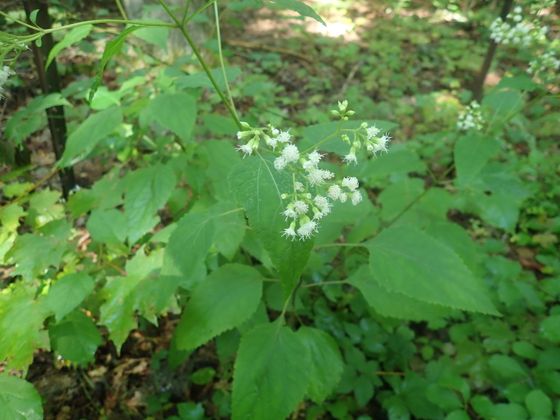
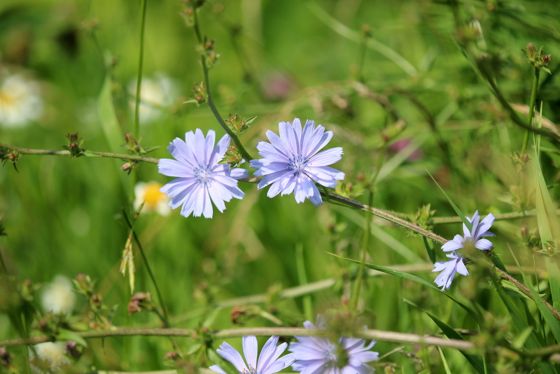
More from the Asteraceae family (212 on Bloomipedia; most observed first): Common yarrow, Goldenrods, White snakeroot, Sunflowers, Chicory, Black-eyed Susan, Bull thistle, Common dandelion.
More Ohio flowers
Sources
- USDA, NRCS. PLANTS Database, profile VEAL.
- iNaturalist, Verbesina alternifolia: taxonomy, research-grade observation counts and “Flowering” annotations, retrieved October 17, 2026.
- Wikipedia, Verbesina alternifolia (lead quoted under CC BY-SA 4.0).
- State rare and invasive plant lists (25):
Show all 25 state lists
- Ohio: Ohio endangered and threatened plants (Ohio Adm. Code 1501:18-1-03, eff. Dec. 26, 2024).
- Ohio: Ohio invasive plant species (Ohio Adm. Code 901:5-30-01).
- Virginia: Virginia endangered and threatened plant and insect species (2VAC5-320-10).
- Virginia: Virginia noxious weeds (2VAC5-317-20, Tier 1, 2 and 3).
- Pennsylvania: Pennsylvania classified native plants (17 Pa. Code Ch. 45, Subchapter B, as amended 2023).
- Pennsylvania: Pennsylvania Noxious Weed List (3 Pa.C.S. § 1519, PA Dept. of Agriculture) (PDA's page spells garlic mustard “Allaria petiolata”; we match it as Alliaria petiolata).
- Maryland: Maryland threatened and endangered plants (COMAR 08.03.08.05, .06 and .08).
- Maryland: Maryland Prohibited Invasive Plant List (COMAR 15.06.04.06; MDA, updated July 2026).
- Illinois: Illinois List of Endangered and Threatened Flora (17 Ill. Adm. Code 1050), per the Endangered Species Protection Board's 2025 checklist.
- Illinois: Illinois Official List of Exotic Weeds (17 Ill. Adm. Code 1100.30, Illinois Exotic Weed Act).
- North Carolina: North Carolina Protected Plant Species List (02 NCAC 48F .0301).
- North Carolina: North Carolina Noxious Weed List (02 NCAC 48A .1702) (the list names any non-native Lythrum; we apply it to purple loosestrife (Lythrum salicaria), which isn't native).
- Indiana: Indiana prohibited invasive terrestrial plants (312 IAC 18-3-25).
- Tennessee: Tennessee endangered plants (Tenn. Comp. R. & Regs. 0400-06-02-.04, Rare Plant Protection and Conservation Act).
- Tennessee: Tennessee Pest Plant List (Tenn. Comp. R. & Regs. 0080-06-24-.02).
- Missouri: Missouri Wildlife Code endangered species (3 CSR 10-4.111), plants.
- Missouri: Missouri noxious weed list (2 CSR 70-45.005).
- Kentucky: Kentucky endangered and threatened plant lists (400 KAR 3:040, eff. 2026).
- Kentucky: Kentucky noxious weeds and invasive plants on state rights-of-way (KRS 176.051; species list from the Kentucky Transportation Cabinet).
- West Virginia: West Virginia noxious weeds (W. Va. Code R. § 61-14A-5) (the rule abbreviates some names (e.g. “P. cuspidatum”); we expand them to match).
- Arkansas: Arkansas State Plant Board noxious weeds and prohibited plants (2 CAR § 50-101).
- Kansas: Kansas noxious weeds (K.A.R. 4-8-44, as amended 2026).
- Oklahoma: Oklahoma Noxious Weed Law (2 O.S. § 3-220).
- Nebraska: Nebraska threatened and endangered species (163 Neb. Admin. Code ch. 4, § 004).
- Nebraska: Nebraska noxious weeds (25 Neb. Admin. Code ch. 10, § 001.02).
- USFWS, ECOS species database (ESA listing check), October 17, 2026.
- NatureServe Explorer, Verbesina alternifolia (global and state ranks).
- Edibility and toxicity: NC State Extension.
- Photo: cigazze via iNaturalist · CC BY 4.0 · resized.