Flower profile
Zizotes milkweed
Asclepias oenotheroides
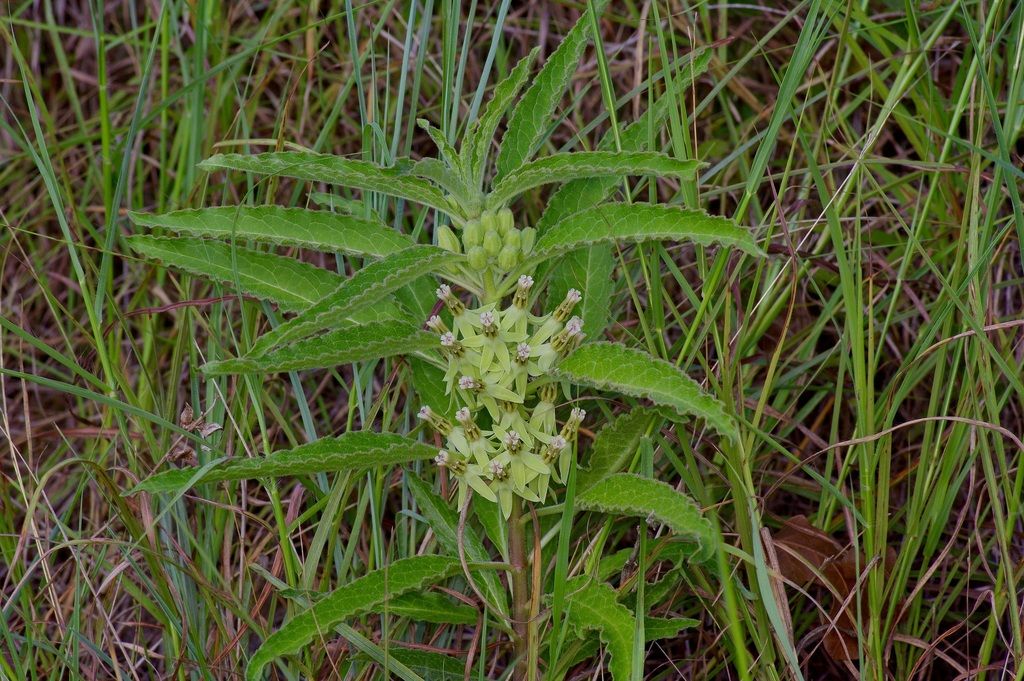
Zizotes milkweed is a wildflower in the Apocynaceae family.12 USDA PLANTS lists it as native in the lower 48 states.2 It is often found in sandy or gravelly ground, prairies, ditches and fields. Can be poisonous to livestock. Prefers sandy, dry soil.3 Across the U.S., flowering sightings are most often in April–September.1
Identification
Zizotes milkweed is described as herbaceous, with perennial.2
The Lady Bird Johnson Wildflower Center describes plants up to about 16 inches tall.3
The Lady Bird Johnson Wildflower Center lists bloom colors as green.3
The Wildflower Center describes the leaves as leaf arrangement is opposite or sub-opposite. leaf attachment is petiolate with 1/2 -1 in (1-2 1/2 cm) long petioles. leaves ovate , 1-4 in (2 1/2-10 cm) long and 1/2-2 1/2 in (1-6 cm) wide. wavy edges..3
When it blooms
In Texas, most flowering sightings come in April–September.1
The Lady Bird Johnson Wildflower Center lists March–October3. iNaturalist flowering sightings across the U.S. are most often in April–September1.
Where it grows
USDA PLANTS records it in 6 states.2 It is listed as native in the lower 48 states.2 Habitat notes from the same record include sandy or gravelly ground, prairies, ditches and fields. Can be poisonous to livestock. Prefers sandy, dry soil.3
Growing and habitat
The Lady Bird Johnson record rates its needs as light: sun; soil moisture: dry.3
Growing note from that record: “This member of the Milkweed family loves full sun and tolerates sandy, dry soils. Great for butterfly gardens. Purple tinge comes to upper leaves in full sun.”3
The same record notes that it attracts butterflies.3
Wildflower Center ratings are general guidance for the species, not a guarantee for your garden.
Conservation
Other states where NatureServe ranks it rare or missing: CO (S1), OK (S1). (S1 critically imperiled, S2 imperiled, SH possibly extirpated, SX presumed extirpated.)4
Edibility and toxicity
The Lady Bird Johnson Wildflower Center warns: “All plants in the genus Asclepias are probably somewhat toxic, some fatally so, to both humans and other animals. The sap of some, including Asclepias oenotheroides , causes skin irritation in humans. The word zizotes in the common name is a Spanish term meaning skin sores.…”3
For pets: ASPCA's entry “Milkweed” (Asclepias species), which covers the whole genus, lists it as toxic to dogs, cats and horses. Signs include: Vomiting, profound depression, weakness, anorexia, and diarrhea are common; may be followed by seizures, difficulty breathing, rapid, weak pulse, dilated pupils, kidney or liver failure, coma…5.
Never eat a wild plant unless you are certain of its identity; this is not medical advice. For a person, call Poison Control at 1-800-222-1222. For a pet, call your vet.
Related plants
Sources and review date
Facts on this page are drawn from the sources below. Numbers in the text point here. Sources used for this page were retrieved between October 17, 2026 and November 16, 2026.
- iNaturalist (taxonomy, research-grade observation counts and “Flowering” annotations, retrieved October 17, 2026).
- USDA, NRCS. PLANTS Database (profile ASOE).
- Lady Bird Johnson Wildflower Center, Native Plant Information Network (record ASOE, retrieved November 16, 2026).
- NatureServe Explorer (global and state ranks for Asclepias oenotheroides).
- ASPCA.
- Photo: Michelle W. (鍾偉瑋) via iNaturalist · CC BY 4.0 · resized.