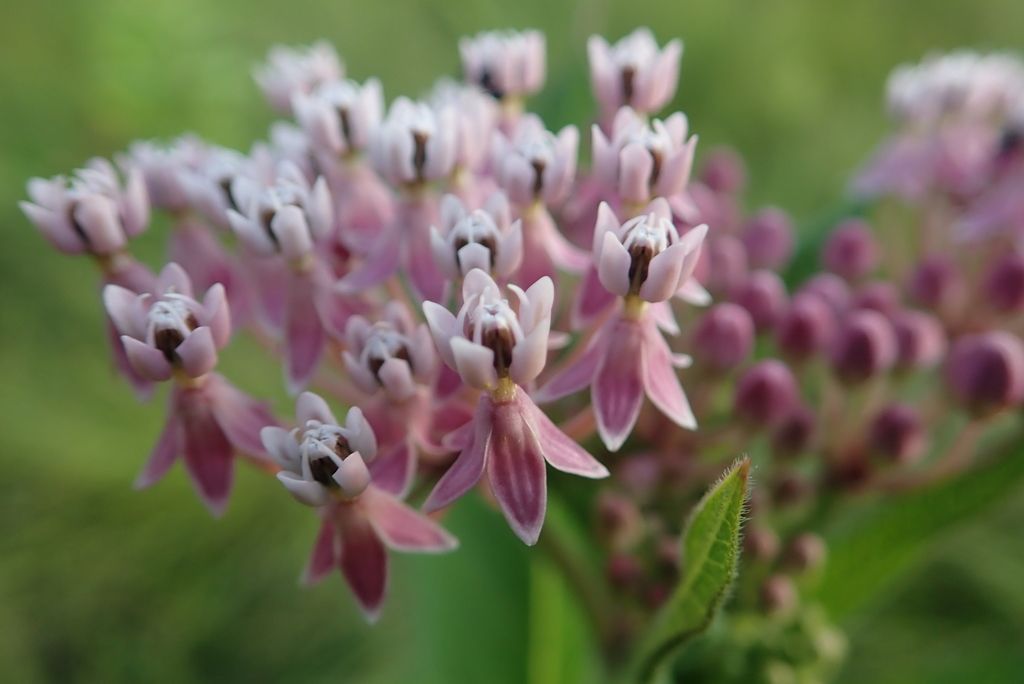
Flower profile
Swamp milkweed
Asclepias incarnata
Swamp milkweed is a wildflower that USDA PLANTS lists as native in the lower 48 states. It's on our flower lists for 17 states, and across the U.S. it's most often seen in bloom in June–August.
*iNaturalist research-grade observations, as of October 17, 2026.
On our lists for: Delaware, Illinois, Indiana, Iowa, Maryland, Massachusetts, Michigan, Minnesota, Nebraska, New Hampshire, New Jersey, New York, Ohio, Pennsylvania, Rhode Island, South Dakota, Wisconsin
Quick look
Asclepias incarnata, the swamp milkweed, rose milkweed, rose milkflower, swamp silkweed, or white Indian hemp, is a herbaceous perennial plant species native to North America. It grows in damp through wet soils and also is cultivated as a garden plant for its flowers, which attract butterflies and other pollinators with nectar.
- It belongs to the Apocynaceae family. iNaturalist
- USDA PLANTS describes it as an herb (forb) with a perennial life cycle. USDA PLANTS
- USDA PLANTS lists it as native in the lower 48 states and records it in 43 states. USDA PLANTS
- In New York, most iNaturalist sightings of it in flower come in June–August. iNaturalist
- In Ohio, most iNaturalist sightings of it in flower come in June–August. iNaturalist
- USDA PLANTS lists its flower color as red. USDA PLANTS
- USDA PLANTS gives its bloom period as fall. USDA PLANTS
- USDA PLANTS lists a mature height of about 4.9 ft. USDA PLANTS
- iNaturalist has 4,500 research-grade sightings of it in New York, ranking #48 among the 109 flowers on our New York list. iNaturalist
- iNaturalist has 3,737 research-grade sightings of it in Ohio, ranking #40 among the 109 flowers on our Ohio list. iNaturalist
- iNaturalist has 3,677 research-grade sightings of it in Michigan, ranking #28 among the 111 flowers on our Michigan list. iNaturalist
Swamp milkweed gift ideas
Handmade swamp milkweed gifts from independent makers.
🌱 Sample spot. Handmade gift picks from independent shops will appear here once our shop partnership is approved. These cards are placeholders, not real products.
-
Placeholder
Swamp milkweed art print
-
Placeholder
Swamp milkweed greeting card
-
Placeholder
Swamp milkweed mug
-
Placeholder
Swamp milkweed earrings
-
Placeholder
Swamp milkweed embroidery pattern
-
Placeholder
Swamp milkweed sticker
When does it bloom?
Bloom time in each of our 17 states
| State | Type | Peak bloom | Sightings* |
|---|---|---|---|
| New York | Native | June–August | 4,500 |
| Ohio | Native | June–August | 3,737 |
| Michigan | Native | June–August | 3,677 |
| Illinois | Native | June–August | 3,456 |
| Wisconsin | Native | June–August | 3,269 |
| Minnesota | Native | June–August | 3,065 |
| Pennsylvania | Native | June–August | 2,354 |
| Massachusetts | Native | June–August | 1,781 |
| Maryland | Native | June–August | 1,280 |
| New Jersey | Native | June–August | 1,144 |
| Indiana | Native | June–August | 1,135 |
| Iowa | Native | July–August | 695 |
| Nebraska | Native | June–August | 358 |
| South Dakota | Native | few records | 302 |
| New Hampshire | Native | June–August | 263 |
| Rhode Island | Native | June–August | 235 |
| Delaware | Native | July–August | 162 |
Conservation status
- Federal (U.S. ESA)
- Not listed Not listed under the Endangered Species Act. USFWS ECOS does track it with the label “Not Listed,” which is informal and gives no legal protection. USFWS ECOS
- NatureServe global
- G5 Secure worldwide. NatureServe
- New York
- Not listed Not on New York protected native plants (6 NYCRR § 193.3). NatureServe: S5, secure in New York. 6 NYCRR § 193.3
- Ohio
- Not listed Not on Ohio endangered and threatened plants (Ohio Adm. Code 1501:18-1-03, eff. Dec. 26, 2024). NatureServe: SNR, not yet ranked in Ohio. OAC 1501:18-1-03
- Michigan
- Not listed Not on Michigan endangered and threatened plants (Mich. Admin. Code R 299.1028, eff. March 20, 2023). NatureServe: SNR, not yet ranked in Michigan. R 299.1028
- Illinois
- Not listed Not on Illinois List of Endangered and Threatened Flora (17 Ill. Adm. Code 1050), per the Endangered Species Protection Board's 2025 checklist. NatureServe: SNR, not yet ranked in Illinois. IL E&T checklist 2025
- Wisconsin
- Not listed Not on Wisconsin endangered and threatened species list (Wis. Admin. Code NR 27.03). NatureServe: SNR, not yet ranked in Wisconsin. NR 27.03
- Minnesota
- Not listed Not on Minnesota endangered, threatened and special concern plants (Minn. R. 6134.0300). NatureServe: SNR, not yet ranked in Minnesota. Minn. R. 6134.0300
- Pennsylvania
- Not listed Not on Pennsylvania classified native plants (17 Pa. Code Ch. 45, Subchapter B, as amended 2023). NatureServe: S5, secure in Pennsylvania. 17 Pa. Code Ch. 45
- Massachusetts
- Not listed Not on Massachusetts Endangered Species Act list (321 CMR 10.90). NatureServe: SNR, not yet ranked in Massachusetts. MESA list
- Maryland
- Not listed Not on Maryland threatened and endangered plants (COMAR 08.03.08.05, .06 and .08). NatureServe: SNR, not yet ranked in Maryland. COMAR 08.03.08
- New Jersey
- Not listed Not on New Jersey Endangered Plant Species List (N.J.A.C. 7:5C-5.1). NatureServe: SNR, not yet ranked in New Jersey. N.J.A.C. 7:5C-5.1
- Indiana
- No list Indiana has no state law listing endangered or threatened plants (the DNR keeps a rare plant list, but it isn't regulatory), so we show NatureServe's Indiana ranks instead. NatureServe: S5, secure in Indiana.
- Iowa
- Not listed Not on Iowa endangered, threatened and special concern plants (Iowa Admin. Code r. 571-77.3). NatureServe: S5, secure in Iowa. IAC 571-77.3
- Nebraska
- Not listed Not on Nebraska threatened and endangered species (163 Neb. Admin. Code ch. 4, § 004). NatureServe: SNR, not yet ranked in Nebraska. 163 NAC 4-004
- South Dakota
- No list South Dakota's endangered and threatened list (ARSD 41:10:02) covers animals only, so we show NatureServe's South Dakota ranks for plants. NatureServe: SNR, not yet ranked in South Dakota.
- New Hampshire
- Not listed Not on New Hampshire Official Rare Plants List (Ncr 312, eff. Jan 1, 2020). NatureServe: SNR, not yet ranked in New Hampshire. NH Ncr 312
- Rhode Island
- Not listed Not on Rhode Island Rare Plants 2016 (RI Natural History Survey, from the RI Wildlife Action Plan; informational, Rhode Island has no state plant-protection listing law). NatureServe: SNR, not yet ranked in Rhode Island. RI rare plants 2016
- Delaware
- Not listed Not on Rare and Uncommon Plants of Delaware (DNREC, 2024; informational, Delaware has no state plant-protection list). NatureServe: S5, secure in Delaware. DE rare plants 2024
- Rare elsewhere
- Other states where NatureServe ranks it rare or missing: AR (S2), AZ (S1), ID (S2), LA (S2), MS (S1), MT (S1), NV (S1), UT (S2), WY (S2). (S1 critically imperiled, S2 imperiled, SH possibly extirpated, SX presumed extirpated.)
Checked October 17, 2026. Rankings and lists can change, so follow the links for the latest.
Can you eat it?
NC State Extension lists it as poisonous to humans (severity: low). Poisonous parts: flowers, fruits, leaves, roots, seeds, stems. Symptoms they list: “Can cause stomach upset, nausea, vomiting, abdominal pain, diarrhea, weakness, lethargy, and confusion if eaten in quantity. Milky sap can cause contact dermatitis and eye irritation” NC State Extension
ASPCA's entry “Milkweed” (Asclepias species), which covers the whole genus, lists it as toxic to dogs, cats and horses. ASPCA
🌿 Never eat a wild plant unless you're certain of its ID; this isn't medical advice. Worried about a person? Call Poison Control at 1-800-222-1222. Worried about a pet? Call your vet.
Where does it grow?
USDA PLANTS records swamp milkweed in 43 states plus Washington, D.C.
recorded by USDA PLANTS on our state lists not recorded
See the full list of states
Alabama, Arkansas, Colorado, Connecticut, Delaware, Florida, Georgia, Idaho, Illinois, Indiana, Iowa, Kansas, Kentucky, Louisiana, Maine, Maryland, Massachusetts, Michigan, Minnesota, Missouri, Montana, Nebraska, Nevada, New Hampshire, New Jersey, New Mexico, New York, North Carolina, North Dakota, Ohio, Oklahoma, Pennsylvania, Rhode Island, South Carolina, South Dakota, Tennessee, Texas, Utah, Vermont, Virginia, West Virginia, Wisconsin, Wyoming; District of Columbia.
New York counties with USDA records: Albany, Bronx, Broome, Cattaraugus, Chautauqua, Chenango, Clinton, Columbia, Delaware, Dutchess, Erie, Essex, Franklin, Greene, Herkimer, Jefferson, Kings, Lewis, Livingston, Madison, Monroe, Nassau, New York, Oneida, Onondaga, Ontario, Orange, Orleans, Oswego, Otsego, Putnam, Queens, Richmond, Rockland, Saratoga, Schenectady, Schuyler, St. Lawrence, Suffolk, Sullivan, Tompkins, Ulster, Warren, Washington, Westchester, Yates.
Ohio counties with USDA records: Adams, Ashland, Ashtabula, Athens, Auglaize, Belmont, Brown, Butler, Carroll, Champaign, Clark, Clermont, Clinton, Columbiana, Coshocton, Crawford, Cuyahoga, Darke, Defiance, Delaware, Erie, Fairfield, Fayette, Franklin, Fulton, Gallia, Geauga, Guernsey, Hamilton, Hancock, Hardin, Harrison, Henry, Highland, Hocking, Holmes, Huron, Jackson, Jefferson, Knox, Lake, Lawrence, Licking, Logan, Lorain, Lucas, Madison, Mahoning, Marion, Medina, Meigs, Mercer, Miami, Monroe, Montgomery, Morgan, Morrow, Muskingum, Noble, Ottawa, Paulding, Perry, Pickaway, Pike, Portage, Preble, Putnam, Richland, Ross, Sandusky, Scioto, Seneca, Shelby, Stark, Summit, Trumbull, Tuscarawas, Union, Van Wert, Vinton, Warren, Washington, Wayne, Williams, Wood, Wyandot.
Michigan counties with USDA records: Alcona, Allegan, Alpena, Antrim, Arenac, Baraga, Barry, Bay, Benzie, Berrien, Branch, Calhoun, Cass, Charlevoix, Cheboygan, Chippewa, Clare, Clinton, Crawford, Delta, Dickinson, Eaton, Emmet, Genesee, Gogebic, Grand Traverse, Gratiot, Hillsdale, Houghton, Huron, Ingham, Iosco, Isabella, Jackson, Kalamazoo, Kalkaska, Kent, Lake, Lapeer, Leelanau, Lenawee, Livingston, Luce, Mackinac, Macomb, Manistee, Marquette, Mason, Mecosta, Menominee, Midland, Missaukee, Monroe, Montcalm, Montmorency, Muskegon, Newaygo, Oakland, Oceana, Ogemaw, Ontonagon, Otsego, Ottawa, Presque Isle, Roscommon, Saginaw, Sanilac, Schoolcraft, Shiawassee, St. Clair, St. Joseph, Tuscola, Van Buren, Washtenaw, Wayne, Wexford.
More New York flowers
Sources
- USDA, NRCS. PLANTS Database, profile ASIN.
- iNaturalist, Asclepias incarnata: taxonomy, research-grade observation counts and “Flowering” annotations, retrieved October 17, 2026.
- Wikipedia, Asclepias incarnata (lead quoted under CC BY-SA 4.0).
- New York: New York protected native plants (6 NYCRR § 193.3).
- New York: New York prohibited and regulated invasive species (6 NYCRR Part 575).
- Ohio: Ohio endangered and threatened plants (Ohio Adm. Code 1501:18-1-03, eff. Dec. 26, 2024).
- Ohio: Ohio invasive plant species (Ohio Adm. Code 901:5-30-01).
- Michigan: Michigan endangered and threatened plants (Mich. Admin. Code R 299.1028, eff. March 20, 2023).
- Michigan: Michigan prohibited and restricted species (NREPA Part 413 and the 2026 Invasive Species Order), as listed by Michigan's Invasive Species Program.
- Illinois: Illinois List of Endangered and Threatened Flora (17 Ill. Adm. Code 1050), per the Endangered Species Protection Board's 2025 checklist.
- Illinois: Illinois Official List of Exotic Weeds (17 Ill. Adm. Code 1100.30, Illinois Exotic Weed Act).
- Wisconsin: Wisconsin endangered and threatened species list (Wis. Admin. Code NR 27.03).
- Wisconsin: Wisconsin invasive species rule (Wis. Admin. Code NR 40.04 prohibited, NR 40.05 restricted).
- Minnesota: Minnesota endangered, threatened and special concern plants (Minn. R. 6134.0300).
- Minnesota: Minnesota Noxious Weed List (Minn. Stat. § 18.79; Minnesota Department of Agriculture, updated January 2026).
- Pennsylvania: Pennsylvania classified native plants (17 Pa. Code Ch. 45, Subchapter B, as amended 2023).
- Pennsylvania: Pennsylvania Noxious Weed List (3 Pa.C.S. § 1519, PA Dept. of Agriculture) (PDA's page spells garlic mustard “Allaria petiolata”; we match it as Alliaria petiolata).
- Massachusetts: Massachusetts Endangered Species Act list (321 CMR 10.90).
- Massachusetts: Massachusetts Prohibited Plant List (MDAR) (Text from MDAR's 2023 scientific-name PDF (mass.gov blocks automated downloads); 2024-2026 additions listed on the mass.gov page: Alnus glutinosa, Pyrus calleryana, Miscanthus sinensis, Aralia elata, Rhodotypos scandens, Symplocos paniculata.).
- Maryland: Maryland threatened and endangered plants (COMAR 08.03.08.05, .06 and .08).
- Maryland: Maryland Prohibited Invasive Plant List (COMAR 15.06.04.06; MDA, updated July 2026).
- New Jersey: New Jersey Endangered Plant Species List (N.J.A.C. 7:5C-5.1).
- New Jersey: New Jersey prohibited invasive plant species (Invasive Species Management Act; propagation banned from Jan 1, 2027, sale from Jan 1, 2030).
- Indiana: Indiana prohibited invasive terrestrial plants (312 IAC 18-3-25).
- Iowa: Iowa endangered, threatened and special concern plants (Iowa Admin. Code r. 571-77.3).
- Iowa: Iowa noxious weeds (Iowa Code § 317.1A).
- Nebraska: Nebraska threatened and endangered species (163 Neb. Admin. Code ch. 4, § 004).
- Nebraska: Nebraska noxious weeds (25 Neb. Admin. Code ch. 10, § 001.02).
- South Dakota: South Dakota statewide noxious weeds (ARSD 12:62:03:01.06).
- New Hampshire: New Hampshire Official Rare Plants List (Ncr 312, eff. Jan 1, 2020).
- New Hampshire: NH Prohibited Invasive Species List (Agr 3800, Table 3800.1).
- Rhode Island: Rhode Island Rare Plants 2016 (RI Natural History Survey, from the RI Wildlife Action Plan; informational, Rhode Island has no state plant-protection listing law).
- Delaware: Rare and Uncommon Plants of Delaware (DNREC, 2024; informational, Delaware has no state plant-protection list).
- Delaware: Delaware Invasive Plant List (3 Del. Admin. Code § 806-3.0).
- USFWS, ECOS species database (ESA listing check), October 17, 2026.
- NatureServe Explorer, Asclepias incarnata (global and state ranks).
- Edibility and toxicity: NC State Extension; ASPCA.
- Photo: Laura J. Costello via iNaturalist · CC BY 4.0 · resized.