Flower profile
Narrowleaf cow wheat
Melampyrum lineare
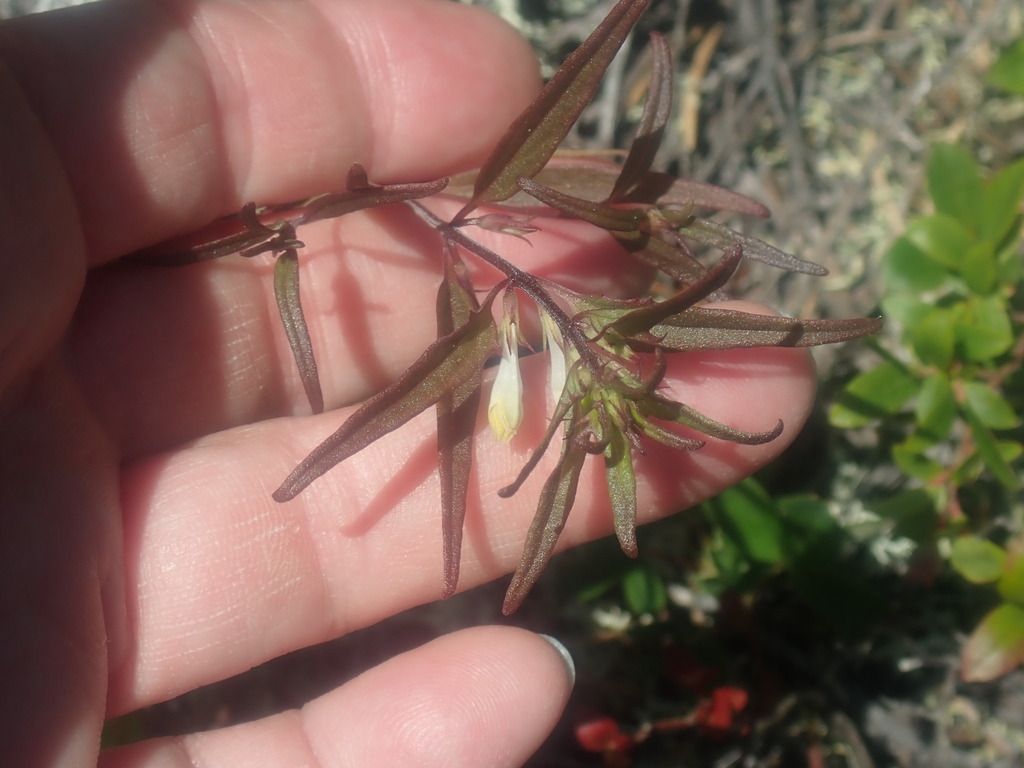
Identification
Narrowleaf cow wheat is described as herbaceous, with annual.2
The Lady Bird Johnson Wildflower Center describes plants up to about 16 inches tall.3
The Lady Bird Johnson Wildflower Center lists bloom colors as white.3
When it blooms
The Lady Bird Johnson Wildflower Center lists June–August3. iNaturalist flowering sightings across the U.S. are most often in June–August1.
Where it grows
USDA PLANTS records it in 27 states, plus Washington, D.C.2 It is listed as native in the lower 48 states.2 The Lady Bird Johnson Wildflower Center describes the native range as “Alberta east to Newfoundland, south to Georgia, and northwest to Tennessee, Illinois, and Minnesota; also in Montana, Idaho, and Washington.”3 Habitat notes from the same record include dry to moist woods, bogs, and rocky barrens.3
Growing and habitat
The Lady Bird Johnson record rates its needs as soil moisture: dry and moist.3
Wildflower Center ratings are general guidance for the species, not a guarantee for your garden.
Conservation
Other states where NatureServe ranks it rare or missing: IL (SX), IN (S1), SC (S2). (S1 critically imperiled, S2 imperiled, SH possibly extirpated, SX presumed extirpated.)4
Edibility and toxicity
The Lady Bird Johnson Wildflower Center warns: “Alfalfa can be toxic to animals and mildly toxic to some humans if ingested. Sensitivity to a toxin varies with age, weight, physical condition, and individual susceptibility. Children are most vulnerable because of their curiosity and small size.”3
Never eat a wild plant unless you are certain of its identity; this is not medical advice. For a person, call Poison Control at 1-800-222-1222. For a pet, call your vet.
Related plants
Sources and review date
Facts on this page are drawn from the sources below. Numbers in the text point here. Sources used for this page were retrieved between October 17, 2026 and November 16, 2026.
- iNaturalist (taxonomy, research-grade observation counts and “Flowering” annotations, retrieved October 17, 2026).
- USDA, NRCS. PLANTS Database (profile MELI2).
- Lady Bird Johnson Wildflower Center, Native Plant Information Network (record MELI2, retrieved November 16, 2026).
- NatureServe Explorer (global and state ranks for Melampyrum lineare).
- Photo: Lynn Harper via iNaturalist · CC0 · resized.