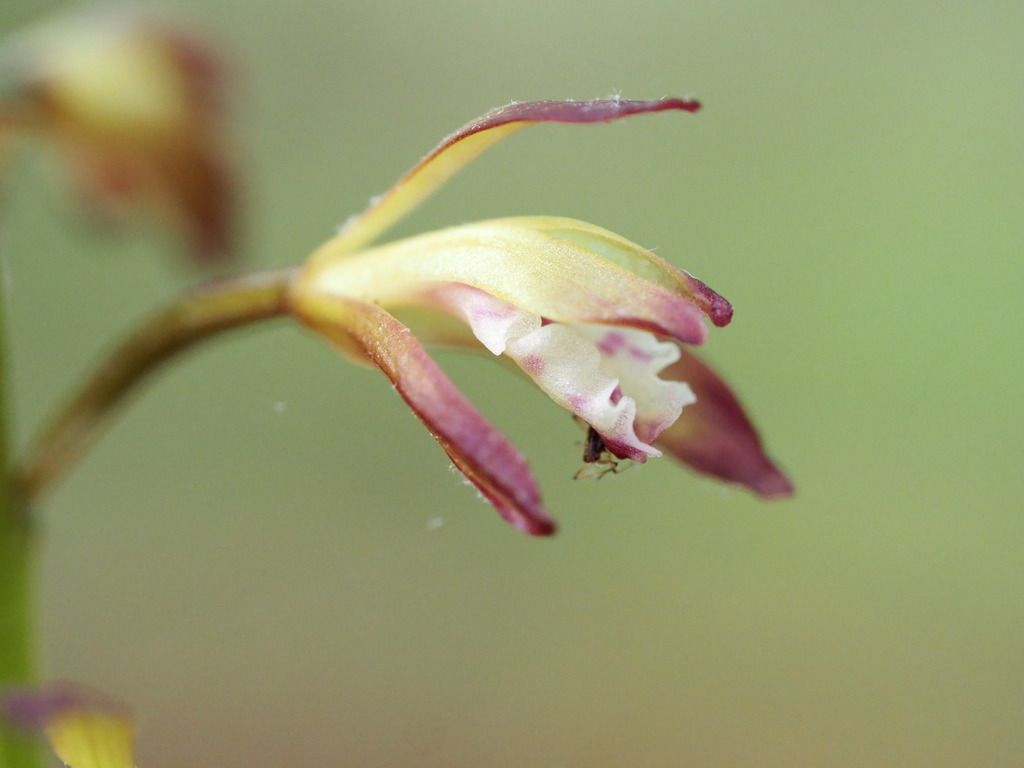
Flower profile
Putty root
Aplectrum hyemale
Putty root (Aplectrum hyemale) is a flowering plant in the Orchidaceae family, native in the lower 48 states, blooming mostly in May across the U.S.
Putty root is a wildflower that USDA PLANTS lists as native in the lower 48 states. It's on our flower lists for 5 states, and across the U.S. it's most often seen in bloom in May.
*iNaturalist research-grade observations, as of October 17, 2026.
On our lists for: Indiana, Kentucky, North Carolina, Virginia, West Virginia
Quick look
Aplectrum hyemale is a species of orchid native to the eastern United States and Canada, from Oklahoma east to the Carolinas and north to Minnesota, Ontario, Quebec and Massachusetts. It is particularly common in the Appalachian Mountains, the Great Lakes Region, and the Ohio and Upper Mississippi Valleys. Isolated populations are also reported from Arizona.
- It belongs to the Orchidaceae family. iNaturalist
- USDA PLANTS describes it as an herb (forb) with a perennial life cycle. USDA PLANTS
- USDA PLANTS lists it as native in the lower 48 states and records it in 29 states. USDA PLANTS
- NatureServe lists it as native to North Carolina, Virginia, Indiana, Kentucky and West Virginia. NatureServe
- In North Carolina, most iNaturalist sightings of it in flower come in May. iNaturalist
- In Virginia, most iNaturalist sightings of it in flower come in May–June. iNaturalist
- iNaturalist has 2,223 research-grade sightings of it in North Carolina, ranking #78 among the 192 flowers on our North Carolina list. iNaturalist
- iNaturalist has 1,988 research-grade sightings of it in Virginia, ranking #88 among the 189 flowers on our Virginia list. iNaturalist
- iNaturalist has 1,158 research-grade sightings of it in Indiana, ranking #62 among the 173 flowers on our Indiana list. iNaturalist
When does it bloom?
Bloom time in the 5 states whose Bloomipedia list includes it
| State | Type | Peak bloom | Sightings* |
|---|---|---|---|
| North Carolina | Native | May | 2,223 |
| Virginia | Native | May–June | 1,988 |
| Indiana | Native | May | 1,158 |
| Kentucky | Native | few records (35) | 666 |
| West Virginia | Native | few records (7) | 404 |
Conservation status
- Federal (U.S. ESA)
- Not listed No U.S. Endangered Species Act listing in the USFWS ECOS database. USFWS ECOS
- NatureServe global
- G5 Secure worldwide. NatureServe
- North Carolina
- Not listed Not on North Carolina Protected Plant Species List (02 NCAC 48F .0301). NatureServe: S4, apparently secure in North Carolina. 02 NCAC 48F .0301
- Virginia
- Not listed Not on Virginia endangered and threatened plant and insect species (2VAC5-320-10). NatureServe: S5, secure in Virginia. 2VAC5-320-10
- Indiana
- No list Indiana has no state law listing endangered or threatened plants (the DNR keeps a rare plant list, but it isn't regulatory), so we show NatureServe's Indiana ranks instead. NatureServe: S5, secure in Indiana.
- Kentucky
- Not listed Not on Kentucky endangered and threatened plant lists (400 KAR 3:040, eff. 2026). NatureServe: S5, secure in Kentucky. 400 KAR 3:040
- West Virginia
- No list West Virginia has no state law listing endangered or threatened plants (only federally listed species are protected), so we show NatureServe's West Virginia ranks instead. NatureServe: S5, secure in West Virginia.
- Rare elsewhere
- Other states where NatureServe ranks it rare or missing: AL (S2), CT (SH), DE (S1), KS (S2), MA (S1), MS (S1), NJ (S1), NY (S1), OK (SH), VT (S1). (S1 critically imperiled, S2 imperiled, SH possibly extirpated, SX presumed extirpated.)
Checked October 17, 2026. Rankings and lists can change, so follow the links for the latest.
Can you eat it?
NC State Extension notes: “non-edible” NC State Extension
It isn't on the ASPCA plant list, and NC State Extension doesn't flag it for pets.
🌿 Never eat a wild plant unless you're certain of its ID; this isn't medical advice. Worried about a person? Call Poison Control at 1-800-222-1222. Worried about a pet? Call your vet.
Where does it grow?
USDA PLANTS records putty root in 29 states plus Washington, D.C.
recorded by USDA PLANTS on our state lists not recorded
See the full list of states
Alabama, Arkansas, Connecticut, Delaware, Georgia, Illinois, Indiana, Iowa, Kansas, Kentucky, Maine, Maryland, Massachusetts, Michigan, Minnesota, Mississippi, Missouri, New Jersey, New York, North Carolina, Ohio, Oklahoma, Pennsylvania, South Carolina, Tennessee, Vermont, Virginia, West Virginia, Wisconsin; District of Columbia.
North Carolina counties with USDA records: Ashe, Avery, Caldwell, Caswell, Catawba, Davie, Durham, Forsyth, Graham, Guilford, Haywood, Henderson, Iredell, Jackson, Macon, Madison, McDowell, Mecklenburg, Mitchell, Orange, Polk, Rockingham, Rowan, Rutherford, Stokes, Swain, Vance, Wake, Watauga, Wilkes, Yadkin.
Virginia counties with USDA records: Albemarle, Alleghany, Amherst, Appomattox, Arlington, Augusta, Bath, Bedford, Botetourt, Buchanan, Buckingham, Campbell, Caroline, Carroll, Charles City, Charlotte, Chesterfield, Clarke, Culpeper, Cumberland, Dickenson, Fairfax, Fauquier, Fluvanna, Franklin, Frederick, Giles, Gloucester, Goochland, Grayson, Greene, Greensville, Halifax, Hanover, Henry, James City, King George, King William, King and Queen, Lee, Loudoun, Louisa, Lunenburg, Madison, Mecklenburg, Middlesex, Montgomery, Nelson, New Kent, Nottoway, Orange, Page, Patrick, Pittsylvania, Powhatan, Prince Edward, Prince George, Prince William, Pulaski, Rappahannock, Richmond, Rockbridge, Rockingham, Russell, Scott, Shenandoah, Smyth, Southampton, Stafford, Suffolk , Surry, Tazewell, Washington, Westmoreland, Wise, York.
Indiana counties with USDA records: Cass, Clark, Crawford, Dearborn, Delaware, Dubois, Fayette, Floyd, Fountain, Franklin, Gibson, Hamilton, Harrison, Henry, Huntington, Jackson, Jefferson, Jennings, LaPorte, Lagrange, Lawrence, Madison, Monroe, Montgomery, Noble, Orange, Parke, Perry, Pike, Putnam, Ripley, Shelby, Spencer, St. Joseph, Sullivan, Tippecanoe, Vigo, Washington, Wayne, Wells.
Names, range and relatives
Native status by region (USDA PLANTS): Canada: Native; Lower 48 states: Native.
County records: USDA PLANTS lists it in 498 counties across 27 states; the most are in Virginia (76), Kentucky (45), Illinois (41).
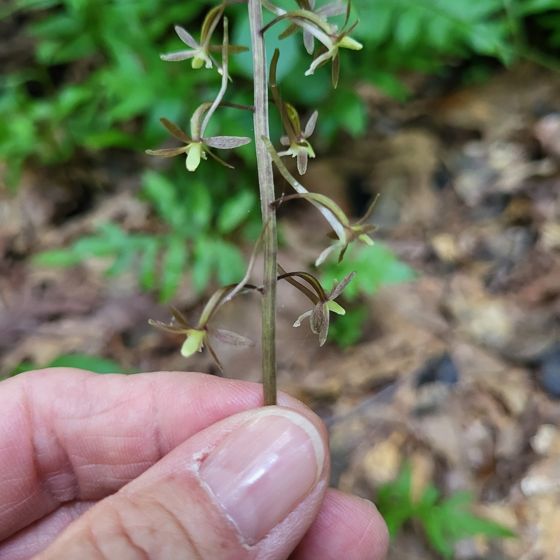
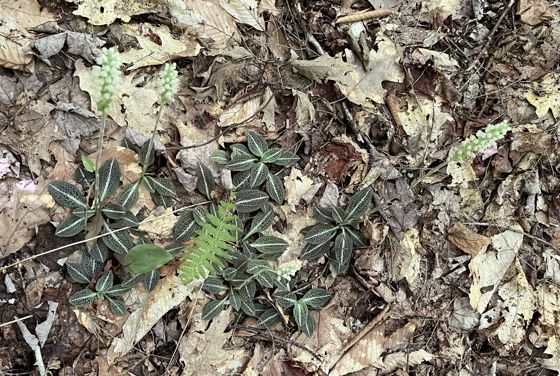
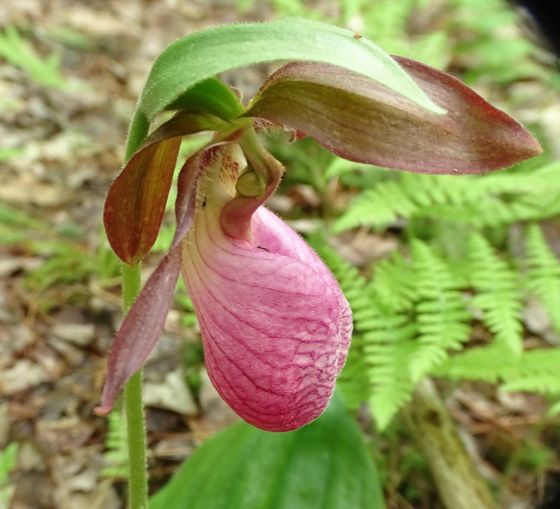
More from the Orchidaceae family (23 on Bloomipedia; most observed first): Pink lady's slipper, Crane-fly orchid, Downy rattlesnake plantain, Broad-leaved helleborine, Western rattlesnake plantain, Spotted coralroot, Showy orchis, White bog orchid.
More North Carolina flowers
Sources
- USDA, NRCS. PLANTS Database, profile APHY.
- iNaturalist, Aplectrum hyemale: taxonomy, research-grade observation counts and “Flowering” annotations, retrieved October 17, 2026.
- Wikipedia, Aplectrum (lead quoted under CC BY-SA 4.0).
- North Carolina: North Carolina Protected Plant Species List (02 NCAC 48F .0301).
- North Carolina: North Carolina Noxious Weed List (02 NCAC 48A .1702) (the list names any non-native Lythrum; we apply it to purple loosestrife (Lythrum salicaria), which isn't native).
- Virginia: Virginia endangered and threatened plant and insect species (2VAC5-320-10).
- Virginia: Virginia noxious weeds (2VAC5-317-20, Tier 1, 2 and 3).
- Indiana: Indiana prohibited invasive terrestrial plants (312 IAC 18-3-25).
- Kentucky: Kentucky endangered and threatened plant lists (400 KAR 3:040, eff. 2026).
- Kentucky: Kentucky noxious weeds and invasive plants on state rights-of-way (KRS 176.051; species list from the Kentucky Transportation Cabinet).
- West Virginia: West Virginia noxious weeds (W. Va. Code R. § 61-14A-5) (the rule abbreviates some names (e.g. “P. cuspidatum”); we expand them to match).
- USFWS, ECOS species database (ESA listing check), October 17, 2026.
- NatureServe Explorer, Aplectrum hyemale (global and state ranks).
- Edibility and toxicity: NC State Extension.
- Photo: Clay Gibbons via iNaturalist · CC BY 4.0 · resized.